












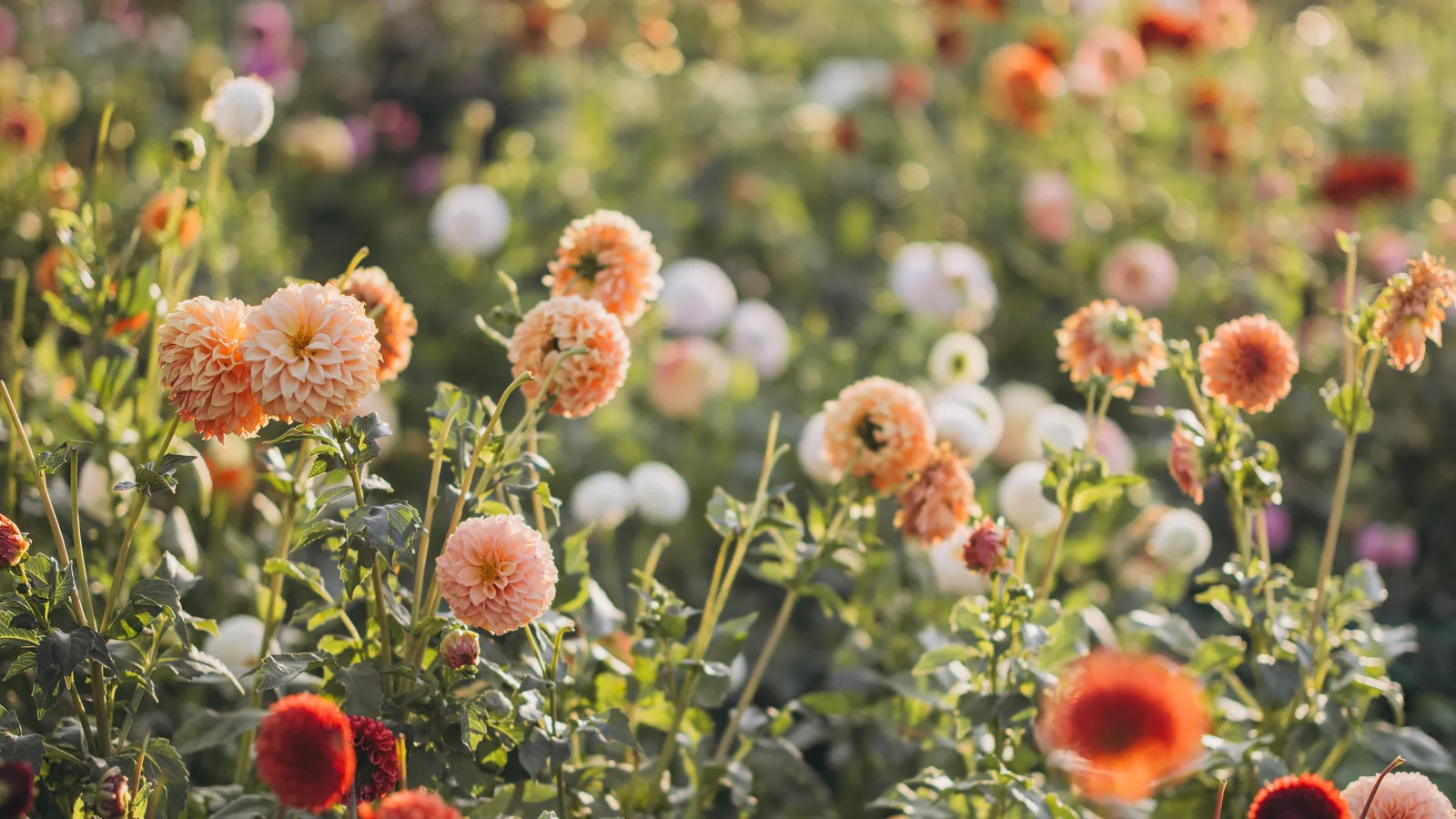
Dahlias, cannas, gladiolus and the other summer bloomers that grow from fleshy tubers, corms and rhizomes cannot survive a cold winter in the ground. Once frost blackens their tops, the choice is to treat them as annuals or to dig them and carry them indoors until spring. The University of Wisconsin-Madison Division of Extension publishes a step-by-step method, revised in September 2026, and the two rules underneath every step are the same: keep the bulbs dry and cool, and never let them freeze, before or during storage.
Step 1: Dig at the Right Moment
UW-Madison Extension says to dig after the foliage dries or just after the first frost. A light to moderate frost kills the top growth without reaching the bulb underground. Once frost has killed the foliage, dig within a few days, because rot organisms can enter through the damaged tops.
Use a digging fork rather than a shovel. Start several inches out from the base of the plant on all sides and lift gently. The goal is to avoid cuts and bruises, and with dahlias, not to rub the skin off the tubers.
The timing differs a little by plant. Extension says to dig dahlias before a hard freeze or after a light frost kills the tops, and to let frost kill canna tops while avoiding a hard freeze, which turns the stems to mush. Gladiolus can come up when the leaves yellow or after the first frost. Tuberous begonias should be dug before a hard frost, and caladiums before any frost at all.
Step 2: Clean Them, With One Exception
Shake off loose soil and cut off the stems. Remaining soil can be hosed off gently, ideally over a wire mesh screen. Do not wash gladiolus corms: Extension says to let them dry and remove the soil afterward. Discard any bulb that is obviously damaged.
Hold off on dividing clumps that have multiplied. Extension advises waiting until spring, because the cuts raise the risk of rot in storage. For dahlias in particular, divide in spring, not before storage, and for cannas, divide in spring with at least three eyes per division.
Step 3: Cure Before Storing
Curing lets the outer surfaces dry and seal. Extension's conditions are out of direct sun, in a dry, well-ventilated spot at 60 to 70 degrees Fahrenheit. The time depends on the plant:
- Most species: one to three days, depending on temperature.
- Dahlias: several hours of drying before storage.
- Cannas: a day or two.
- Gladiolus: a day or two in bright sun, then about three weeks in a well-ventilated spot. Afterward, remove the old, shriveled corm at the base and keep only the plump new corms.
- Calla: two to three weeks in a warm location.
- Tuberous begonia: one to two weeks, with 2 to 5 inches of foliage left on.
Before packing, inspect each bulb for insects and disease. Extension notes that dusting with a fungicide labeled for that plant is optional and most useful where a species has had storage disease before.
Step 4: Label and Pack
Label each bulb or bag with its variety, either on the bag, directly on the bulb in permanent marker or on a tag tied to the root. Pack the dried bulbs between 2- to 3-inch layers of peat moss, sand, vermiculite, sawdust, wood shavings or coir, and keep individual bulbs from touching so rot cannot spread from one to the next. For a large quantity, a ventilated container such as a cardboard box works. Avoid airtight containers, which trap moisture and promote decay. Cannas can also be wrapped in newspaper or stored in paper bags.
Step 5: Store Cool, Not Cold
Extension's general target is 35 to 45 degrees with about 50 percent relative humidity, in an unfinished basement away from heat sources, an unheated garage that does not freeze, or a root cellar. A few plants want it warmer: cannas at 45 to 50 degrees, calla at 45 to 55, tuberous begonia at 50 and caladium at 60.
Step 6: Check Through the Winter
Look the bulbs over periodically, and dahlias monthly. Extension's fixes for the three common problems:
- Rot: remove rotting bulbs. On large tubers, cut out the damaged tissue.
- Shriveling: lightly moisten the packing material, for example with a spray bottle, and repack.
- Too much moisture: take the bulbs out, let them air-dry for a few days and repack them in dry material.
What to Do This Week
If frost has already blackened the tops in your garden, the clock is running: dig within a few days, cure for the time your plant needs, and get them into a cool, frost-free spot. Write the variety on every bag now, while you still know which clump was which.
Loading comments…