












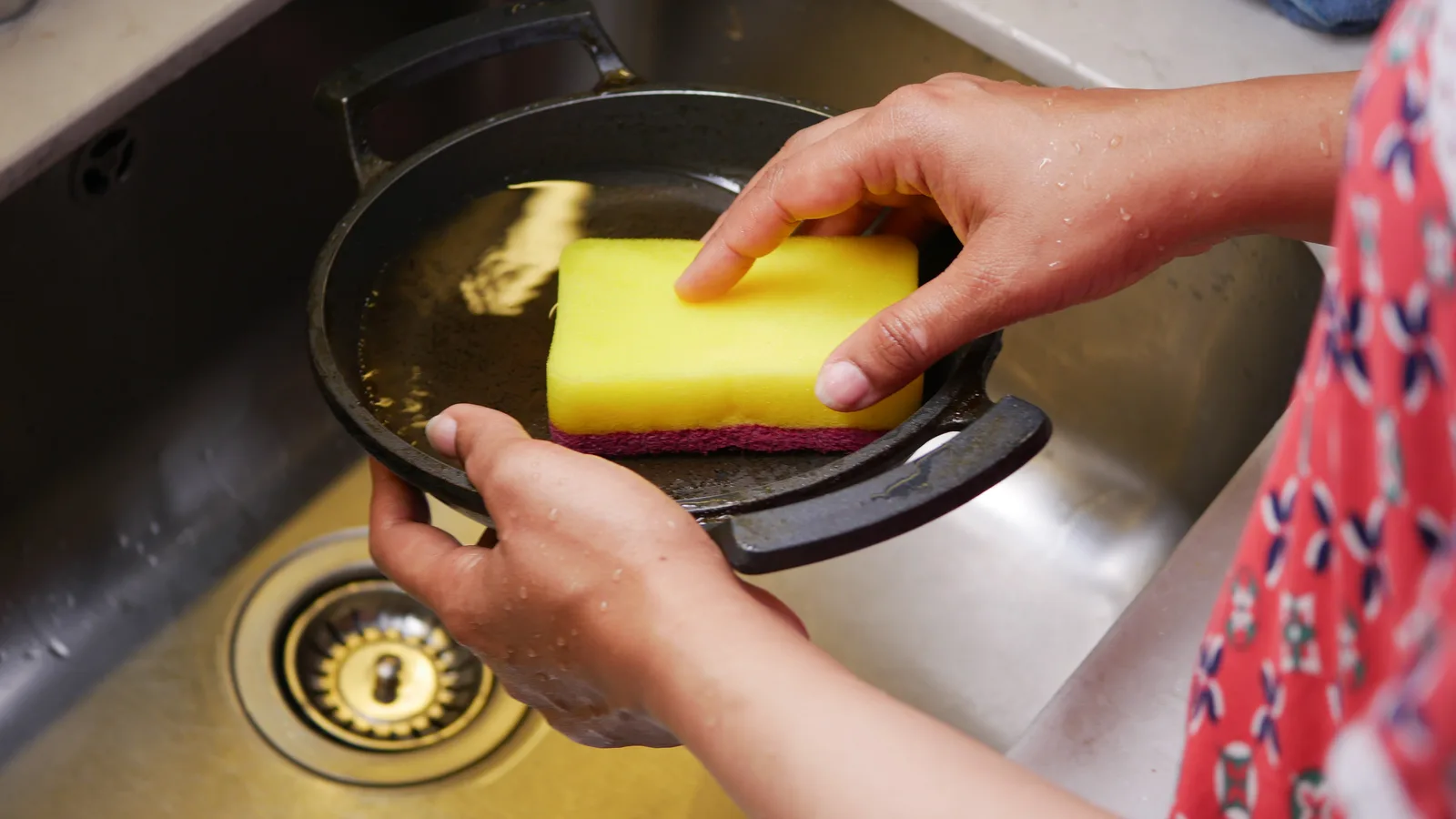
The day after a holiday meal leaves a kitchen with more fat than any other day of the year: drippings in the roasting pan, a skillet of bacon grease, and for households that fried a turkey, gallons of used oil in the pot outside. The Environmental Protection Agency's guidance on where all of it goes is short and consistent across its septic and sewer pages. It belongs in the trash, never down a drain.
What Happens in the Pipes
The EPA's stormwater guidance on household waste describes the mechanism: when residents or restaurants dump cooking oils and grease down the drain instead of in the trash, those substances can congeal in the sanitary and storm sewer systems and cause backups and flooding. Fat that pours as a warm liquid cools inside the pipe and sticks.
That matters well beyond one kitchen. The EPA estimates there are at least 23,000 to 75,000 sanitary sewer overflows a year in the United States, and lists clogs among their causes. An overflow can contaminate waterways, and the EPA notes that sewage can also back up into homes, causing property damage. Its overflow estimate does not count those backups into buildings.
On a Septic System, It Is a Direct Cost
For a home on a septic system, the EPA's septic guidance is blunt: never pour cooking oil or grease down the drain. The same page adds fats, butter, wax, cheese and heavy cream to the list of things to keep out. It also says to eliminate or limit use of a garbage disposal to cut the fats, grease and solids reaching the tank, and that a household that does use one will need its tank pumped more often. The EPA's baseline is an inspection at least every three years by a septic service professional and pumping typically every three to five years.
Where the Grease and Oil Go
EPA's guidance names the trash as the alternative to the drain. In practice that means:
- Pan drippings and skillet grease: let them cool and firm up, scrape them into a disposable container with a lid, and put it in the trash. Wipe greasy pans with a paper towel before washing, so less fat reaches the sink.
- Fryer oil: leave it in the pot until it has cooled completely, then funnel it back into its original jugs or another sealable container. Before putting gallons of it in the household trash, check your town's sewer utility or solid waste department for its rules on used cooking oil.
- Food scraps: scrape plates into the trash or compost rather than the disposal, especially on a septic system.
Hot Water and Soap Do Not Fix It
Hot water and dish soap do not change where the grease ends up: the EPA describes cooking oil and grease congealing in the sewer lines. For a slow drain, the EPA septic page advises boiling water or a drain snake rather than chemical drain openers.
What to Do Next
Set out a lidded can or jar by the stove for the weekend's drippings, scrape and wipe pans before they go in the sink, and leave the fryer oil outside until it is cold. Then look up your town's sewer utility or solid waste department for its rules on used cooking oil.
Loading comments…