












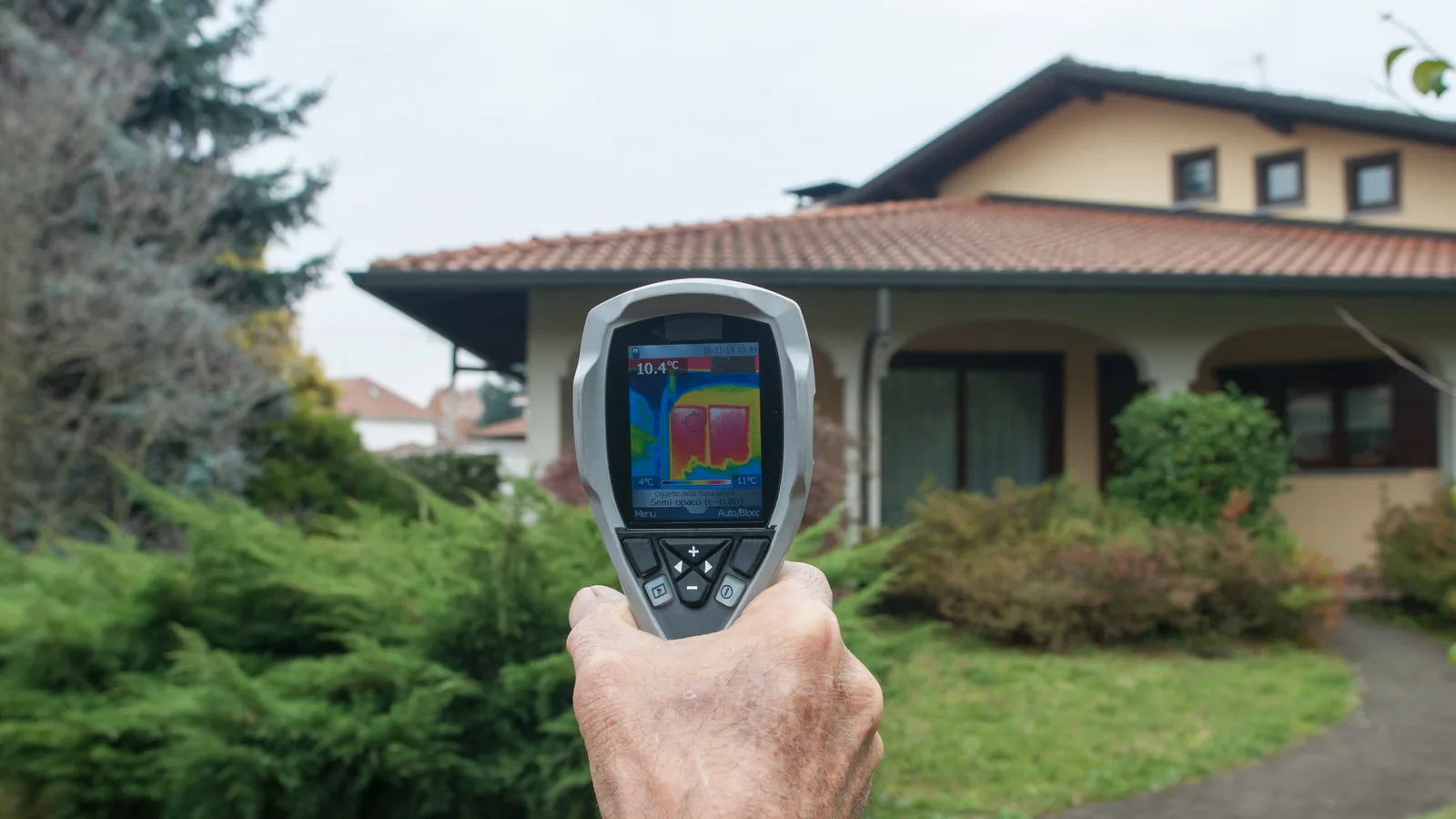
A drafty bedroom, condensation on the windows or a heating bill that jumped this month are the kinds of problems a professional home energy assessment is built to explain. The Department of Energy's consumer guide to home energy assessments, also called energy audits, puts the cost at roughly $250 to $600 or more, and describes what the assessor should measure, what you should have ready and what you should get at the end. Here is the visit, step by step.
Before the Assessor Arrives
The DOE guide asks homeowners to prepare two things:
- A list of the indoor problems you have noticed, such as condensation and rooms that are uncomfortable or drafty.
- Copies or summaries of recent energy bills.
The assessor should start with a walk-through of the house to learn how energy is used day to day, both overall and room by room.
The Blower Door Test
The blower door test measures how airtight the house is. A powerful fan is mounted in a flexible panel and frame that fits into an exterior doorway. The fan pulls air out of the house, lowering the pressure inside, so outdoor air flows in through every unsealed gap. With the fan running, the assessor can use a smoke pencil to see exactly where air is getting in.
The DOE guide flags one detail worth asking about: the blower door should be calibrated, meaning connected to a pressure gauge called a manometer that measures the pressure difference while the fan runs. That produces an actual measurement of air leakage for the whole house. A blower door without that measurement can still find leaks, but cannot tell you how much air the house is losing. Some assessors also use a duct blower, a variable-speed fan connected to the duct system, to measure leakage in the ductwork itself.
The Infrared Scan
A thermographic scan uses an infrared camera to show temperature differences along walls, roofs and around windows and doors, with warmer areas appearing whiter and cooler areas darker. Run together with the blower door, leaks show up in the image as black streaks. The DOE guide says these two techniques are the most common and are often done together. During the visit, the assessor may also inspect the heating and cooling systems, test for natural gas leaks and check whether the house is properly ventilated.
What You Should Get Afterward
The assessment should end with a report of findings and ideas for improvements. The DOE guide notes that the answer may be as simple as air sealing small gaps and adding attic insulation, or it may show that bigger upgrades, such as replacing heating and cooling equipment, are cost-effective. Many contractors will do the assessment at a reduced rate if you hire them for the work the report recommends.
Finding an Assessor
The DOE guide says to use a certified assessor, often a licensed contractor with experience in heating and cooling, windows and lighting. It points to three places to look: your electric or gas utility, your state or local energy or weatherization office, and the contractor listings of Home Performance with ENERGY STAR. For lower-income households, the DOE's Weatherization Assistance Program funds states to help weatherize homes.
The Tax Credit Is Gone for 2026
For 2023 through 2025, the IRS allowed a tax credit of up to $150 for a home energy audit of a main home, counted within the $1,200 annual limit of the Energy Efficient Home Improvement Credit. The IRS says that credit applies only to qualifying expenses placed in service before the end of 2025, so an assessment done this winter does not qualify. Utilities and states run their own programs, so the offices named above are the place to ask about any discount.
A Do-It-Yourself Check in the Meantime
The DOE guide also describes a basic depressurization test a homeowner can run, ideally on a cool, windy day: close all exterior doors, windows and fireplace flues; turn off combustion appliances such as a gas furnace and water heater (the guide says this step can be skipped if you prefer not to turn off the furnace); turn on every exhaust fan that blows air outside, such as bathroom fans and stove vents; then pass a lit incense stick or smoke candle around common leak spots. Where the smoke is drawn into or out of the room, there is a leak. The places it says to check include where different materials meet, such as brick and wood siding, the edges of outlets and switch plates, windows and door frames, baseboards, attic hatches and the openings where electrical, gas, cable and phone lines enter the house.
Electrical, gas, roof and ladder work can cause serious injury. Shut off power or gas first, follow the manufacturer's instructions and local code, and hire a licensed pro for anything beyond your experience.
This article reports rules, data and expert guidance. It is not legal, tax, insurance or financial advice. Talk to a licensed pro, your tax advisor or your insurer before you act on it.
Loading comments…