












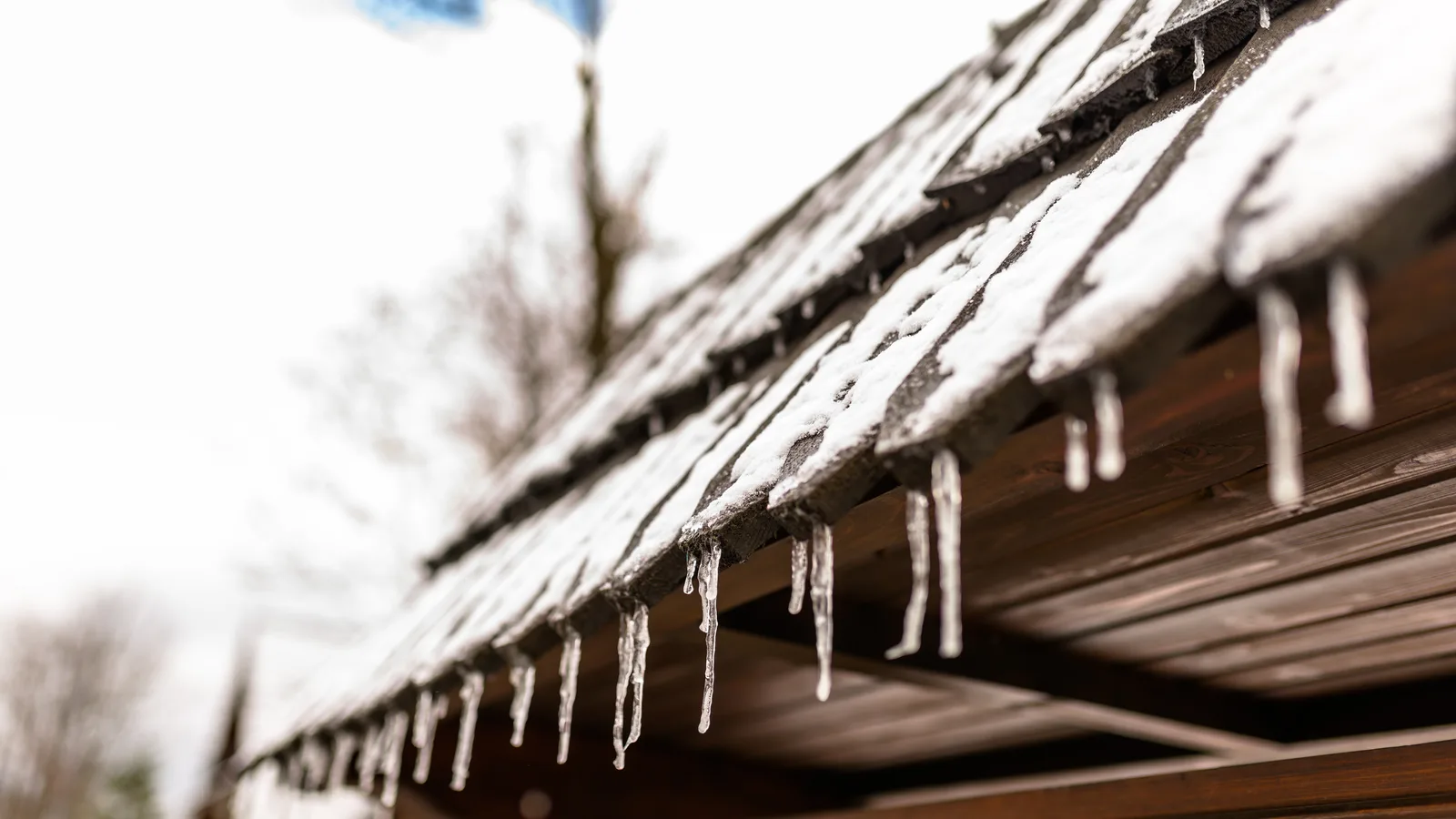
A row of icicles along the gutter line looks like winter scenery, but it can also be the visible edge of an ice dam: a ridge of ice at the bottom of the roof that stops melting snow from draining off. The water that backs up behind it can work under the shingles and into the attic, the walls and the ceilings below. The University of Minnesota Extension, which has studied ice dams in one of the snowiest states in the country, traces nearly every one of them to the same cause: heat leaving the house.
How an Ice Dam Forms
Three things have to line up, according to Minnesota Extension's guide on dealing with and preventing ice dams. There has to be snow on the roof. The higher parts of the roof's outside surface have to sit above 32°F while the lower parts, usually the overhang at the eaves, stay below 32°F. And the outdoor temperature has to be below freezing. The extension's authors stress that these are average temperatures held over a sustained period, not a single warm afternoon.
Snow on the warmer upper roof melts. The water runs down until it reaches the colder edge and freezes there. The ridge grows as more meltwater feeds it, and the water that arrives after it has nowhere to go. That pooled water stays liquid, finds cracks and openings in the roof covering, and flows into the attic. From there it can soak insulation, run into exterior walls or stain the ceiling.
Where the Heat Comes From
Since most ice dams form at the edge of the roof, something has to be warming the roof higher up. Minnesota Extension says that heat comes mainly from the house itself, and only rarely from the sun. It reaches the roof three ways: by conduction through the ceiling and insulation, by convection as warm air rises off the top of the insulation, and by radiation from that warmer surface to the cold roof sheathing.
The extension singles out a fourth path as the largest in many homes: air leakage. Warm indoor air escapes through gaps in the ceiling, such as the opening around a ceiling light fixture, and carries heat straight into the attic. Its guide also lists other sources worth checking:
- Kitchen or bathroom exhaust fans that end just above the roof, which can melt the snow around them.
- Chimneys, especially with frequent use of a wood stove or fireplace.
- Leaky or poorly insulated ductwork running through the attic.
- Knee wall spaces beside finished rooms under the roof.
For new construction, the guide adds that recessed lights, skylights, complicated roof shapes and heating ducts in the attic all raise the risk.
What Minnesota Extension Says to Do Now
The short-term options address the snow and the water, not the cause. Removing snow from the roof takes away one of the three ingredients. The extension names a roof rake and a push broom as tools for the job, and warns that both can damage roofing materials.
When water is already coming into the house, the guide describes cutting channels through the dam so the water behind it can drain: hosing it with tap water on a warm day, working upward from the lower edge of the dam. It calls this a temporary measure that stops working within days.
The same guide carries a plain warning: anyone on a roof in winter, or working on a roof from below, risks injury and can damage the roof and the house, and the extension recommends contacting professionals for the job.
The Long-Term Fix, in Order
Minnesota Extension puts the permanent fixes in a specific sequence. First, make the ceiling airtight so warm, moist air cannot flow from the living space into the attic. Only after the air leakage paths are sealed does it suggest adding ceiling or roof insulation to cut heat loss by conduction.
Ventilation comes after that, and the guide is specific about its role. Natural roof ventilation can help keep roof temperatures even, but once heat loss has been cut substantially, only small amounts are needed. Natural attic ventilation still matters for drying the attic and clearing summer heat. Powered attic fans are a different matter: the extension says mechanical attic ventilation is not a recommended ice dam fix, because it can create attic moisture problems and pull the house into negative pressure.
The guide recommends a weatherization contractor for the work. That contractor should run a blower door test to measure how airtight the ceiling is, and may use an infrared camera to find spots in the ceiling losing the most heat. It adds one caution for any house that is tightened up: ventilation systems, exhaust fans and fuel-burning appliances still need enough air to run safely.
Two Things to Know Before Repairs
Stopping the melt means more snow stays on the roof, which adds weight. Minnesota Extension says a house built to current codes should be designed for the expected snow load. If you have no plans for the house or are unsure, it suggests asking a professional engineer to evaluate the roof structure, and notes that the original building plans may be on file with the local building inspection office.
Inside, the extension says to hold off on repairing water-damaged ceilings and walls until they are fully dry, and to dry wet areas right away to keep mold and mildew from growing. Interior repairs should be paired with fixing the heat loss that caused the dam, or the damage will come back with the next snow.
Electrical, gas, roof and ladder work can cause serious injury. Shut off power or gas first, follow the manufacturer's instructions and local code, and hire a licensed pro for anything beyond your experience.
This article reports rules, data and expert guidance. It is not legal, tax, insurance or financial advice. Talk to a licensed pro, your tax advisor or your insurer before you act on it.
Loading comments…