












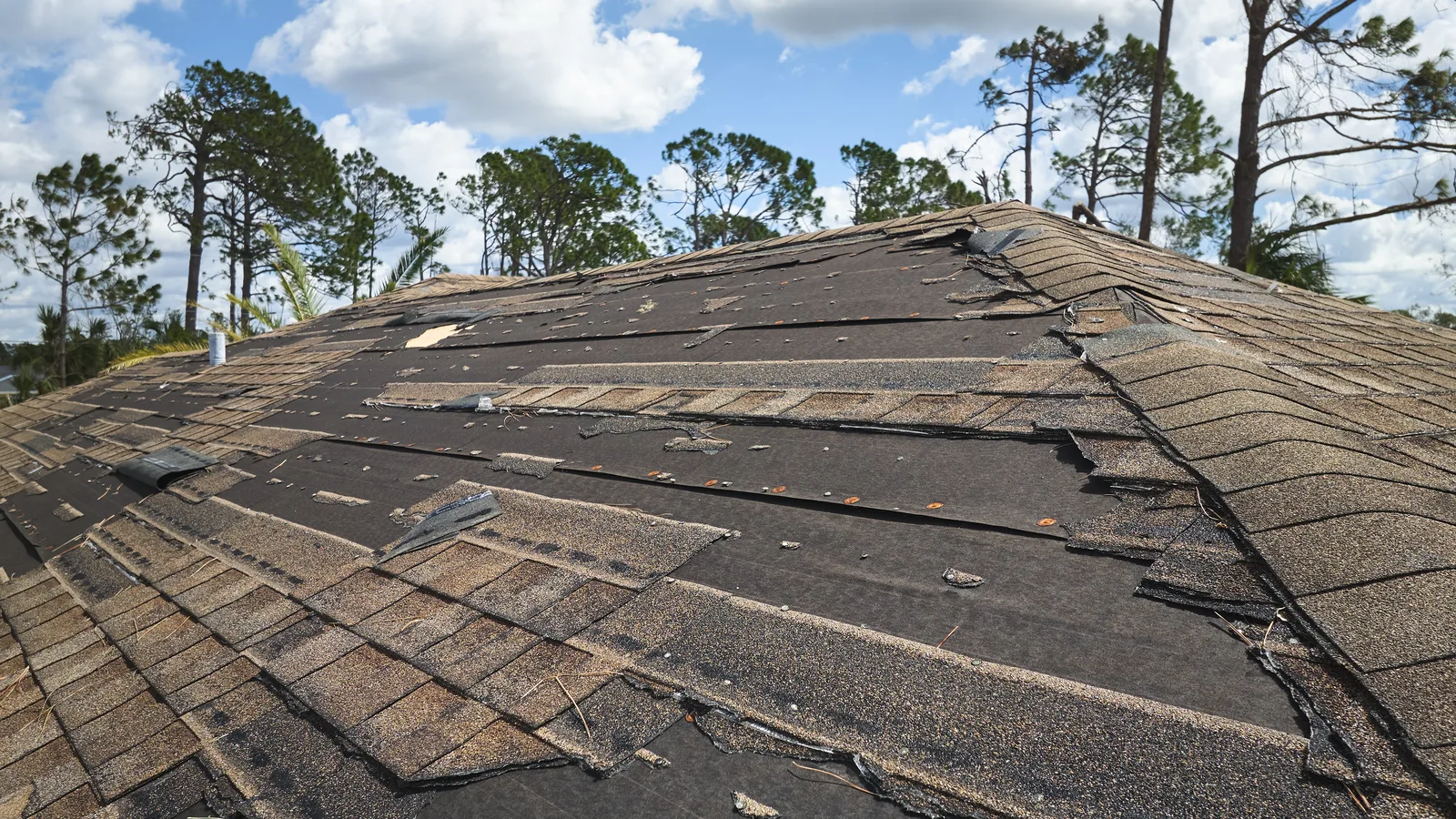
Two households with the same storm damage and the same deductible can receive insurance checks $10,000 apart. The National Association of Insurance Commissioners, the organization of the state officials who regulate insurance, uses that example to explain the two ways a homeowners policy can value a damaged roof: replacement cost value and actual cash value.
The two definitions
Replacement cost value pays to repair or replace damaged property without deducting for depreciation. Actual cash value pays the depreciated cost of the repair or replacement. Insurers usually calculate depreciation from the condition of the property when it was damaged, what a new one would cost and how long the item normally lasts, the NAIC says. For a roof, that means age counts heavily: the older the shingles, the larger the deduction.
Either way, the deductible, the part of a claim the homeowner pays, comes off the payment.
The NAIC's example
In the association's illustration, two families each have $15,000 in roof damage and a $1,000 deductible.
- The replacement cost policy pays $14,000: the $15,000 repair minus the $1,000 deductible.
- The actual cash value policy pays $4,000: the $15,000 repair, minus $10,000 in depreciation, minus the $1,000 deductible.
The second family covers $11,000 of the repair itself. The figures are the NAIC's illustration, not an average of real claims; the depreciation on an actual roof depends on its age, material and condition and on the insurer's schedule.
What moves the cost
The NAIC's shopping guidance for homeowners insurance notes the trade-off: premiums are generally lower for actual cash value coverage, and replacement cost coverage pays more when there is a claim. It also flags two details in replacement cost policies. Many pay only the actual cash value at first and release the rest once repairs are begun or completed, and many cap the amount.
A single policy can use both methods. The roof may be valued one way and the rest of the house another, and the association says a roof or other structures can carry special deductibles of their own.
Wind and hail
The same NAIC guidance lists what to check about storm coverage, because a roof claim usually starts with wind or hail:
- Whether the policy covers windstorm and hail damage at all. Some policies exclude it, which the NAIC says is common in coastal areas, and a separate wind policy may be needed.
- Whether wind or hail carries a separate deductible.
- Whether a special deductible applies to the roof.
Where to find it in a policy
The valuation method is stated on the declarations page or in the loss settlement section of the policy, and any roof-specific terms are usually in an endorsement, a page added to the standard form. The questions the NAIC suggests putting to an insurer or agent are whether the roof is covered at replacement cost or actual cash value, whether wind and hail are covered, and which deductible applies to each.
The association also points to construction. It suggests looking at the Insurance Institute for Business and Home Safety's Fortified roof standard and at wind-resistant features such as hurricane clips, and keeping the roof in good condition. Whether an insurer discounts for any of those depends on the company and the state.
State insurance departments publish their own consumer guides and take complaints about claim payments; the NAIC's website links to each one.
This article reports rules, data and expert guidance. It is not legal, tax, insurance or financial advice. Talk to a licensed pro, your tax advisor or your insurer before you act on it.
Loading comments…