






Apple announced on October 13, 2026 a lineup of smart home accessories it calls the Apple Home Collection, developed with LG Electronics and Schneider Electric and designed to work in Apple's Home app. Apple says the collection goes on sale starting in December 2026, with select accessories, which it did not name, arriving in early 2027.
The lineup has nine products: a video doorbell, three cameras, a deadbolt lock, two thermostats and two room sensors. Apple says every device supports Thread, the low-power wireless mesh network used by many smart home products, and that the lock, thermostats and sensors also support Matter, the cross-brand smart home standard.
Thermostats and sensors
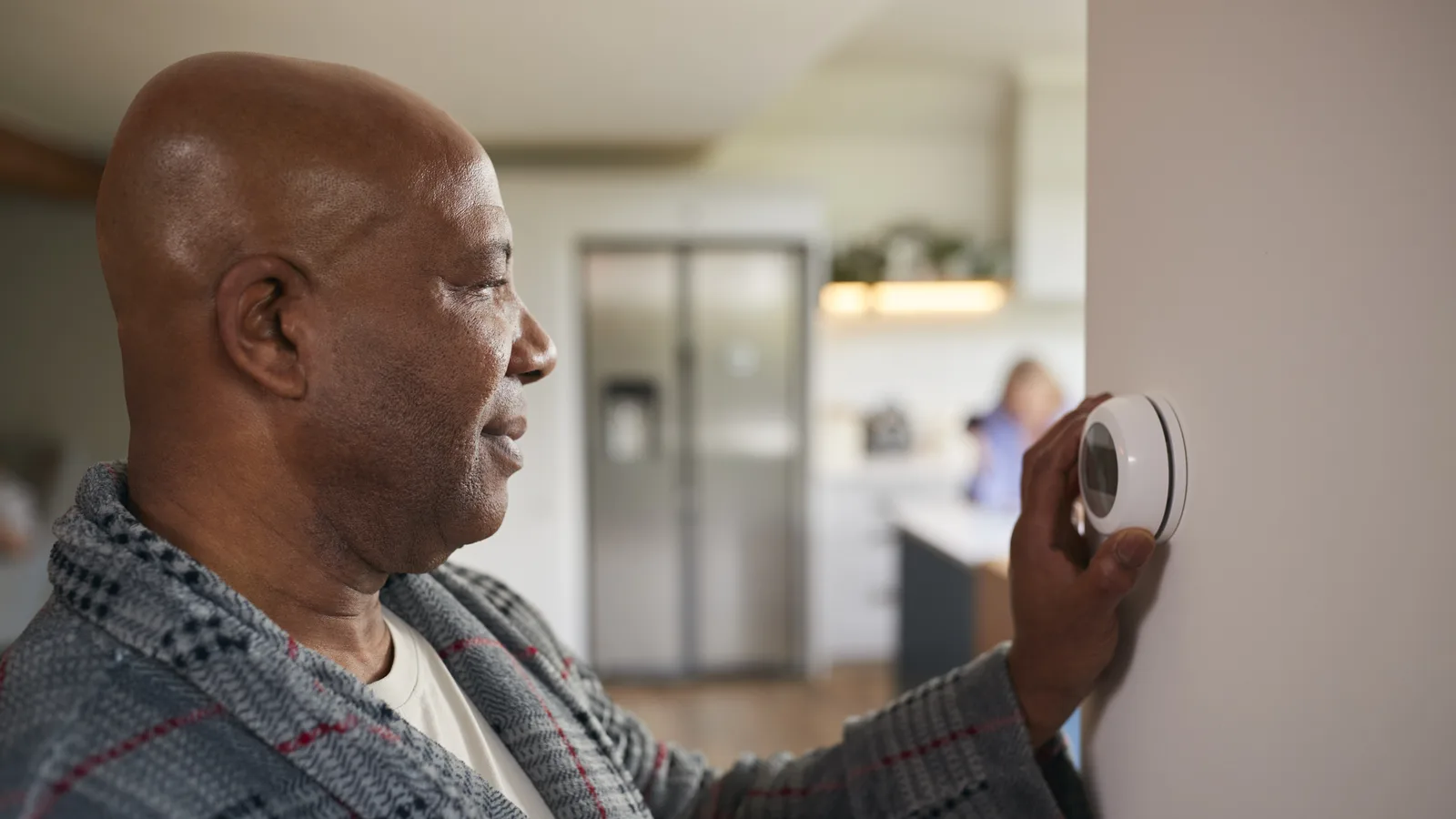
LG and Schneider Electric each make a smart thermostat, both listed at $199.95 and sold in the U.S. and Canada. Apple lists the same features for both: a setting it calls Adaptive Temperature, on-device detection of the wiring at the wall, and Clean Energy Guidance, which is available only in the contiguous United States with a compatible utility plan. Each maker also sells a $39.95 room sensor that reports temperature and humidity to the thermostat. Installation accessories are sold separately: a C-wire power adapter from either maker for $24.95, for systems without a common wire to power the thermostat, and a Schneider trim plate for $14.95.
The deadbolt
LG's Smart Deadbolt Lock, $349.95 in the U.S. and Canada, unlocks by proximity using Ultra Wideband radio with a compatible iPhone or Apple Watch and also by tapping a home key on the phone or watch, by PIN pad or by a hidden backup key. Apple says it senses whether the door is open or closed and whether it has been tampered with, supports sharing access with guests, and supports Matter and Aliro, the digital key standard.
Doorbell and cameras
LG makes the four camera products. The Video Doorbell Wired, $249.95, has two cameras, a front camera recording up to 2.5K and a downward camera recording in full HD, plus a spotlight, and chimes through Apple's HomeView hub or a HomePod. The Floodlight Cam, $399.95, pairs motion-activated floodlights with a camera recording up to 2.5K. The Outdoor Cam Plug-In is $299.95 and the Indoor Cam Plug-In is $199.95; Apple says the indoor model can tilt down to stop monitoring when the first member of the household comes home. The doorbell and outdoor cameras are sold in the U.S., Canada and the U.K.
What it takes to run them
Setup requires an iPhone on the latest software. A home hub is required for camera monitoring and for some other features; Apple lists HomeView, HomePod, HomePod mini and Apple TV 4K as hubs. Camera event history requires a paid iCloud+ plan: the 50GB plan covers one camera, the 200GB plan up to five and the 2TB plan an unlimited number, and Apple says footage is stored encrypted in iCloud for 10 days. Video summaries and search through Apple Intelligence also require an Apple Intelligence-capable iPhone or iPad. Apple says each accessory is encrypted end to end in Apple Home, so LG, Schneider Electric and Apple cannot read the data, and that camera footage is processed on the home hub or in its Private Cloud Compute system. Apple says the cameras keep recording to built-in storage during Wi-Fi outages.
Installation
Apple says it will offer professional installation by ADT through Apple Retail stores in the U.S. for an additional charge. Several of the products connect to household wiring: the thermostats wire into the heating and cooling system's controls, with an optional C-wire adapter for systems that lack one, and the doorbell is a wired model. Whether an existing system has a common wire, and which adapter it needs, varies from house to house.
Apple's announcement lists the prices, regions and requirements for each device, and the compatibility of a given heating and cooling system is set by the thermostat maker's own wiring guidance.
Electrical, gas, roof and ladder work can cause serious injury. Shut off power or gas first, follow the manufacturer's instructions and local code, and hire a licensed pro for anything beyond your experience.
This article reports rules, data and expert guidance. It is not legal, tax, insurance or financial advice. Talk to a licensed pro, your tax advisor or your insurer before you act on it.
Loading comments…