












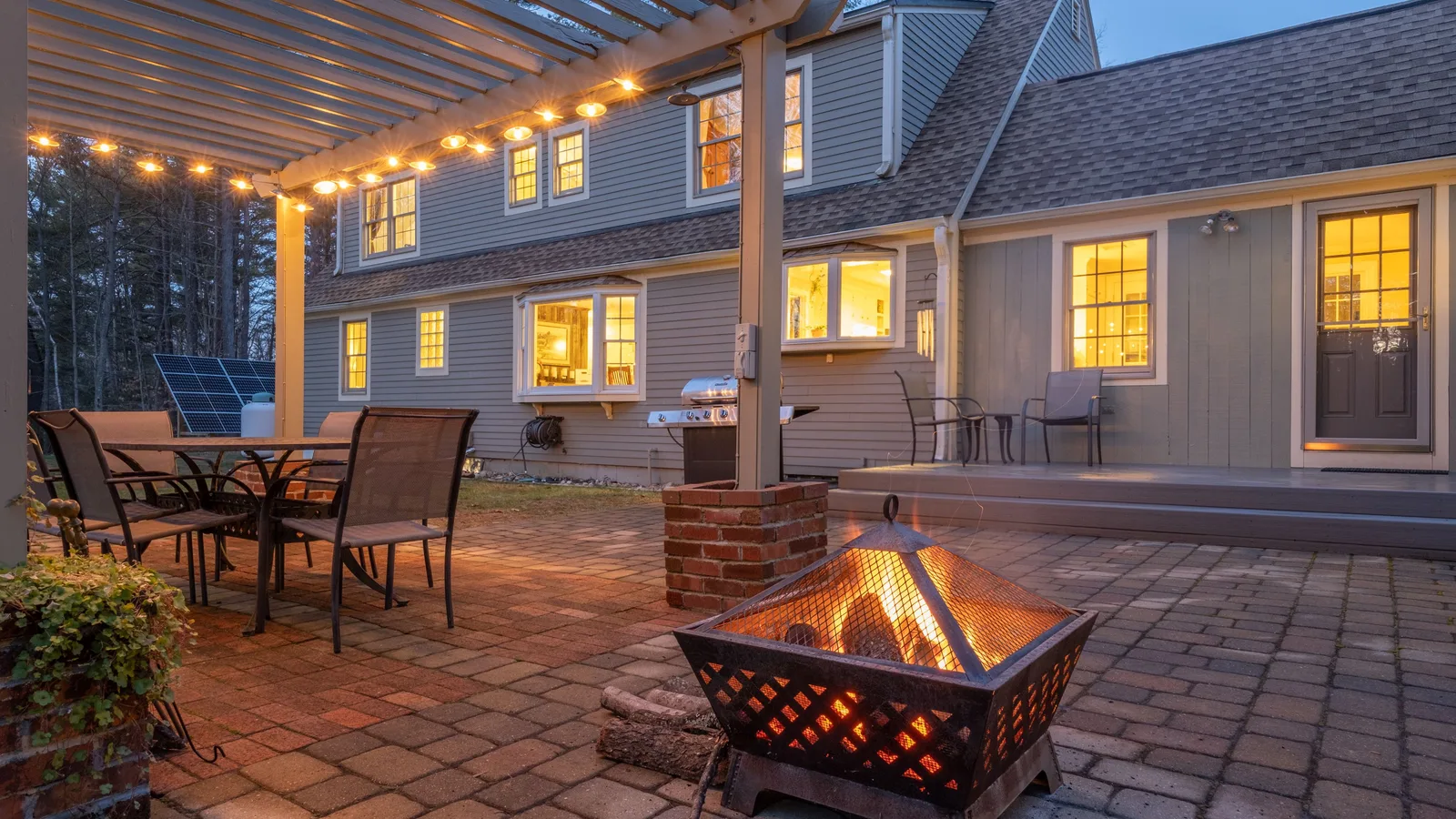
A fire pit on the patio is a common way to stretch a holiday gathering outdoors after dark, and the setup decides whether it stays a good evening. The National Fire Protection Association's 2026 educational messages for the fire service and the U.S. Fire Administration's outdoor fire safety guidance agree on the core rule, and NFPA spells out the rest of the job in detail.
Step 1: Check whether you can burn at all
NFPA's first message is to check with the local fire department or municipality for restrictions on fire pits and to get a permit if one is required. Some places ban outdoor burning entirely, and many issue burn bans in dry or windy spells. NFPA also says to avoid burning anything outdoors on windy, dry days, since embers can light nearby buildings or vegetation.
Step 2: Measure 10 feet
Both NFPA and the U.S. Fire Administration say a fire pit belongs outdoors and at least 10 feet from the house and from anything that can burn. NFPA's list of what to keep it away from is specific: siding, decks, deck railings, tents, grass and other plants, and anything overhead, including eaves, overhanging branches and structures such as a pergola. A fire pit set on a wood deck or tucked under a covered porch fails that test.
For comparison, NFPA puts open campfires at 25 feet from anything that can burn and bonfires or yard waste fires, where allowed, at 50 feet. Chimineas, patio torches and personal fireplaces get the same 10 feet as a fire pit.
Step 3: Level ground that does not burn
NFPA calls tripping on or into the pit a real danger. It says to set the pit on level ground or a surface that will not catch fire, such as patio blocks, brick or concrete, to clear rocks and sticks from around it and branches from above it, and to keep the area lit or carry a flashlight when walking to and from the pit.
Step 4: The right fuel, and nothing poured on it
For a wood-burning pit, NFPA says to burn only clean, dry hardwood seasoned at least six months and to start it with commercial fire starters used as their maker directs. It says never to use lighter fluid or gasoline to start or relight a fire pit. A metal screen over a wood fire keeps sparks in; the U.S. Fire Administration recommends one, and NFPA says to check local rules on screens.
NFPA and the Consumer Product Safety Commission have also warned people to stop using pourable gel fuel in fire pots, personal fireplaces and similar tabletop units, because pouring it into a pot that is still burning has caused flash fires and burns.
Step 5: Set the chairs and the 3-foot zone
NFPA calls for a 3-foot safety zone around the pit that children and pets stay out of, and for chairs to be arranged a safe distance back. It advises against loose clothing near the flames, and the U.S. Fire Administration says to watch children closely whenever the pit is lit and to keep matches and lighters out of their reach. For roasting, NFPA recommends commercial roasting forks with prongs and a wooden handle.
Step 6: Put it out completely
Someone stays with the fire the whole time it burns. NFPA says to keep a hose, a bucket of water or a shovel with dirt or sand nearby, to follow the pit maker's instructions for putting it out, and to make sure it is completely out before everyone goes inside, since embers can stay hot for hours or days. For a gas fire pit, turn off the fuel supply after use.
Ashes from a wood pit go into a metal container with a tight lid, used only for ashes and kept away from anything that can burn, once they have cooled. NFPA says never to dump them straight into a trash can.
Electrical, gas, roof and ladder work can cause serious injury. Shut off power or gas first, follow the manufacturer's instructions and local code, and hire a licensed pro for anything beyond your experience.
This article reports rules, data and expert guidance. It is not legal, tax, insurance or financial advice. Talk to a licensed pro, your tax advisor or your insurer before you act on it.
Loading comments…