












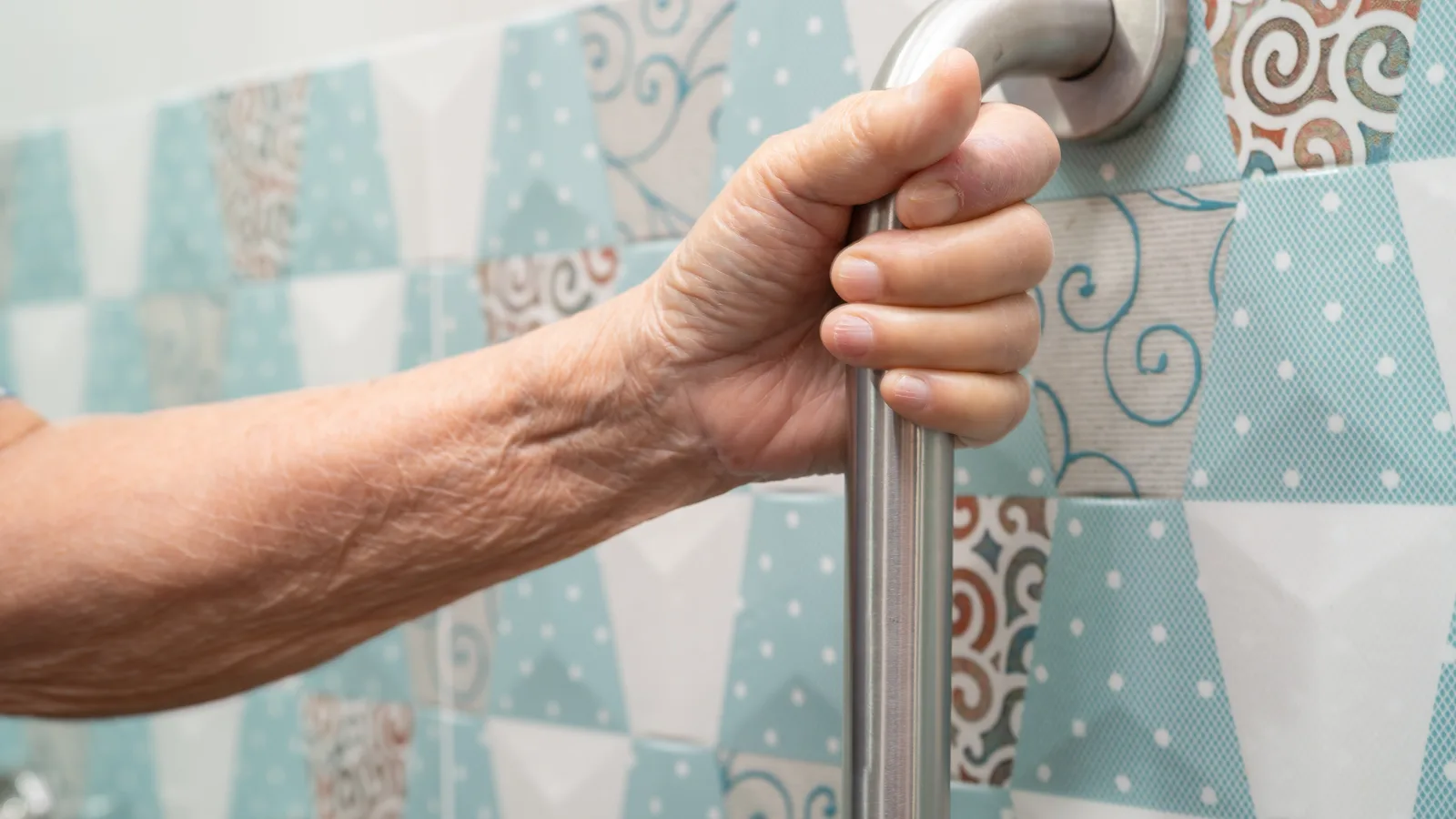
A house full of holiday guests often includes a parent or grandparent who steps over a tub wall more carefully than they did a decade ago. The bathroom is where those steps go wrong. A Centers for Disease Control and Prevention study estimated that 234,094 people aged 15 and older were treated in U.S. emergency departments for nonfatal injuries that happened in a bathroom in a single year, a rate of 96.4 per 100,000 people. Falls caused 81.1 percent of them, and the injury rate rose with age.
What the CDC study counted, and its limits
The study, published in the CDC's Morbidity and Mortality Weekly Report on June 10, 2011, used 2008 data from a national sample of hospital emergency departments. The highest injury rates were in or around the tub or shower (65.8 per 100,000) and on or near the toilet (22.5 per 100,000). Among people 85 and older, tub and shower injuries reached 200.2 per 100,000. The data are older and cover only injuries treated in emergency departments, and the study did not compare bathrooms with other rooms, so it shows where bathroom injuries happen rather than that the bathroom is the riskiest room.
The measurements in the federal standard
No federal rule requires grab bars in a private house. The most widely used set of numbers comes from the 2010 ADA Standards for Accessible Design, which apply to public accommodations and commercial facilities, and which many installers and manufacturers use as the reference for homes too:
- Height: mounted horizontally, 33 to 36 inches above the finished floor, measured to the top of the gripping surface (section 609.4).
- Size: a round bar 1.25 to 2 inches in outside diameter (609.2).
- Space from the wall: exactly 1.5 inches between the wall and the bar, and at least 12 inches of clear space above it (609.3).
- Strength: the bar, its fasteners and its mounting must take a 250-pound force applied vertically or horizontally at any point (609.8).
- At a toilet: a side-wall bar at least 42 inches long, extending at least 54 inches from the rear wall, and a rear-wall bar at least 36 inches long (604.5).
The 1.5-inch gap is there so a hand can wrap the bar without an arm slipping through to the wall. The 250-pound figure is the reason a towel bar is not a grab bar: towel bars and their drywall anchors are not built for that load.
What the strength number means for installation
A bar is only as strong as what holds it. In practice that means fastening into wall studs or into solid blocking installed behind the wall, or using anchors the bar's manufacturer rates for the load in that wall type. In a tiled shower, it also means drilling through tile without cracking it and sealing every penetration against water.
The manufacturer's instructions name the fasteners, the stud or blocking requirement and the load the bar is rated for. A remodeler or a certified aging-in-place specialist can add blocking while walls are open, which is the least expensive time to do it.
Loading comments…