












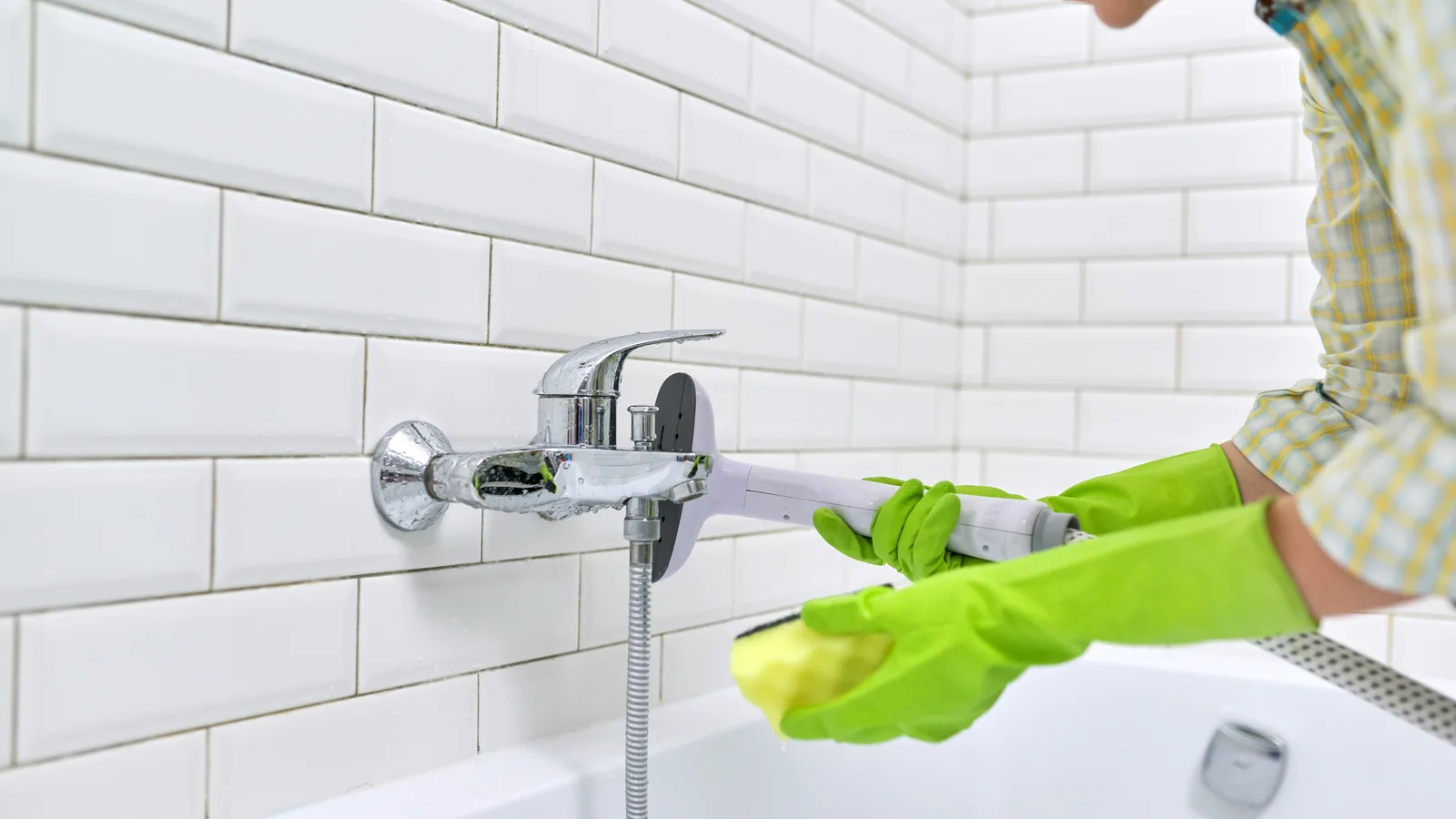
Winter is mold season in a bathroom. Windows stay shut, hot showers run longer, and the moisture that would leave through an open window in July stays on the grout, the caulk and the ceiling. The Environmental Protection Agency's A Brief Guide to Mold, Moisture and Your Home draws a clear line between the mold a homeowner can clean up and the mold that calls for a professional, and the line is a measurement: about 10 square feet.
The 10-square-foot line
EPA's guide says that if the moldy area is smaller than about 10 square feet, roughly a 3-foot by 3-foot patch, most homeowners can handle the job themselves. Spotting along a tub surround, a dark band of grout or a patch on the ceiling above the shower usually falls under that. Above that size, or where there has been a lot of water damage, EPA points to its more detailed remediation guidance written for schools and commercial buildings, and to professional help.
EPA lists the other cases where a homeowner should not take it on alone:
- The water involved was sewage or other contaminated water.
- Mold may be inside the heating and cooling system. EPA says not to run the system in that case.
- Mold is suspected behind walls, under flooring or in other hidden spaces.
- Anyone in the house has health concerns. EPA recommends talking to a health professional before starting.
Fix the water first
The guide's first rule is that a mold cleanup is not finished until the moisture problem behind it is fixed. In a bathroom that usually means one of two things: a leak (a supply line, a wax ring, failed caulk or grout letting water into the wall) or plain humidity with nowhere to go. Water-damaged materials should be dried within 24 to 48 hours, EPA says, because that is the window in which mold gets established.
Cleaning a small patch
- Gear up. EPA recommends an N-95 respirator that fits properly, which it prices at about $12 to $25, gloves that reach the middle of the forearm, and goggles without ventilation holes. For gloves used with a disinfectant or strong cleaner, it names natural rubber, neoprene, nitrile, polyurethane or PVC.
- Scrub hard surfaces with detergent and water, then dry them completely. Tile, glass, porcelain and sealed surfaces clean up this way.
- Replace what cannot be cleaned. Porous materials that have grown mold, such as ceiling tiles and carpet, may have to be thrown out, EPA says, because mold grows into the material itself.
- Do not paint or caulk over mold. Clean and dry the surface first. Paint over mold tends to peel.
On bleach
EPA does not recommend routine use of bleach or other biocides in mold cleanup. A professional may use one in specific situations, for example where someone with a weakened immune system lives in the house. The agency notes that dead mold can still cause allergic reactions, so it still has to be removed, not just killed. Anyone who does use bleach should ventilate the room and never mix it with cleaners that contain ammonia.
Keeping it from coming back
For bathrooms in particular, EPA's prevention advice is to run the exhaust fan or open a window during and after showers and to clean more often. It also sets a humidity target for the whole house: keep indoor relative humidity below 60 percent, ideally between 30 and 50 percent. A hygrometer, which EPA says costs about $10 to $50, shows where a house sits. A bathroom fan that runs but leaves the mirror fogged long after a shower is a sign the fan is not moving enough air or the duct is not reaching the outside, both of which a contractor can check.
A small patch scrubbed once and gone is a cleaning job. Mold that returns to the same spot after cleaning, or a stain that spreads on a ceiling, points to the moisture problem underneath it, and that is where EPA says to look first.
Loading comments…