












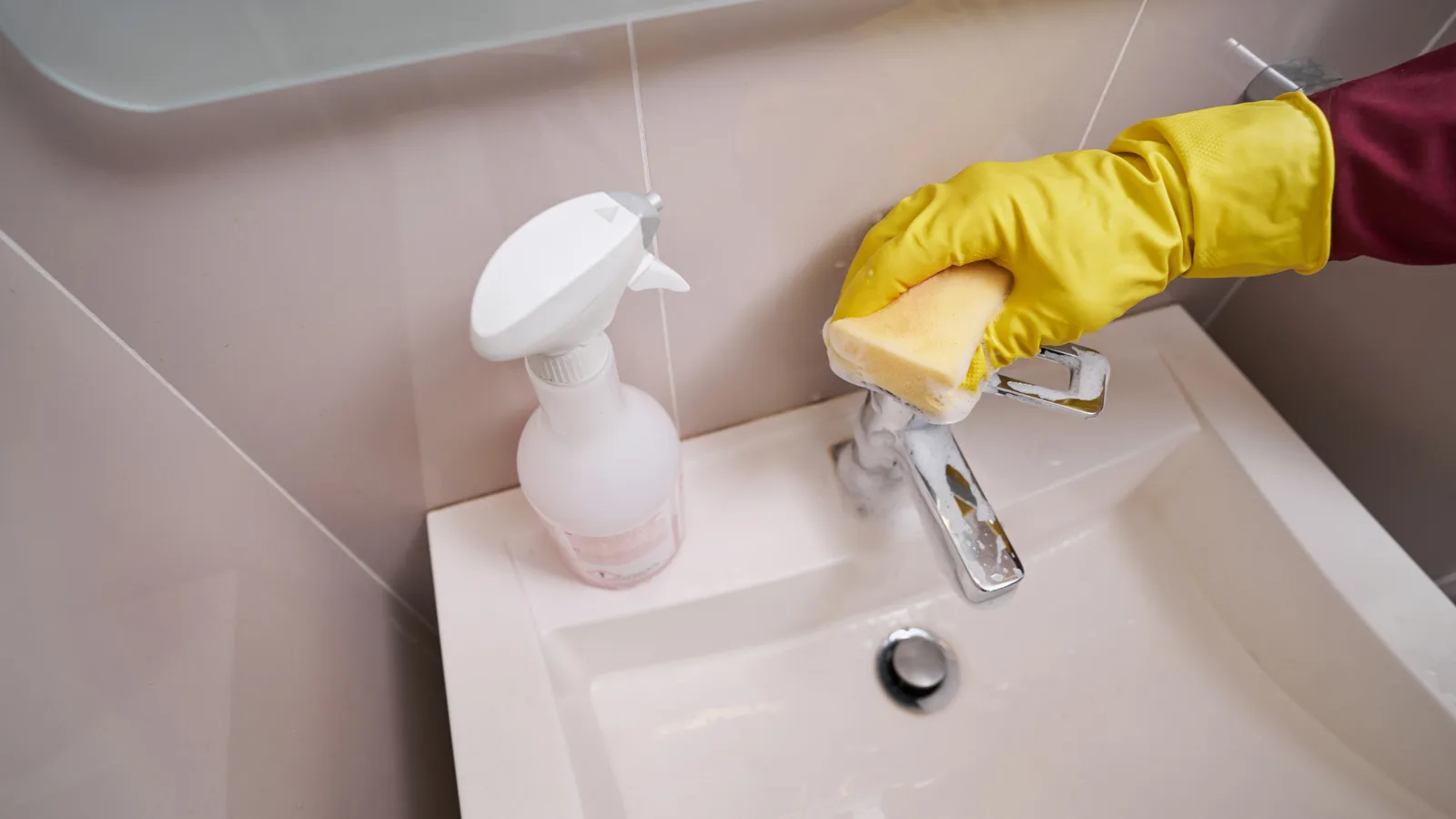
The bleach to water ratio the Centers for Disease Control and Prevention (CDC) gives for disinfecting a household surface is 5 tablespoons, which is one third of a cup, of bleach in a gallon of room-temperature water. For a smaller batch, the agency's figure is 4 teaspoons in a quart. That recipe applies only when the bottle's own label gives no dilution directions, and it comes with conditions about which bleach qualifies, how long the surface stays wet and how long the mixed solution keeps. The guidance is on the CDC's page on cleaning and disinfecting with bleach, dated April 24, 2024.
Most days, soap and water is the job
The CDC separates cleaning from disinfecting. Cleaning with soap or detergent and water removes most germs from surfaces in most situations, the agency says, and disinfecting a home is likely not needed unless someone in the house is sick or a sick person has recently visited. Cold and flu season, and a house about to fill with holiday guests, is when the question tends to come up.
When disinfecting is called for, the order matters. A surface that is visibly dirty gets cleaned with a soap or detergent product first, and the bleach solution goes on after that.
Which bottle counts
The CDC's instructions cover regular, unscented household bleach with a sodium hypochlorite concentration of 5 percent to 9 percent. The concentration is printed on the label. The agency says not to use a bleach that falls outside that range or that does not state its concentration, and it notes that some laundry bleaches and splashless bleaches are not appropriate for disinfecting.
The label comes first in every case. If it gives dilution and application directions, those are the ones to follow, including any protective equipment it names. The CDC's recipe is the fallback for a bottle that has none.
The recipe, the minute and the 24 hours
- Mix: 5 tablespoons (1/3 cup) of bleach per gallon of room-temperature water, or 4 teaspoons per quart.
- Apply and wait: follow the manufacturer's contact time. If the label gives none, the CDC says to leave the solution on the surface for at least 1 minute before wiping or removing it. The surface should stay visibly wet for that whole time.
- Ventilate: open windows and doors while working, and check the label to see whether gloves or eye protection are called for.
- Make it fresh: a diluted solution loses strength. The CDC says to mix a new batch daily, because the solution is no longer effective after more than 24 hours.
- Wash up: wash hands after cleaning or disinfecting.
A spray bottle of diluted bleach mixed last week, in other words, is not doing the job its owner thinks it is.
What bleach must never be mixed with
The CDC's rule is broad: never mix household bleach, or any disinfectant, with any other cleaner or disinfectant. The Washington State Department of Health's indoor air quality program explains the chemistry behind it. Sodium hypochlorite, the active ingredient in chlorine bleach, reacts with ammonia to produce toxic gases called chloramines, and with acids to release chlorine gas.
The trouble is that neither ammonia nor acid always announces itself. According to the department, ammonia turns up in some glass and window cleaners and in urine, which is why it advises caution when cleaning litter boxes, diaper pails and toilet bowls. Acids include vinegar, toilet bowl cleaners, drain cleaners, rust removers, some glass cleaners, some automatic dishwasher detergents and rinses, and brick and concrete cleaners. The department adds that bleach also reacts with some oven cleaners, hydrogen peroxide and some insecticides, and that many household products contain bleach without the word being prominent, so the label is the place to check.
Exposure to chloramine gas can cause coughing, shortness of breath, chest pain, wheezing, nausea, watery eyes and irritation of the nose and throat, the department says. Chlorine gas irritates the eyes, nose and throat even at low levels over a short time, and at higher levels can cause vomiting, severe breathing difficulty, pneumonia and fluid in the lungs. Very high levels can be fatal.
Where the mixing happens
The health department's lists point at the places in a house where the two chemicals meet without anyone deliberately combining them: a toilet bowl, where an acid-based bowl cleaner and bleach are both in common use; a sink drain, where a drain cleaner may already be sitting; a litter box or diaper pail, where the ammonia comes from urine and not from a bottle. The CDC's two instructions, one product at a time and windows and doors open, apply in each of those places.
If it goes wrong
The Washington department's instruction for anyone exposed to a chemical mixture who has symptoms is to contact a health care provider or call 911. Product labels usually carry a toll-free number for questions about that product.
For a household that would rather not dilute anything, the CDC's page links to the Environmental Protection Agency's lists of registered disinfectants, for other options. The practical step for today is to pick up the bleach already in the house and read two lines on it: the sodium hypochlorite percentage and the disinfecting directions. If either is missing, that bottle is for laundry.
Loading comments…