












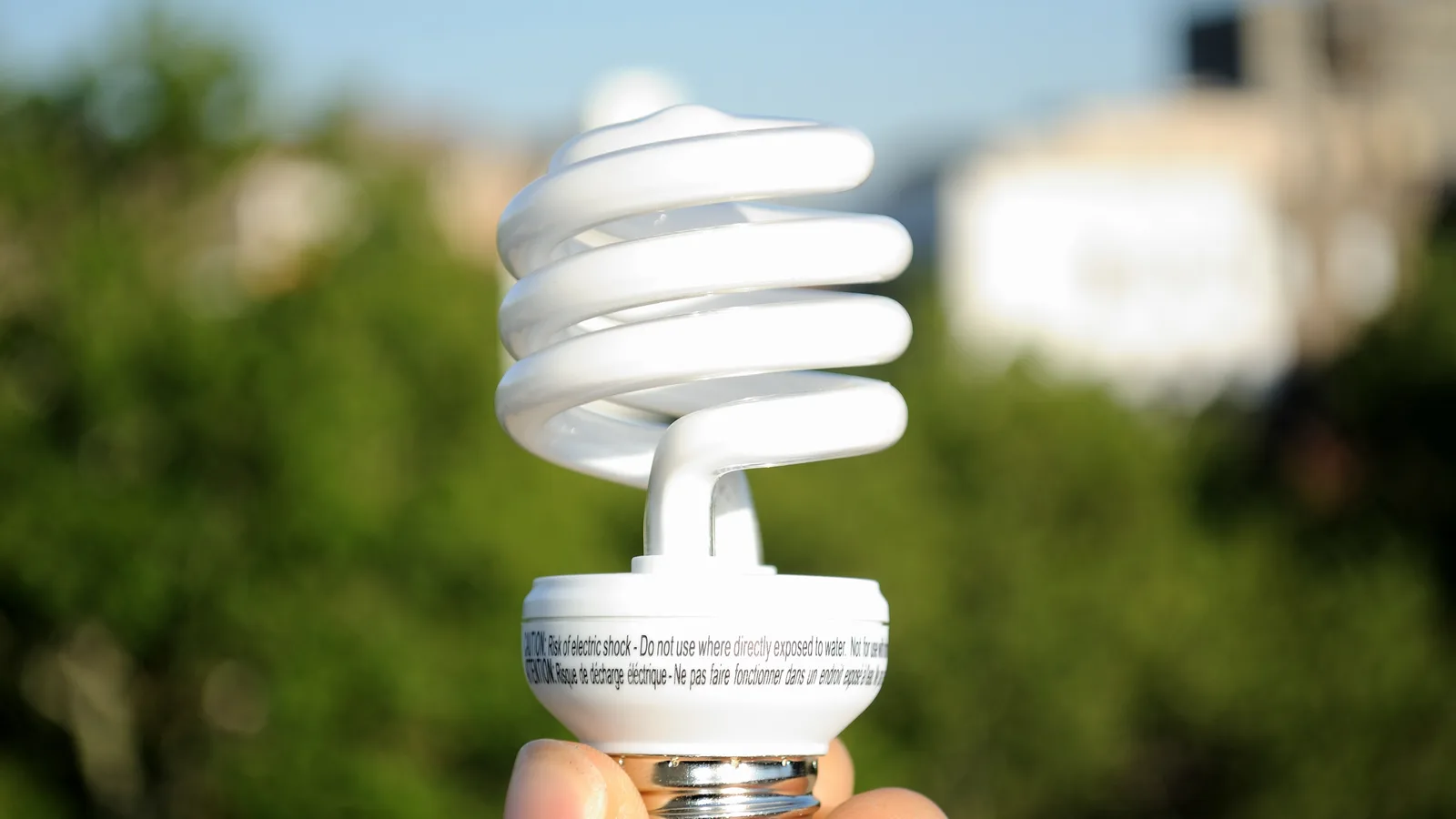
A compact fluorescent lamp (CFL) holds about 4 milligrams of mercury on average, sealed inside its glass tubing, according to the U.S. Environmental Protection Agency. An intact bulb releases none. When one breaks, part of that mercury can escape as vapor, and EPA has a specific cleanup sequence meant to keep the vapor out of the air you breathe and out of the rest of the house.
Winter is when many households handle the most bulbs: swapping out burned-out lamps as the days get shorter, moving fixtures to make room for decorations and pulling lamps from storage. A dropped CFL is a common result, and the steps below come from EPA's guidance on cleaning one up.
The first ten minutes
Get people and pets out of the room, steering them around the broken area so no one tracks glass or powder through the house. Open a window or an outside door and leave the room to air out for 5 to 10 minutes. If the house has central forced-air heating or cooling, turn it off so the system does not pull vapor into other rooms.
While the room airs out, gather supplies: stiff paper or cardboard, sticky tape such as duct tape, damp paper towels or disposable wet wipes for hard floors, and a glass jar with a metal lid. EPA lists a sealable plastic bag as the fallback when no jar is available, noting that plastic does not stop mercury vapor from escaping, so a bag has to leave the house as soon as cleanup is done.
Cleaning hard floors and counters
Scoop up the glass and powder with the stiff paper or cardboard and put the debris and the paper into the jar. Press tape onto the area to lift the small fragments and fine powder that the scoop missed, and add the used tape to the jar. Then wipe the spot with damp paper towels or wet wipes and put those in the jar as well.
Cleaning carpet and rugs
The sequence is the same without the wet wipes: scoop with stiff paper, lift what remains with tape, and put everything in the jar. Carpet fibers hold fine debris, which is why EPA adds instructions for later vacuuming of the same spot (covered below).
When vacuuming is and is not appropriate
EPA advises against vacuuming unless broken glass is still there after every other step. A vacuum can spread mercury vapor and powder through the room and its exhaust. If you do need it, keep the window or outside door open and use the hose attachment on the affected area if the vacuum has one. Afterward, remove the bag, or empty and wipe the canister, and seal the bag, the debris and anything used to clean the vacuum in a plastic bag.
For carpet or rugs, EPA also covers the next several times the area is vacuumed: turn off the forced-air system, close doors to other rooms, open a window or outside door, and change the vacuum bag after each use in that area. Keep the system off and the window open for several hours afterward when practical.
Getting the debris out of the house
Move the sealed jar or bag and all cleanup materials outdoors promptly, to an outside trash can or another protected spot. Nothing from the cleanup should stay inside. Wash your hands with soap and water after handling the containers. Leave the room aired out and the heating or cooling off for several hours, as practical.
Disposal rules vary by place. EPA says some states and localities require fluorescent bulbs, broken or whole, to go to a recycling center, and that household trash is acceptable only where no such rule applies. EPA names California, Maine, Massachusetts, New Hampshire, Vermont and Washington as states that bar mercury-containing lamps from landfills. EPA's guidance also points to the national Poison Help line, 1-800-222-1222, for questions about an exposure.
Bulbs that are still whole
EPA recommends recycling unbroken CFLs over putting them in the trash. Options it lists include household hazardous waste collections run by local waste agencies (usually free, sometimes held only once or twice a year), in-store recycling at some hardware and home stores, and prepaid mail-back kits. Not every store location takes bulbs, and some take CFLs but not 4-foot tubes, so EPA suggests calling first. Store spent bulbs in their original boxes or the boxes from replacements, since recyclers generally want them unbroken.
LED bulbs avoid the problem entirely. A December 2015 fact sheet from the Interstate Mercury Education and Reduction Clearinghouse (IMERC), a program of northeastern state environmental agencies, states that LED lamps contain no mercury.
Before the next bulb swap
Put a glass jar with a metal lid, a roll of duct tape and a piece of cardboard in the place where spare bulbs are kept, and look up your town or county's household hazardous waste schedule now, so a broken or burned-out CFL has somewhere to go the day it happens.
Sources
- U.S. Environmental Protection Agency: Cleaning Up a Broken CFL
- U.S. Environmental Protection Agency: What are the Connections between Mercury and CFLs?
- U.S. Environmental Protection Agency: Recycling and Disposal of CFLs and Other Bulbs that Contain Mercury
- U.S. Environmental Protection Agency: Health Effects of Exposures to Mercury
- Interstate Mercury Education and Reduction Clearinghouse (hosted by EPA): IMERC Fact Sheet, Mercury Use in Lighting
Loading comments…