












The first cold weeks of fireplace season bring a familiar surprise: a beetle on the hearth, ants on the rug, or a sawdust trail from the log basket. Extension entomologists at the University of Illinois and Purdue University say most of it comes from the firewood itself, and that a few storage habits solve nearly all of it.
What lives in firewood
Illinois Extension lists three main groups. Wood-boring beetles, including longhorned beetles, metallic wood borers and bark beetles, spend their larval stage feeding inside the wood, and the adults are what crawl out. Carpenter ants do not eat wood but nest in damp or decaying wood, especially wood that has sat on the ground for a long time. Termites nest in the soil and tunnel into firewood stacked directly on the ground. Spiders, cockroaches, pill bugs, wasps and praying mantis egg cases turn up too.
Will they spread into the house?
For the most part, no. Illinois Extension says insects that emerge indoors are a nuisance rather than a threat, because the wood in a finished house and its furniture is too dry for them to live in. Penn State Extension says the same of carpenter ants carried in with firewood: the workers cannot start a nest or damage the house.
Termites are the one that calls for a closer look. Purdue Extension notes that termites brought in on firewood will not infest the structure, but finding termites in wood stacked near the house may be a sign to have the house itself inspected.
How to store it
Both extension services give the same distance. Keep the stack at least 3 feet from the house, garage, shed or any other structure. Wood piled against a wall holds moisture against the siding, invites insects to move from the pile to the building, and dries more slowly.
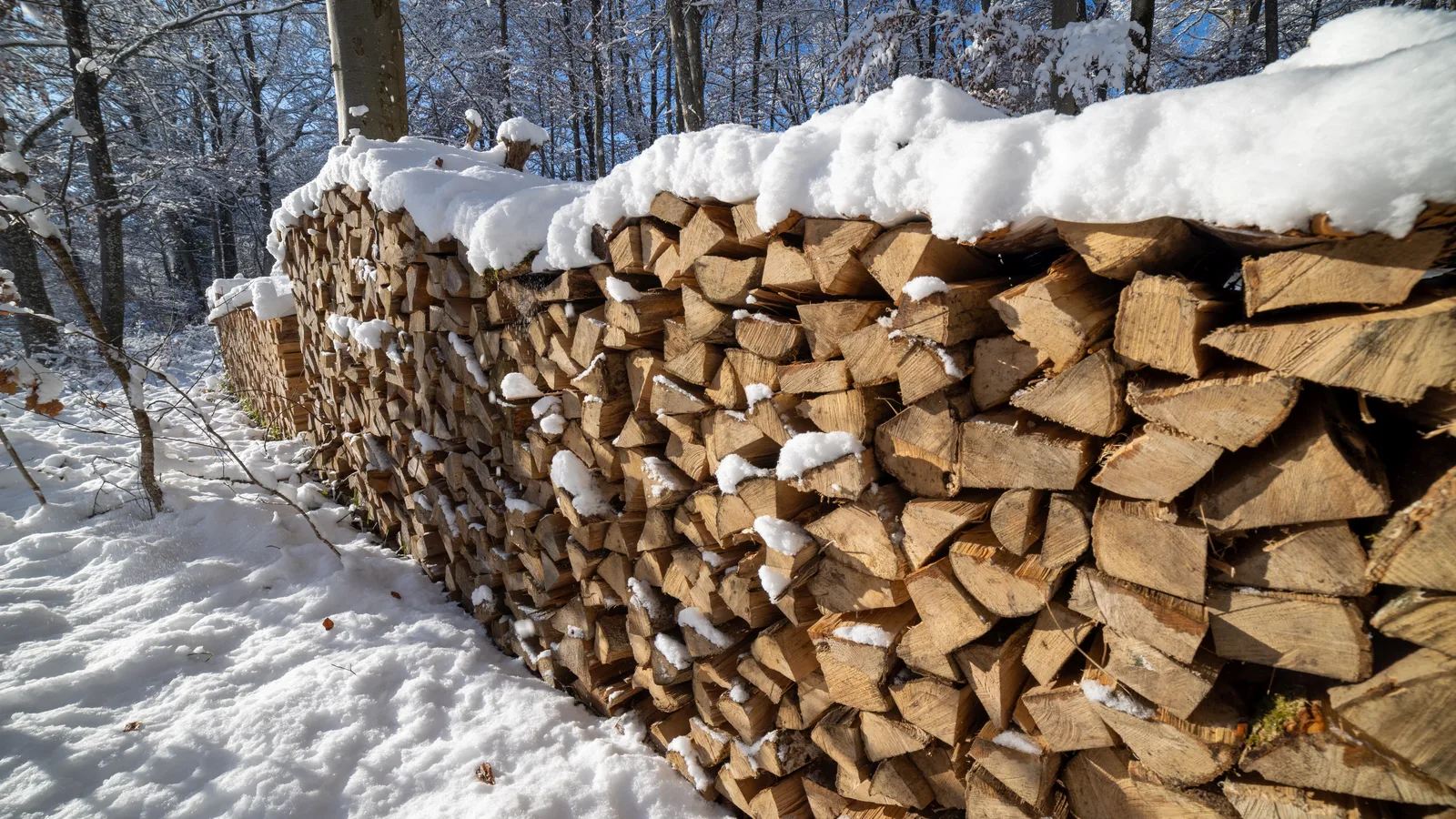
Get the wood off the ground on a rack, pallets or rails. Illinois Extension says that makes it harder for termites to reach and helps the wood dry faster, and drier wood is less hospitable to insects of every kind. Cutting and stacking in mid to late fall, as Purdue Extension advises, gives wood time to dry before the next season.
How much to bring in
Bring in only a day or two of wood at a time. Both Illinois and Purdue Extension give that limit for the same reason: insects in a log stay dormant in the cold, and the longer the wood sits in a warm room, the more likely anything inside it warms up and emerges.
What not to do
Do not spray firewood with insecticide. Illinois Extension is direct about it: pesticides will not reach insects already bored into the wood, and burning treated wood can produce harmful fumes. Vacuum up anything that emerges indoors instead.
If you find termites in the stack, or carpenter ants keep appearing indoors when no firewood is in the house, that is the point to call a licensed pest management professional to inspect the structure.
Loading comments…