












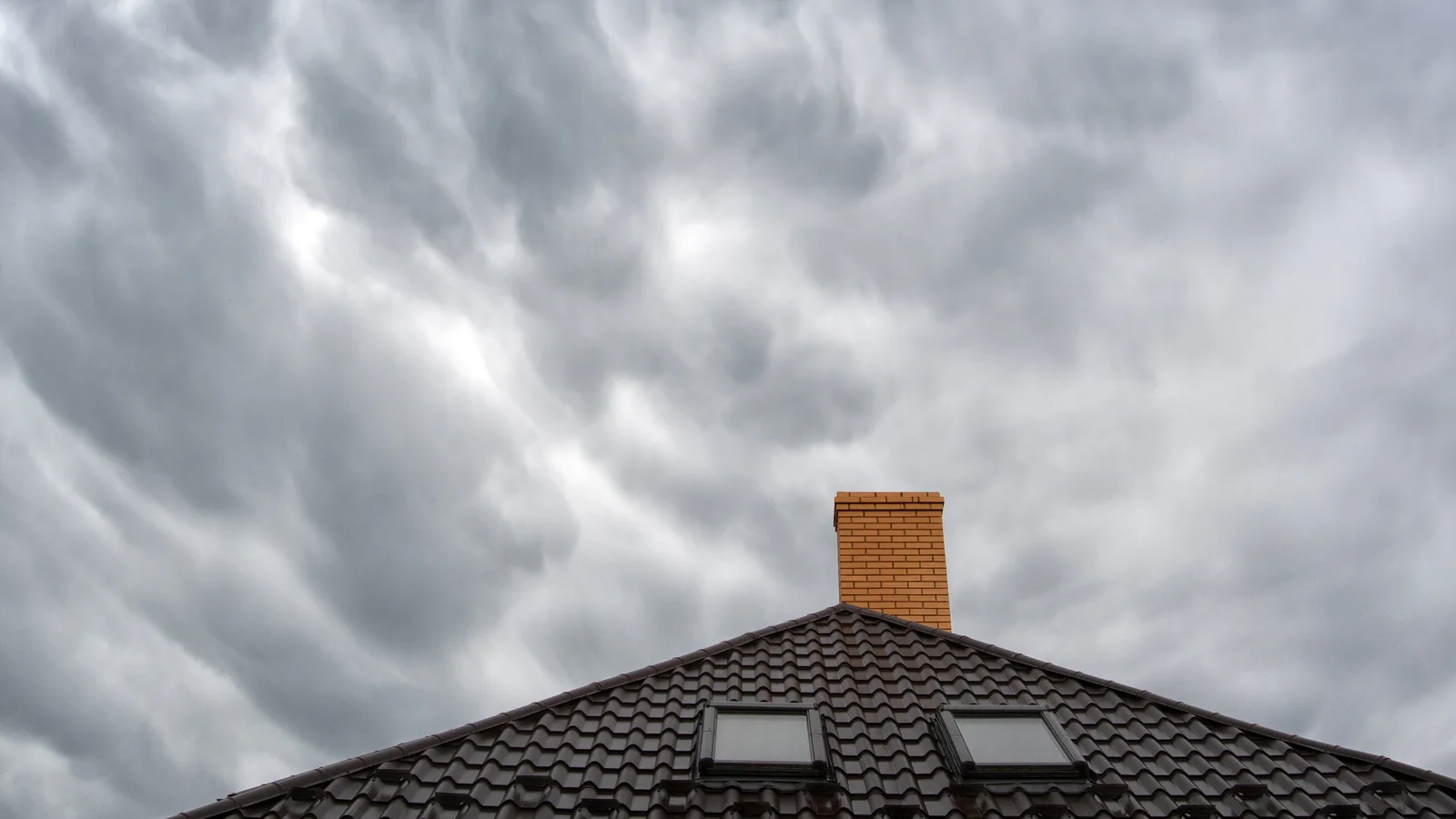
After a winter windstorm, the safest first look at a roof is from the ground. IKO, one of the larger North American shingle makers, says that unless someone has experience working at heights and the right safety equipment, the check should stay at street level, with a professional roofer doing any closer inspection. A wet or icy roof adds to the risk, since shingles, flashing and ladder rungs all become slick.
What to look for from the yard
Walk the full perimeter of the house in daylight, and look at each roof plane from far enough back to see it whole. Binoculars help. Owens Corning's storm checklist and IKO's guidance name the signs that can be seen from below:
Missing shingles. Gaps in the pattern, or shingles lying in the yard, on the driveway or in flower beds.
Lifted, curled or cracked shingles. Owens Corning notes that a shingle that has lifted can break the seal that keeps wind-driven rain out, even if it settles back down. Edges that look raised or out of line with their neighbors are worth noting.
Torn or dented shingles and dark patches. IKO says patches of exposed black asphalt, where the surface granules are gone, point to damage, often from hail.
Damaged gutters and roof accessories. Dents in gutters, gable vents and other roof hardware, or gutters pulled loose or clogged with storm debris that stops them from draining.
Debris on the roof. Anything from small branches to large limbs. A limb resting on the roof should be removed by a professional, not pulled down from a ladder.
Then go inside. Owens Corning recommends checking ceilings, light fixtures and the attic with a flashlight for water spots or active leaks, since a leak can stay hidden for a while before it shows.
Document it before anything is cleaned up
The National Association of Insurance Commissioners, the group of state insurance regulators, says to document all losses before removing debris or belongings: photograph or film the damage and list what was damaged or lost. Wide shots of each side of the house, close shots of each problem area, and a note of the date and time of the storm help. Keep any shingles or pieces that came off, since the NAIC suggests holding damaged items so the insurer can inspect them.
Contact the insurer promptly. The NAIC notes that the time allowed to report a claim varies by state, and that it helps to know the policy's deductible before calling. The insurer typically sends its own adjuster at no cost to inspect the roof, the exterior and any temporary repairs.
The duty to limit further damage
Homeowners policies generally expect the owner to take reasonable steps to keep damage from getting worse, which the NAIC says policies call mitigation. After documenting the damage, that can mean a tarp over a hole in the roof or plywood over a broken window. The NAIC says insurers typically reimburse the cost of those temporary repairs when the loss itself is covered, so keep every receipt. A roofer can install a tarp; climbing a damaged, wet roof to do it alone is the kind of work IKO advises leaving to a professional. The NAIC also notes the adjuster may want to see estimates before permanent repairs begin.
Hiring a roofer, and spotting a storm chaser
Contractors who travel from storm to storm can turn up in a neighborhood soon after the wind dies down. The Federal Trade Commission's guidance on scams after weather emergencies lists the warning signs: a contractor who says no license is needed, offers a discount only for signing on the spot, wants full payment up front or in cash, asks for a signature on a contract with blank spaces, or will not show a license, proof of insurance or a written contract.
The FTC recommends confirming a contractor's license with the state or county, asking for proof of insurance, getting more than one written estimate, and getting a written contract that lists the contractor's name, address, phone and license number, start and finish dates, the payment schedule and any verbal promises. If the contract is signed at home, it should include the right to cancel within three business days. Pay by credit card or check, hold the final payment until the work is done, and never sign an insurance check over to a contractor. Licensing rules for roofers differ by state, so the state licensing board or attorney general's consumer office is the place to confirm what applies locally.
Suspected scams can be reported to the FTC at ReportFraud.ftc.gov and to the state attorney general.
The next step: photograph every side of the roof from the ground today, check the attic for water, call the insurer with the policy number ready, and get the license number of any roofer before agreeing to an inspection.
Electrical, gas, roof and ladder work can cause serious injury. Shut off power or gas first, follow the manufacturer's instructions and local code, and hire a licensed pro for anything beyond your experience.
This article reports rules, data and expert guidance. It is not legal, tax, insurance or financial advice. Talk to a licensed pro, your tax advisor or your insurer before you act on it.
Sources
- IKO: The Storm Is Over. Now What?
- Owens Corning Roofing: Roof Storm Damage Checklist
- National Association of Insurance Commissioners: Navigating the Claims Process: Recover and Rebuild
- National Association of Insurance Commissioners: What You Need to Know When Filing a Homeowners Claim
- Federal Trade Commission: How To Avoid Scams After Weather Emergencies and Natural Disasters
Loading comments…