












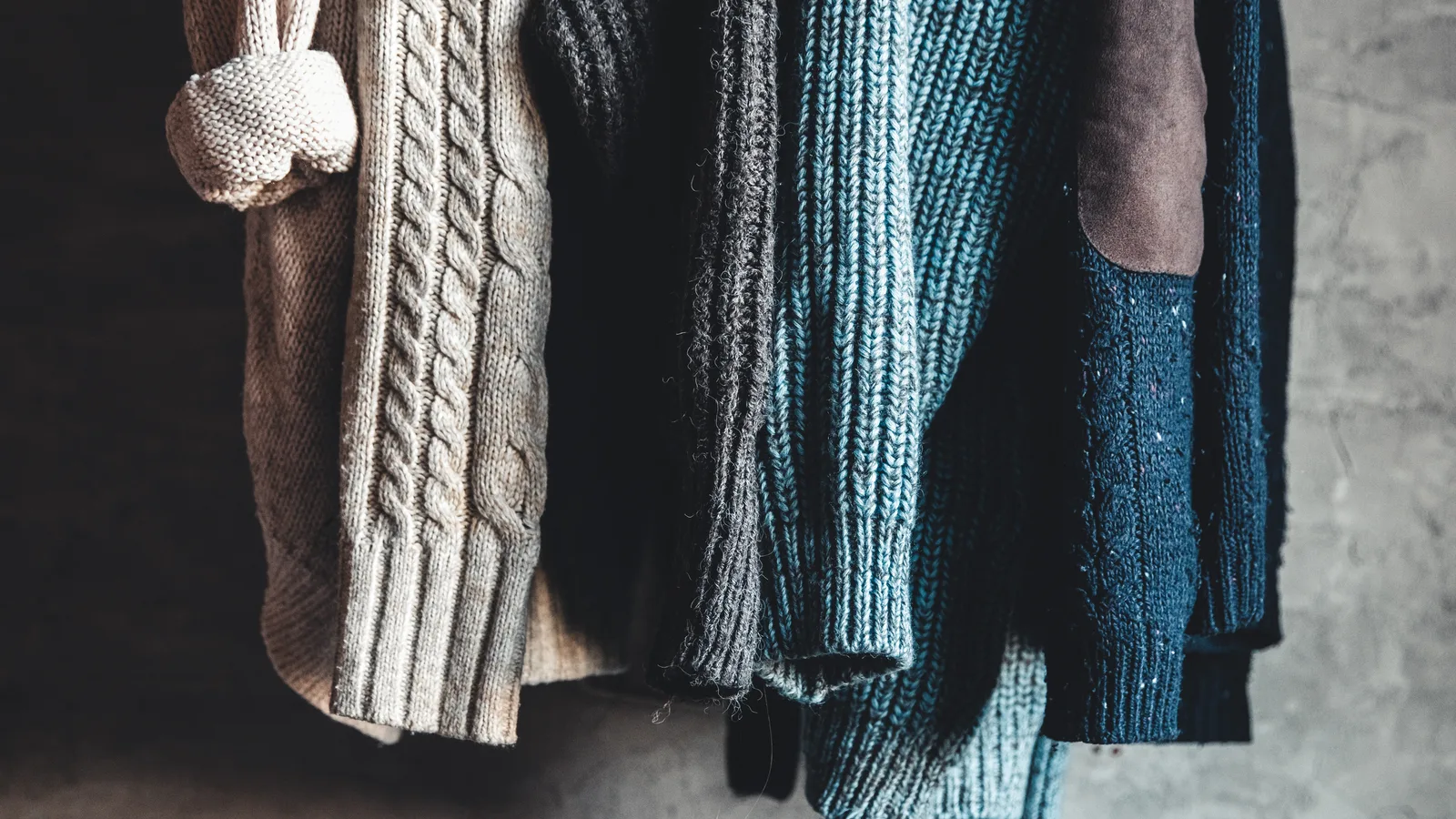
Pulling the wool sweaters and coats out of storage for winter is when most households find the damage: small holes, thin patches where the fibers look grazed, sometimes a bit of silk webbing in a fold. The cause is nearly always the larvae of one of two clothes moths, and the University of California's Statewide Integrated Pest Management Program lays out how to confirm it and get rid of them without guessing.
Which moth it is
UC IPM's Pest Notes on clothes moths cover the two species found in homes. The webbing clothes moth is the more common and does more damage. Its adults are gold, with reddish-golden hairs on top of the head and a wingspan of about half an inch. The casemaking clothes moth is about the same size, with browner wings marked by faint dark spots.
Both are weak fliers that are not drawn to lights. They tend to flutter close to the infested closet or rug rather than fly across a room. A moth that flies steadily around the kitchen and is roughly twice as long is a pantry moth, a different pest with a different fix.
The adults do no harm. The damage comes from the larvae, which are shiny white with dark heads. Webbing clothes moth larvae spin temporary silk feeding tubes; casemaking larvae carry a silk case, cigar shaped and about three-eighths of an inch long, that takes on the color of the fabric they are eating.
What they eat, and why some sweaters get hit
The larvae feed on animal fibers: wool, fur, felt, carpets and rugs, upholstery and the bristles of natural brushes. They will eat a cotton or synthetic blend when wool is in it. UC IPM notes that soiled fabric is far more attractive than clean fabric, so a sweater put away with food, sweat or other stains is the likeliest to be damaged. Damage tends to be in hidden places: under collars and cuffs, in upholstery crevices and on carpet under heavy furniture.
Signs to look for
- Silk tubes or matted patches of silk with fibers and droppings in them, often in folds and seams.
- Fibers grazed off the surface, or holes.
- Fur with hairs clipped at the base.
- Small open-ended cases clinging to the fabric.
Beyond the closet, the guide lists baseboards, cracks where hair and lint collect, under heavy furniture, and inside heater housings and vents.
How long they have been at it
A female lays 40 to 50 eggs over two to three weeks, glued to the threads of the fabric. In warm conditions the eggs hatch in four to ten days, and the larval stage can last anywhere from about five weeks to two and a half years, depending on temperature and food. A heated house lets them keep developing through the winter.
Killing them in what is already infested
UC IPM gives four ways to treat an item, and says to check first whether the fabric can take heat or cold:
- Wash it. Laundering for 20 to 30 minutes in water of at least 120°F is the most effective method, for items that can take hot water.
- Dry clean it, which may be the only option for many woolens.
- Freeze it. Seal the item in a plastic bag and keep it in the freezer below 18°F for several days.
- Heat it. At least 30 minutes above 120°F, where the fabric tolerates it.
For the closet itself, take everything out, vacuum and wash the shelves and especially the cracks, and empty or throw out the vacuum bag promptly, because it can hold eggs and larvae. Brushing woolens outdoors in the sun, along seams, folds and pockets, knocks eggs and larvae loose.
Storing them so it does not happen again
Clean, moth-free items go into airtight containers. The guide is specific about the common remedies:
- Cedar. Eastern red cedar oil kills small larvae but not large ones, and the effect fades after a few years. A tightly built chest matters more than the wood.
- Mothballs, flakes and crystals made with paradichlorobenzene are toxic, must be kept away from children and pets, leave an odor and can soften plastic buttons and hangers. Their vapors kill only in a truly airtight container; in an ordinary closet they mostly repel adults while larvae keep feeding.
- Pheromone traps catch male clothes moths and help show whether an infestation is still active, but they do not solve one on their own.
UC IPM says most households can handle clothes moths themselves. A heavy or widespread infestation, stuffed furniture where larvae are deep inside, or valuable furs and textiles are cases for a licensed pest control operator or a professional fumigation or storage firm.
Loading comments…