












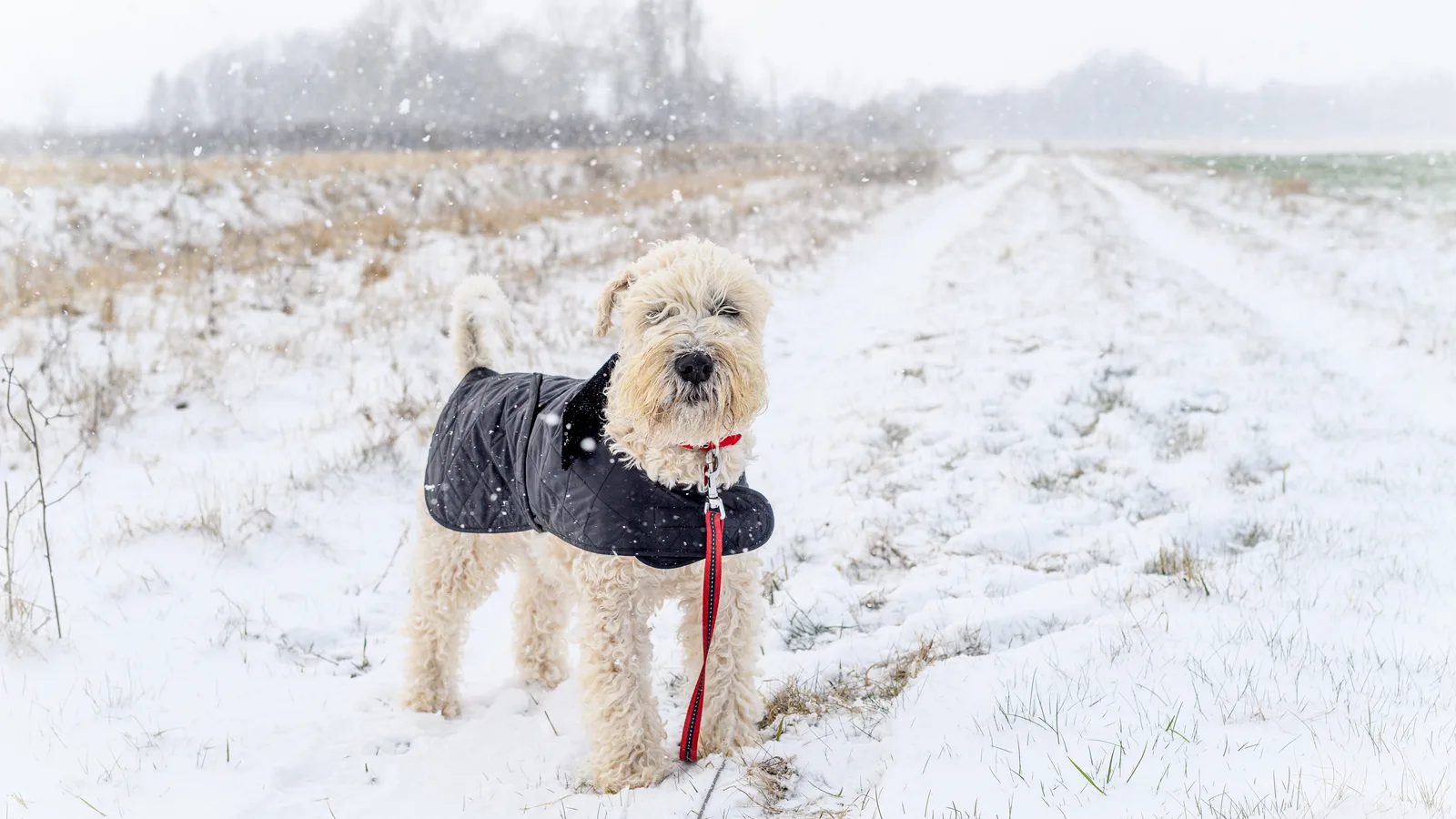
More dogs are lost during winter than during any other season, according to the American Society for the Prevention of Cruelty to Animals (ASPCA). The reason the organization gives is scent: a dog can lose it in snow, and with it the trail home. That is one of ten points in the cold-weather guidance the ASPCA publishes for pet owners, and most of the ten concern ordinary household routine: where a pet sleeps, how often it is bathed, what it wears and what happens at the door after a walk.
The baseline: indoors
The ASPCA's starting rule is a comparison. If it is too cold for a person, it is probably too cold for a pet, and animals should be kept inside. Left outdoors, the organization says, pets can freeze, become disoriented, or be lost, stolen, injured or killed.
The rule does not come with a temperature, and the guidance does not sort breeds into those that can and cannot stay out. It treats outdoor time in cold weather as something to limit for every pet.
A parked car is not shelter
The warning about pets in parked cars is usually a summer one. The ASPCA has a winter version. A car in cold weather acts like a refrigerator, holding the cold in, and an animal left alone in one can freeze to death, the organization says. Its instruction is not to leave pets alone in a car in cold weather.
Leash and tag
Because snow and ice interfere with scent, the guidance says never to let a dog off the leash on snow or ice, and especially not during a snowstorm. It pairs that with identification: a dog should wear an ID tag at all times. A collar check takes a minute and is worth doing before the first snowfall.
The coat a dog already has, and the one it may need
The ASPCA says never to shave a dog down to the skin in winter, because a longer coat provides more warmth. For a long-haired dog, a trim is enough to cut down on the ice balls, salt crystals and de-icing chemicals that cling to fur and dry the skin, and the hair between the toes should be trimmed too.
For a short-haired dog, the organization suggests a coat or sweater, and it describes the fit: a high collar or turtleneck, with coverage from the base of the tail to the belly.
Skin, baths and the air indoors
Going repeatedly from cold air outside to a heated house can cause itchy, flaking skin, the ASPCA says. Its guidance for that has three parts. Keep the home humidified. Towel a pet dry as soon as it comes inside, with attention to the feet and the spaces between the toes, where snow packs into balls. And bathe pets as little as possible during cold spells, because frequent washing strips the oils that protect the skin. When a bath cannot wait, the organization suggests asking a veterinarian to recommend a moisturizing shampoo or rinse.
Paws at the door
The guidance calls for washing and drying a pet's feet and stomach after each walk to remove ice, salt and chemicals, and checking the paw pads for cracks and the skin between the toes for redness. Before a walk, petroleum jelly or another paw protectant a veterinarian approves can be massaged into the pads, and booties add more coverage. A towel carried on a long walk lets an owner clean irritated paws along the way. The chemicals themselves, ice melt and antifreeze, were the subject of an earlier article here; the ASPCA's point in this guidance is the routine at the door.
Food, water and a bed off the floor
Pets burn extra energy keeping warm, the ASPCA says, and feeding a little more in the winter months supplies the calories. Plenty of water keeps a pet hydrated and its skin less dry. How much more food is right for a given animal is a question for its veterinarian, since the guidance gives no amounts.
For sleep, the organization describes the spot: warm, off the floor and away from all drafts, with a bed and a blanket or pillow. In a house with tile or a concrete slab, off the floor is the part that takes some arranging.
Who to call
For a pet that may have swallowed antifreeze or another toxic substance, the ASPCA says to contact a veterinarian or its poison control center at (888) 426-4435 immediately. The step for this week is smaller: read the tag on the collar, and put a towel by the door.
Loading comments…