












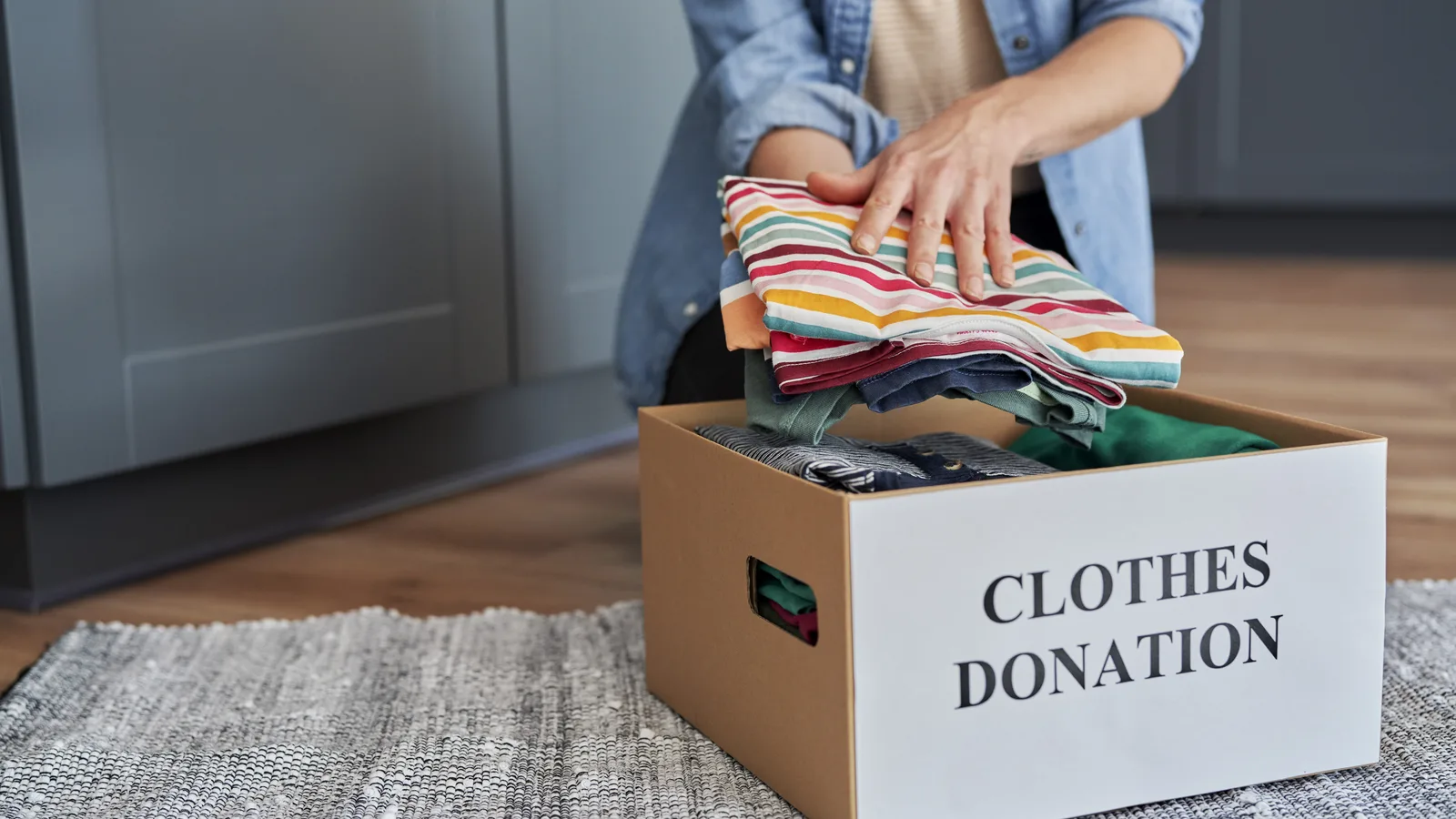
Under IRS rules, used clothing and household items given to a charity generally count for a tax deduction only if they are in good used condition or better, and only for the price a buyer would actually pay for them secondhand. That second point matters most for anyone loading the car with outgrown coats, spare bedding and an old dresser before the holidays: the figure the IRS recognizes is closer to a thrift store tag than to what the item cost new.
Who the rules apply to
IRS Publication 526, the 2025 edition used for returns filed in 2026, says a charitable contribution is generally deductible only for taxpayers who itemize on Schedule A of Form 1040. For anyone who takes the standard deduction, a bag of donated goods does not change the tax bill.
A new rule takes effect with tax year 2026. In a November 10, 2026 reminder (IR-2026-135), the IRS said taxpayers who do not itemize may deduct up to $1,000 of qualifying cash gifts to qualified charities, or $2,000 on a joint return. The same release states that noncash contributions, property included, do not qualify. Gifts to supporting organizations, and cash used to open or fund a donor advised fund, are also left out. Clothing, toys and furniture fall outside that new deduction.
What counts as a household item
Publication 526 lists furniture, furnishings, electronics, appliances and linens as household items. It sets apart food, paintings, antiques and other art, jewelry and gems, and collections, which follow their own valuation rules. Most of what comes out of a closet or a spare room during a holiday cleanout lands in the household category.
How the IRS values used goods
The IRS measures a donated item at its fair market value: what a willing buyer would pay a willing seller. Publication 561, revised December 2025, explains that used clothing and household goods are usually worth far less than their purchase price, and that prices paid at consignment and thrift shops are a useful guide. Furniture and electronics that have gone out of style may have little market value at all.
Publication 526 adds that a formula based on a percentage of replacement cost is not an acceptable way to set the value. Photos, receipts and statements from the charity can support the number, and the IRS says to keep that evidence with personal records rather than attach it to the return.
The paperwork rises with the dollar amount
The records the IRS expects scale with what is claimed for an item or a group of similar items:
- Under $250. A receipt from the charity with its name and address, the date and place of the gift, and a description of what was given. Where a receipt is not practical, such as an unattended drop box, Publication 526 calls for reliable written records with the same details, plus the condition of each clothing or household item, its value and how that value was reached.
- $250 or more. A contemporaneous written acknowledgment from the charity. It must describe the gift and state whether the donor received any goods or services in return, with a good-faith estimate of their value if so. It has to be in hand by the earlier of the date the return is filed or its due date, extensions included.
- More than $500. Form 8283 goes with the return. Per IRS Tax Topic 506, Section A covers noncash gifts above $500 and up to $5,000 per item or group of similar items.
- More than $5,000. A qualified appraisal signed by a qualified appraiser, plus Section B of Form 8283, which the receiving charity also completes in part. Publication 561 notes the appraisal fee itself is not deductible.
The one exception to the condition rule
An item that is not in good used condition can still be claimed if the amount claimed for that single item is more than $500. In that case, Publications 526 and 561 require a qualified appraisal from a qualified appraiser and a completed Section B of Form 8283, along with the written acknowledgment.
Checking that the charity qualifies
Not every group collecting donations can receive tax-deductible gifts. Publication 526 and Tax Topic 506 both point to the IRS Tax Exempt Organization Search tool at IRS.gov/TEOS, which lets anyone look up an organization by name or Employer Identification Number to see whether gifts to it qualify. Asking the organization directly is another option the IRS lists.
Before the first bag goes out
Sort what is in good used condition from what is worn out, photograph each group, write down what is in it, and ask for a receipt at the drop-off. Those few minutes produce the records the rules describe, whether or not the household ends up itemizing for 2026.
This article reports rules, data and expert guidance. It is not legal, tax, insurance or financial advice. Talk to a licensed pro, your tax advisor or your insurer before you act on it.
Loading comments…