












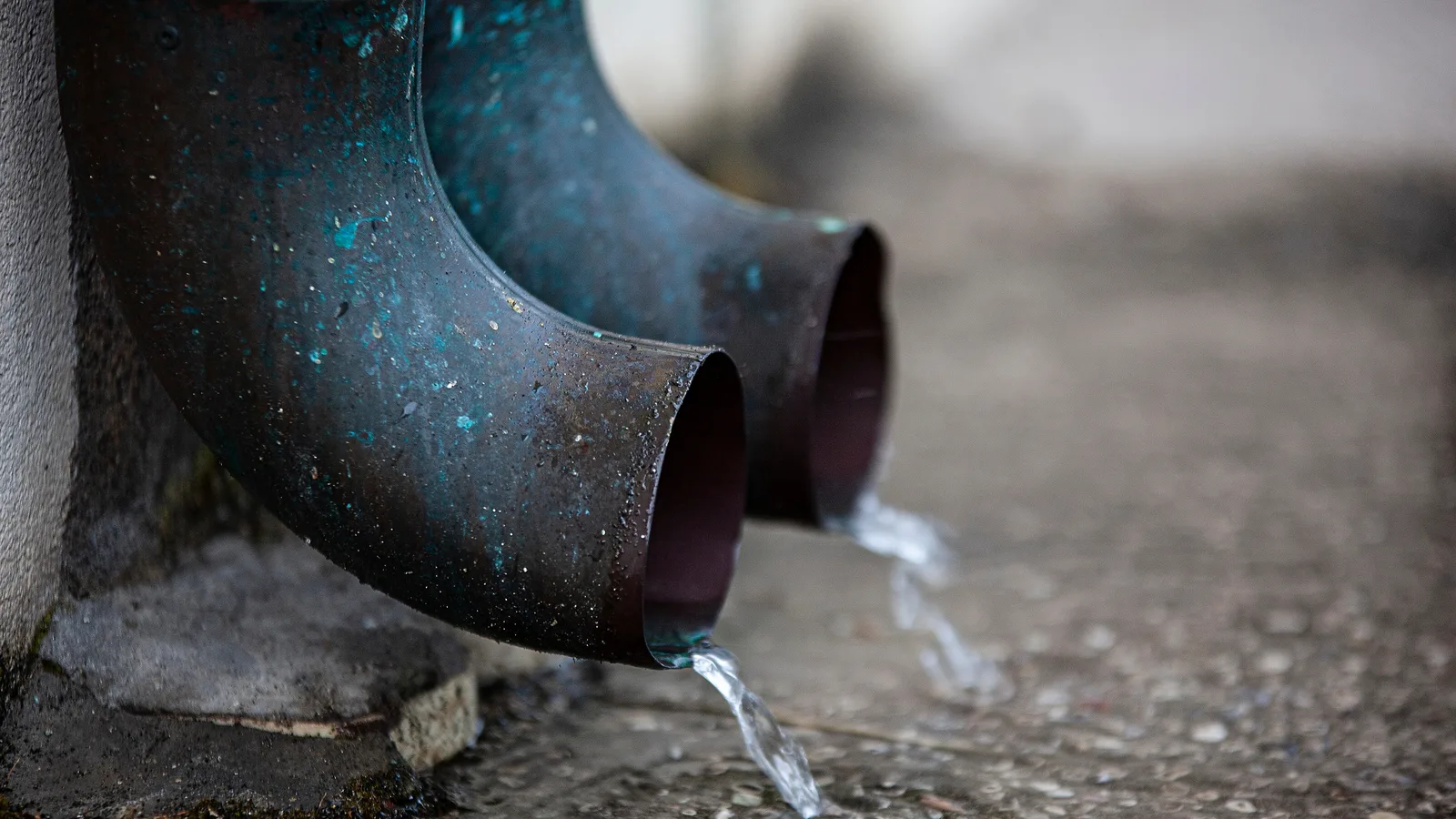
A roof collects a remarkable amount of water, and every gallon of it leaves through a few downspouts. Where those downspouts let it go decides whether it soaks into the yard or into the basement. Federal building guidance is consistent on the number: roof water should end up at least 5 feet from the foundation.
Late fall, after the leaves are down and before the ground freezes, is the time to check it.
What the guidance says
The Environmental Protection Agency's guidance on preventing mold tells homeowners to make sure gutter drains carry rainwater at least 5 feet away from the foundation, and that the ground next to the house should slope down and away from it, because water pooling at the foundation is a common source of indoor moisture problems.
The Department of Energy's Building Science Education guidance, which draws on the EPA's Indoor airPLUS program, sets the same line for new construction: route downspout piping to a sloped final grade more than 5 feet from the foundation, or, where the lot is tight, to an underground catchment system more than 10 feet away that is not connected to the foundation drain. Gutters and downspouts in new homes fall under the International Residential Code, and local code can require more.
Checking your own downspouts
The simplest test is a rainstorm. Walk the house during one, or run a garden hose into each gutter on a dry day, and watch where the water goes at the bottom of each downspout. The warning signs are water pooling against the foundation, a trench dug in the soil beside the house, a splash block that has tilted back toward the wall, or an extension that was knocked off by a mower and never put back.
Then look at the ground. Soil settles over the years, and a bed that once sloped away can end up sloping toward the house. Mulch and edging piled against the siding do the same.
Fixing it
Most fixes are simple. A downspout extension, flexible or rigid, attached to the elbow at the bottom of the downspout can carry water the full 5 feet. Point it toward ground that falls away from the house and away from a neighbor's lot, a walkway that will ice over, or a window well.
Where soil has settled, adding and compacting soil next to the foundation so it slopes away restores the drainage. Keep soil and mulch below the siding and any wood trim so the fix does not create a new moisture problem.
A buried pipe that carries water to a distant outlet or a dry well is a bigger job. Before digging, call 811 so underground utility lines are marked, and check with your town, since some municipalities regulate where roof runoff may be discharged and whether it may be tied into a storm sewer.
Gutters first
None of this works if the gutters overflow before the water reaches the downspout. Clearing them is ladder work. Set the ladder on firm, level ground, keep three points of contact, and do not lean out past the rails. If the roofline is two stories high or the gutters are hard to reach, a gutter or roofing contractor can clean them and check that they pitch toward the downspouts.
Electrical, gas, roof and ladder work can cause serious injury. Shut off power or gas first, follow the manufacturer's instructions and local code, and hire a licensed pro for anything beyond your experience.
Loading comments…