












A clothes dryer pushes hot, damp air through a screen, a duct and an outside vent, and every load leaves fiber behind somewhere along that path. Fire departments in the United States responded to an estimated average of 13,820 home fires a year in which a dryer was involved in the ignition from 2014 through 2018, according to the National Fire Protection Association. Those fires caused an average of seven civilian deaths, 344 injuries and $233 million in direct property damage a year.
The leading cause was not a defect. In the NFPA's analysis, 32 percent of home dryer fires were caused by a failure to clean, and 27 percent started when dust, fiber or lint ignited. The U.S. Fire Administration's more recent figure is close: failure to clean was the leading factor in home clothes dryer fires from 2018 through 2020, at 31 percent. Mechanical failures accounted for 27 percent of fires in the NFPA's numbers, and electrical failures for 16 percent.
Here is how the job breaks down, from the part cleaned every load to the part cleaned once a year.
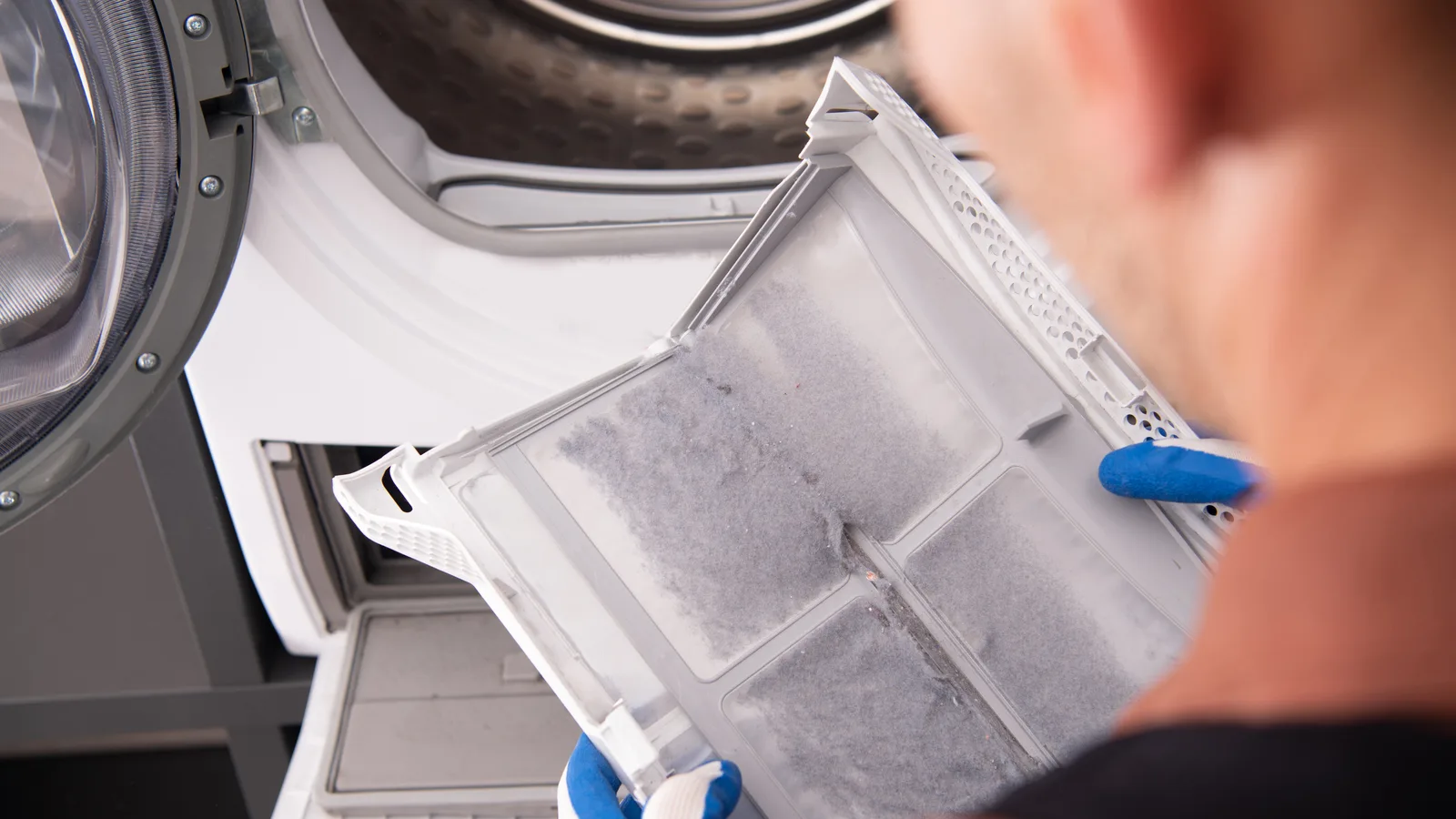
Every load: the lint screen
The NFPA's dryer safety tips say to clean the lint filter before or after each load, and never to run the dryer without the filter in place. Pull the screen, roll the lint off with fingers, and slide it back in until it seats. A CPSC survey of dryer owners found that only about 68 percent of those who cleaned the filter did it every load, as manufacturers recommend.
Watch for the signs of a blocked path
The NFPA lists a sign worth knowing: clothes that are still damp at the end of a normal cycle, or loads that take longer than usual, can mean the lint screen or the exhaust duct is blocked.
Once a year or sooner: the duct
The NFPA advises cleaning lint out of the vent pipe at least once a year, or more often if drying is taking longer than normal. Its desk reference for fire departments recommends every three months or hiring a dryer vent cleaning service. To do it yourself:
- Unplug an electric dryer. For a gas dryer, turn the gas supply valve off as well; the NFPA advises having gas dryers inspected by a qualified professional to make sure the gas line and connection are intact.
- Pull the dryer out from the wall and loosen the clamp holding the duct to the back of the machine.
- Run a dryer vent brush, sold in sections that screw together, through the duct from the dryer end, and vacuum out the lint it loosens. Vacuum the dryer's own outlet as well.
- Reattach the duct and push the dryer back without crushing or kinking it.
The duct material
The NFPA says rigid or flexible metal venting should be used to keep air flowing and drying times normal. The CPSC notes most manufacturers specify rigid or corrugated semi-rigid metal duct, and the U.S. Fire Administration recommends replacing coiled-wire foil or plastic venting with rigid, non-ribbed metal duct. Plastic and foil accordion ducts sag, kink and catch lint in their folds.
Outside: the vent hood
With the dryer running, go outside and check that the vent flap opens and that air is blowing out. The NFPA recommends checking periodically that the exhaust is not restricted and that the outdoor flap will open. Clear lint, leaves, nests and, in winter, snow from the opening.
The rest of the routine
The NFPA also advises keeping the area around the dryer clear of things that burn, such as boxes and cleaning supplies, and turning the dryer off when leaving home or going to bed. If a duct runs a long distance or through a wall or attic that cannot be reached, a dryer vent cleaning service has the tools to clean it end to end.
Electrical, gas, roof and ladder work can cause serious injury. Shut off power or gas first, follow the manufacturer's instructions and local code, and hire a licensed pro for anything beyond your experience.
Sources
- National Fire Protection Association: Home Dryer Fires (June 2020)
- National Fire Protection Association: Clothes Dryer Safety Tips
- U.S. Fire Administration: Appliance and Electrical Fire Safety
- U.S. Fire Administration: Clothes Dryer Fire Safety
- U.S. Consumer Product Safety Commission: Consumer Opinion Forum, Survey 3, Clothes Dryer Maintenance
Loading comments…