












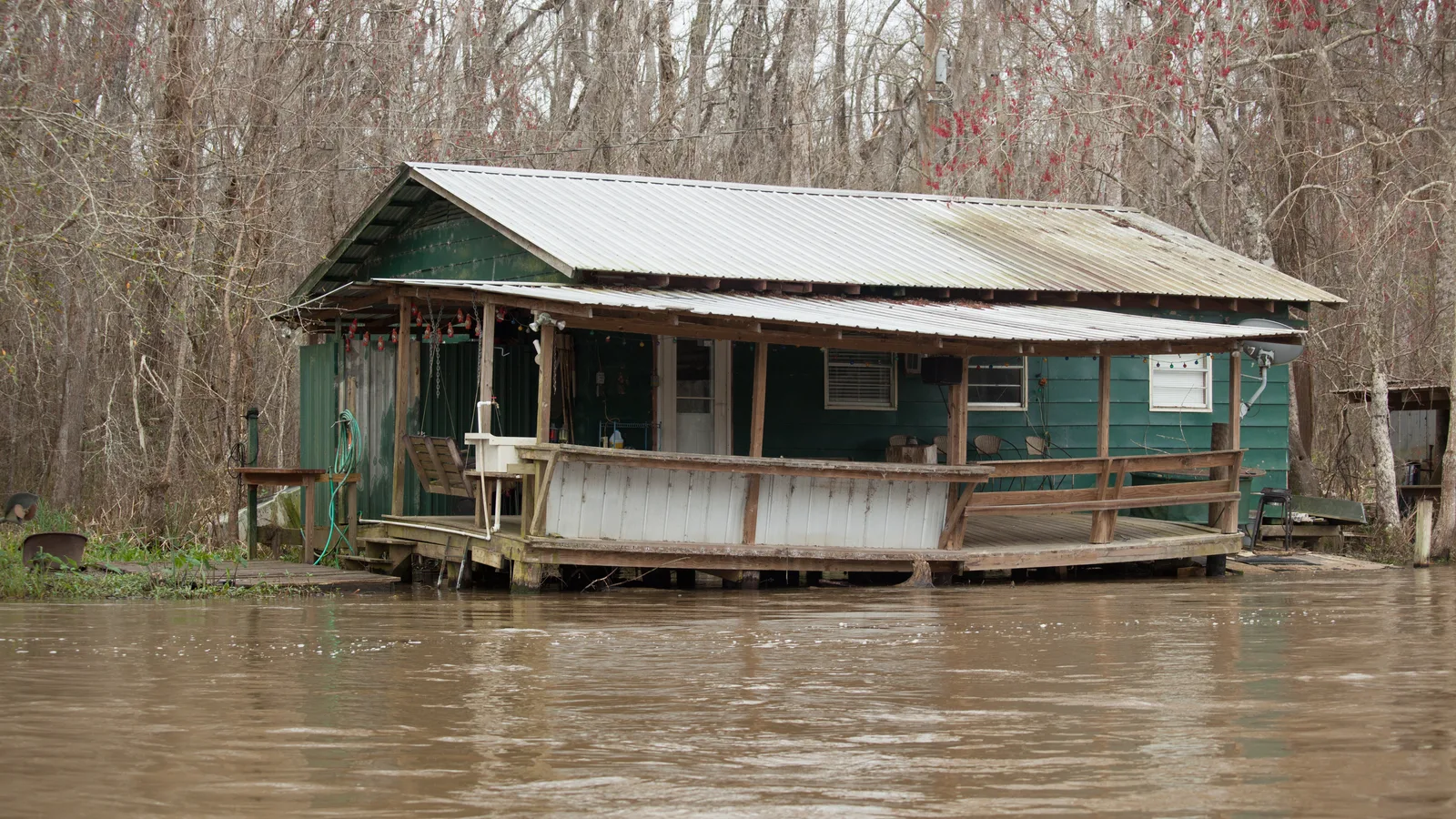
A home outside a mapped high-risk flood zone is not a home that cannot flood. According to the Federal Emergency Management Agency, which runs the National Flood Insurance Program, 29 percent of NFIP flood claims come from outside high-risk flood areas.
Your homeowners policy almost certainly excludes it
FEMA's guidance is plain on this point: most homeowners insurance does not cover flood damage. Water that rises from outside, from a river, storm surge, heavy rain overwhelming drainage or snowmelt, is a flood, and it is handled by a separate flood policy.
What an NFIP policy covers
- Building coverage, up to $250,000 for a home, pays to repair the structure and its systems.
- Contents coverage, up to $100,000, pays for belongings. It is bought separately from building coverage.
- Renters can buy contents-only coverage, up to $100,000.
- Anyone living in a community that participates in the NFIP is eligible, including condominium and townhouse owners. Policies are sold through insurance agents, and NFIP rates are the same whichever participating insurer sells the policy.
What it leaves out
FEMA lists several things an NFIP policy does not pay for, and the list surprises people after a flood:
- Personal property kept in a basement.
- Property outside the insured building, including landscaping, septic systems, decks, patios, fences and swimming pools.
- Temporary housing and other living expenses while the house is repaired.
- Cars and most other self-propelled vehicles.
- Currency, precious metals, stock certificates and other valuable papers.
Flood policies are also sold by private insurers outside the NFIP. FEMA notes that their costs can differ, and their limits and exclusions are set by each insurer, so a private quote is read line by line rather than compared on premium alone.
The 30-day wait
An NFIP policy generally takes effect 30 days after it is bought, so coverage purchased when a storm is in the forecast usually arrives too late for that storm. FEMA lists the exceptions: there is no wait when flood insurance is bought as part of making, increasing, extending or renewing a mortgage, or when coverage is changed at renewal. The wait is one day for a property newly mapped into a high-risk zone, if the policy is bought within 12 months of the map change, and for flooding caused or made worse by a wildfire on federal land, if the policy is bought within 60 days of the fire's containment.
Finding out where a home stands
The starting point is the official flood map. FEMA's Flood Map Service Center lets anyone search an address and see its flood zone. A zone designation is a measure of mapped risk, not a guarantee, and it says nothing about the 29 percent of claims that come from lower-risk areas. With the address and zone in hand, the questions for an insurance agent are: what an NFIP building and contents policy would cost for the home, what a private flood policy would cover and exclude by comparison, and what the deductible options are.
This article reports rules, data and expert guidance. It is not legal, tax, insurance or financial advice. Talk to a licensed pro, your tax advisor or your insurer before you act on it.
Loading comments…