












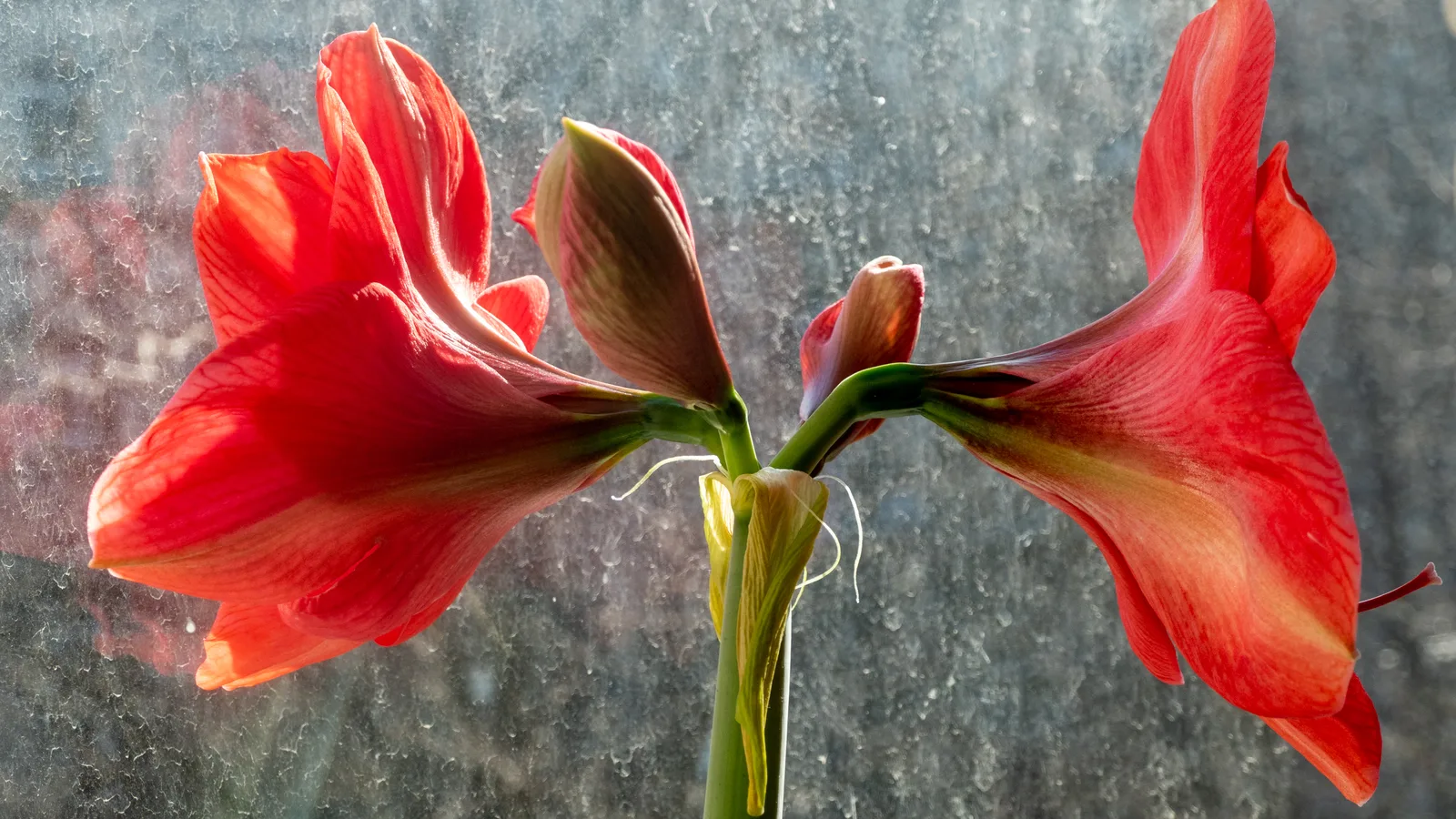
Paperwhites bloom about 3 to 5 weeks after planting, according to University of Wisconsin-Madison Extension, and amaryllis typically flower 4 to 8 weeks after an early to mid-November planting, according to Clemson Cooperative Extension's Home and Garden Information Center. A bulb potted in the third week of November can be in flower for late December or January. Wisconsin's forcing guide notes that neither bulb needs a cold period first.
Planting amaryllis
Clemson and the University of Minnesota Extension both say to set the bulb so one-third to one-half of it sits above the soil. Clemson explains that keeping the top of the bulb dry helps prevent red blotch, a fungal disease. Clemson calls for a pot 1 to 2 inches wider than the bulb's widest point, with drainage holes and a heavy, broad base so the plant does not tip over in bloom.
On water, Clemson says to soak the pot after planting, let it drain, wait a week, then keep the mix slightly moist and empty the saucer. Minnesota's rule is to water when the top 2 inches of soil are dry and never let the pot stand in water.
Light and temperature for amaryllis
Clemson calls for at least four hours of direct sun a day, with a south-facing window first and an east or west window second, and says to turn the pot every few days so the stalk grows straight. It gives 70 to 75 degrees Fahrenheit while roots, leaves and the stalk develop, and about 65 degrees once flowers open, which makes the blooms last longer. Minnesota says to move the plant out of direct sun once the buds start to open. Clemson says to keep it away from heaters and vents.
Forcing paperwhites in pebbles
Wisconsin's method fills a shallow container about two-thirds full with pebbles, gravel or soil. The bulbs go in flat end down, as close as they fit without touching, with more material filled in around them to hold them upright. Water should just reach the bottoms of the bulbs; the extension warns that bulbs sitting in water will rot. A clear glass container shows the roots and the water line.
Wisconsin roots the bulbs in a cool, dark spot at 45 to 50 degrees for about three weeks, then moves them to a cool, sunny spot. The same page says blooms last 10 days to several weeks in cool conditions and less in a warm room.
Keeping paperwhite stems short
Paperwhites often grow tall enough to flop. Cornell University's Flower Bulb Research Program tested dilute alcohol as a fix, in work supervised by program director Bill Miller and carried out by horticulture student Erin Finan as a senior project. The program reports that plants grown this way came out one-third to one-half shorter, with no loss of flower size, fragrance or longevity, and needed no stakes.
- Timing. Start once the bulbs have rooted and the green shoot is 1 to 2 inches above the bulb, usually about a week after planting. Pour off the water and replace it with the solution.
- Strength. Cornell gives 4 to 6 percent alcohol as the working range. Growth problems show up above 10 percent, and 25 percent is severely toxic.
- Mixing. One part of a 40 percent distilled spirit to 7 parts water gives about 5 percent. Rubbing alcohol, usually sold at 70 percent, takes 1 part to 10 or 11 parts water.
- What to skip. Beer and wine, which the program says cause problems because of their sugars.
Pets
The ASPCA lists both plants as toxic to dogs, cats and horses. Its amaryllis entry names lycorine and related compounds and lists vomiting, diarrhea, drooling, abdominal pain, loss of appetite, lethargy and tremors. Paperwhites are a narcissus, and the ASPCA's narcissus entry names lycorine and other alkaloids, says the bulbs are the most toxic part, and notes that eating a large amount can lead to convulsions, low blood pressure, tremors and heart rhythm problems. Clemson adds that every part of amaryllis is poisonous to people and pets if eaten in quantity, with the bulb the most toxic. A planted bowl of either belongs where animals cannot reach it.
Saving an amaryllis to bloom again
Minnesota's steps start with cutting off faded flowers so the plant does not set seed, leaving the stalk until it yellows, and keeping the plant in the sunniest indoor spot with regular water and half-strength fertilizer. It can go outdoors after spring frost and must come in before the first fall frost. Minnesota then lets the leaves brown, cuts them off, and stores the bulb dry in a cool, dark place at 50 to 60 degrees for 8 to 12 weeks; Clemson gives 8 to 10 weeks with no water or fertilizer. After the rest, the pot returns to a sunny window with water and feeding resumed, and Minnesota says flowers usually follow in about 4 to 6 weeks.
For bloom by the end of December, the planting window is now: pot amaryllis this week, start paperwhites in early December, and mark the calendar for the alcohol swap about a week after the paperwhites go in.
Sources
- Clemson Cooperative Extension Home and Garden Information Center: Amaryllis
- University of Minnesota Extension: Growing and caring for amaryllis
- University of Wisconsin-Madison Extension: Forcing Bulbs
- Cornell University Flower Bulb Research Program: Pickling your Paperwhites
- ASPCA: Toxic and Non-toxic Plants: Amaryllis
- ASPCA: Toxic and Non-toxic Plants: Narcissus
Loading comments…