












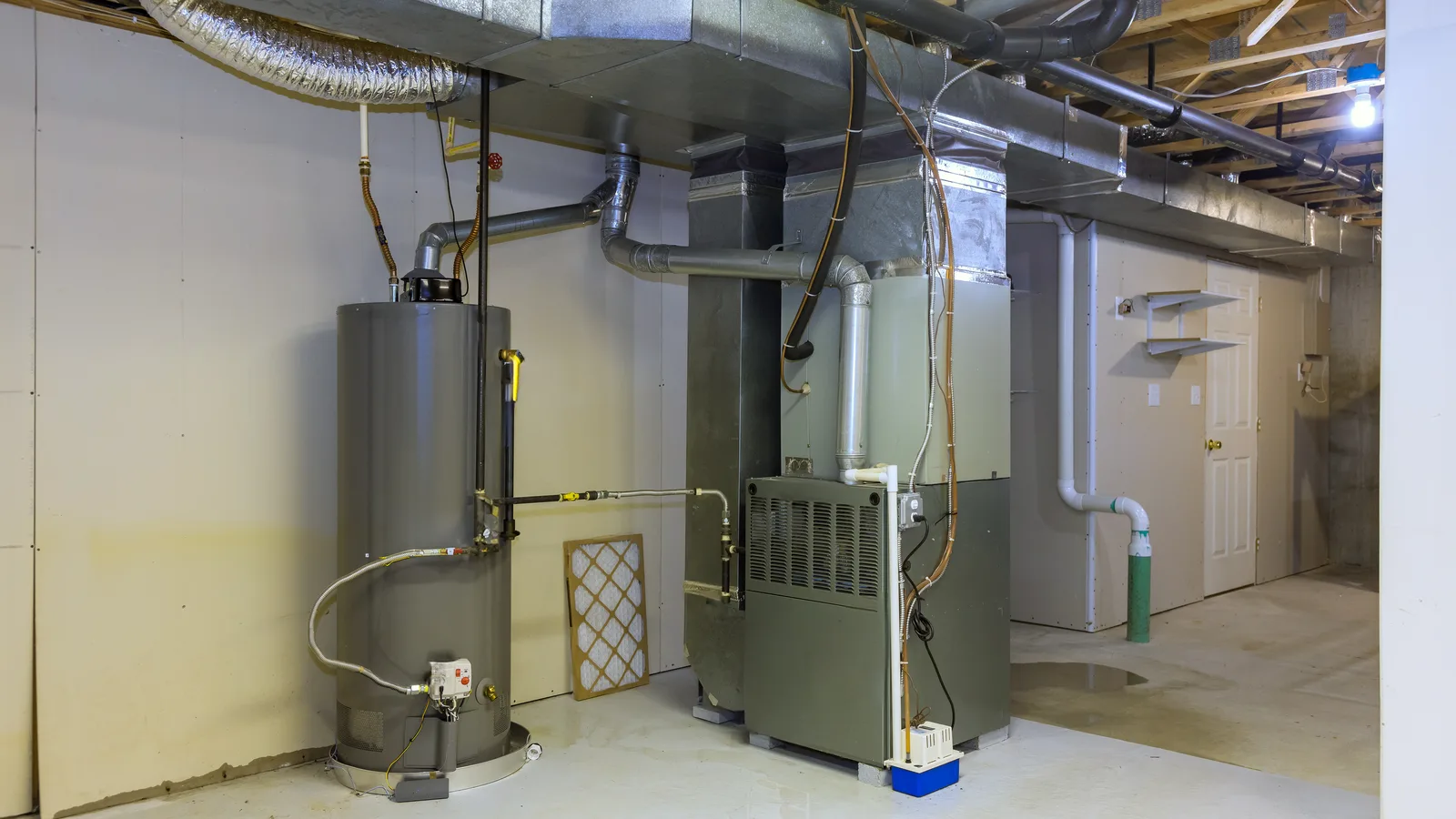
Every gas, oil and electric furnace sold in the United States carries an AFUE number. AFUE stands for Annual Fuel Utilization Efficiency. ENERGY STAR, the efficiency program run by the Environmental Protection Agency, describes it as the percentage of the heat in the incoming fuel that is turned into space heat instead of being lost. A furnace rated 80 percent AFUE turns about 80 cents of every dollar of gas into heat for the house; one rated 95 percent turns about 95 cents of it.
How the number is measured
AFUE is a laboratory rating, set by a federal test procedure in the Department of Energy's appliance rules (10 CFR Part 430). It describes the furnace over a typical heating season, not on any single cold night, and it rates the appliance itself. Heat lost after it leaves the furnace, through leaky ductwork in an attic or crawl space, is not in the number at all, which is why ENERGY STAR's own furnace guidance pairs a new furnace with sealing ducts and the house and with regular maintenance.
The federal floor today
The minimum AFUE a furnace must meet depends on its type. Under the federal standards in 10 CFR 430.32, current as of November 23, 2026, the minimums are:
- Non-weatherized gas furnaces, the indoor kind in most basements and closets: 80 percent, for furnaces made on or after November 19, 2015.
- Mobile home gas furnaces: 80 percent.
- Weatherized gas furnaces, the outdoor packaged units: 81 percent.
- Non-weatherized oil furnaces: 83 percent.
- Weatherized oil furnaces and electric furnaces: 78 percent.
- Mobile home oil furnaces: 75 percent.
The 95 percent line in 2028
The same regulation sets a higher floor for the most common type. Non-weatherized gas furnaces and mobile home gas furnaces manufactured on and after December 18, 2028, must reach at least 95 percent AFUE. The standard is written by the date a furnace is manufactured, and it does not require replacing a furnace already in a house.
What ENERGY STAR requires
ENERGY STAR sets its own bar above the federal one. Under its furnace specification, in effect since February 1, 2013, a certified gas furnace must reach 95 percent AFUE or higher in the U.S. South and 97 percent or higher in the U.S. North, and a certified oil furnace must reach 87 percent. Certified furnaces must also leak no more than 2 percent of the fan's rated airflow through cracks and joints in the cabinet. The program's South is Alabama, Arizona, Arkansas, California, Delaware, the District of Columbia, Florida, Georgia, Hawaii, Kentucky, Louisiana, Maryland, Mississippi, Nevada, New Mexico, North Carolina, Oklahoma, South Carolina, Tennessee, Texas and Virginia, plus Puerto Rico, Guam and American Samoa; every other state is North.
ENERGY STAR estimates that a certified gas furnace is up to 18 percent more efficient than a baseline model in the North and saves about $160 a year there, and up to 16 percent more efficient in the South, saving about $60 a year. For oil furnaces it estimates up to 4 percent better efficiency and about $90 a year. Those are the program's national estimates against baseline models; actual savings depend on the house, the climate, the fuel price and how the system is installed.
Reading a quote
A furnace quote should name the model and its AFUE, and the model can be checked against ENERGY STAR's certified product list or the manufacturer's spec sheet. Questions worth bringing to the contractor: how the new furnace will vent in this house, whether the ducts were inspected for leaks, how the furnace was sized for the house, and whether any utility or state rebate applies to the AFUE level quoted.
Electrical, gas, roof and ladder work can cause serious injury. Shut off power or gas first, follow the manufacturer's instructions and local code, and hire a licensed pro for anything beyond your experience.
This article reports rules, data and expert guidance. It is not legal, tax, insurance or financial advice. Talk to a licensed pro, your tax advisor or your insurer before you act on it.
Loading comments…