










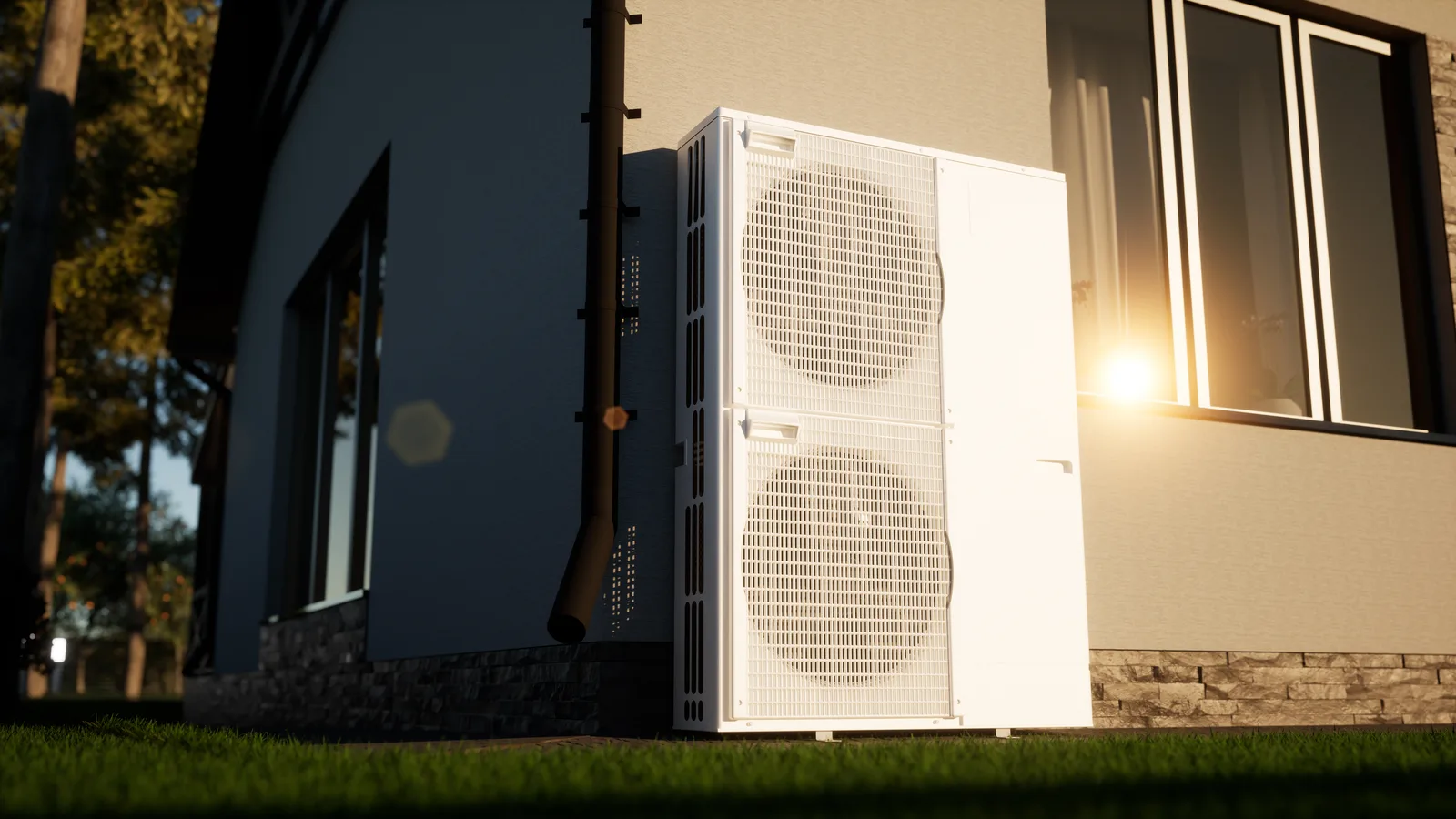
The most common question in a heat pump quote is the size of the unit, usually given in tons or in British thermal units per hour, and the answer should come from a calculation rather than from the size of the old furnace. The Northeast Energy Efficiency Partnerships guide that the Department of Energy's Building Science Education program uses to train installers says ACCA Manual J, or an equivalent method, is always an acceptable way to calculate the heating and cooling loads for an air-source heat pump. Here is what that calculation does, and what the same guidance says to do with the number.
What a load calculation measures
A heating load is the amount of heat a house loses on a very cold day, the design day for its location. Manual J, published by the Air Conditioning Contractors of America, adds up that loss room by room. The NEEP guide lists what any method has to account for: the area and insulating value of every wall, roof, window, floor and foundation; air leakage; duct losses, but only when ducts will be used; and for cooling, heat gained from the sun and from people and appliances inside.
The guide also lists ways the number goes wrong. Load calculations already contain safety factors, so the contractor should follow the procedure as written without adding more padding. Infiltration estimates are often overstated, and the guide recommends a blower door test to measure air leakage rather than guess it; it notes that existing homes that have been reasonably weatherized tend to leak less than 0.4 air changes per hour at design conditions. And the contractor should use the approved outdoor design temperature for the nearest location.
Why bigger is not safer
Oversizing, according to the NEEP guide, leads to excessive cycling, low efficiency and poor dehumidification in summer. Modern cold-climate heat pumps are variable speed, so the guide stresses that the smallest output a system can run at matters as much as its largest: a unit that cannot turn down far enough cycles on and off through the mild days that make up most of a winter.
The capacity targets
For a heat pump replacing the whole heating system, the NEEP guide suggests choosing equipment that delivers 100 to 115 percent of the calculated heating load at the local design temperature, without auxiliary heat. The alternative it describes is to design for 75 to 85 percent of the load and include just enough supplemental heat, such as electric resistance or radiant heat, for the coldest hours. When an existing furnace or boiler stays in place as backup, the guide says it is especially important to be conservative in the load calculation, since the backup removes the risk of undersizing.
Capacity at the design temperature should be read from the manufacturer's extended performance tables, and the guide points to the maximum heating capacity at 5 degrees Fahrenheit reported in NEEP's Cold Climate Air Source Heat Pump specification as a cross-check. A heat pump's rated capacity at 47 degrees is not what it delivers on a 5-degree night.
Fix the house first
The same guide's first recommendation comes before any sizing: address insulation, air leaks and leaky or disconnected ducts before installing new equipment. That lowers heating and cooling costs, improves comfort and reduces the size of the equipment needed.
Questions to bring to a quote
Based on that guidance, a homeowner comparing bids can ask each contractor whether a room-by-room Manual J calculation was done and can see it; what outdoor design temperature was used; whether air leakage was measured or assumed; what the proposed unit's capacity is at the design temperature, not just its nominal rating; how low it can turn down; and how backup heat will be handled.
This article reports rules, data and expert guidance. It is not legal, tax, insurance or financial advice. Talk to a licensed pro, your tax advisor or your insurer before you act on it.
Sources
- Northeast Energy Efficiency Partnerships (via U.S. DOE Building Science Education): Guide to Sizing and Selecting Air-Source Heat Pumps in Cold Climates
- Air Conditioning Contractors of America: Manual J, Residential Load Calculation
- U.S. DOE Building Science Education: Guide to Installing Air-Source Heat Pumps in Cold Climates
Loading comments…