












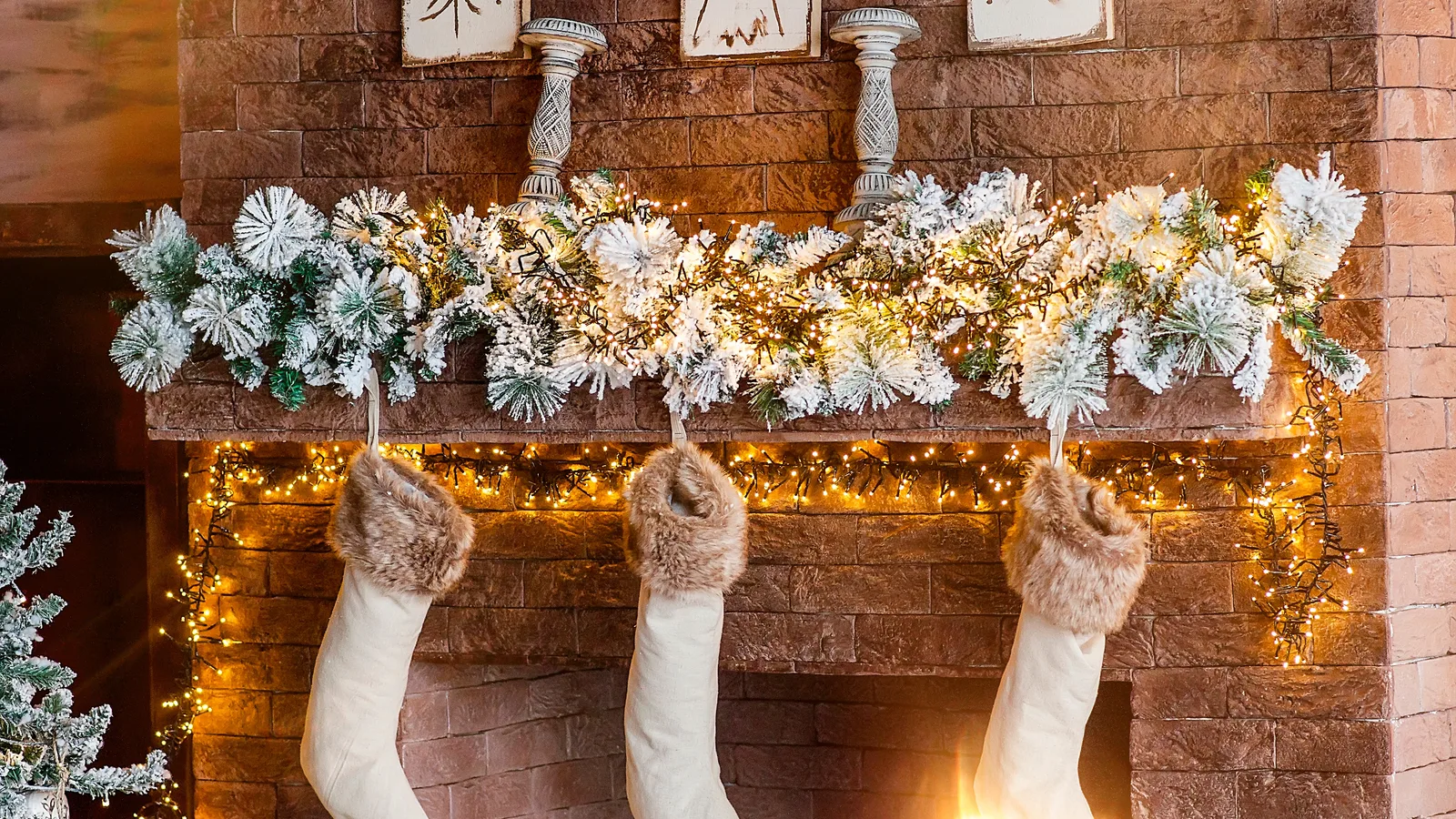
U.S. fire departments answer an estimated 835 home structure fires a year that start with holiday decorations other than the Christmas tree, according to the National Fire Protection Association (NFPA). Its holiday fact page puts the yearly toll of those fires at an average of 3 civilian deaths, 29 injuries and $18 million in direct property damage. The tree itself accounts for far fewer: NFPA counts an average of 143 home fires a year that started with a Christmas tree from 2020 through 2024, with an estimated 7 deaths, 13 injuries and $15 million in property damage across that span.
By count, then, the garland, the window displays and the extra light strings start more holiday fires than the tree. Here is what the data points to and the clearances NFPA and the U.S. Fire Administration (USFA) give.
Where decoration fires come from
NFPA's winter holiday tip sheet, published in 2025, reports that half of decoration fires happen because a decoration was set too close to a heat source. Its holiday fact page, drawing on NFPA Research, adds that candles start one third of home decoration fires over the whole year, and that the share rises to 49 percent in December. Cooking starts another 18 percent of decoration fires.
For the tree, the same page reports that electrical distribution or lighting equipment was involved in 40 percent of home Christmas tree fires, that lamps or bulbs started 24 percent, and that a heat source too close to the tree causes nearly one in four. NFPA also notes that 35 percent of Christmas tree fires happened in January, when trees left up after the holidays have dried out. NFPA's holiday page does not list the study years behind the decoration count and the percentages, so treat them as the association's current research figures rather than a single year's tally.
Three feet from heat applies to more than the tree
NFPA and USFA both set a clearance of at least 3 feet between a Christmas tree and any heat source, and they name the sources: fireplaces, radiators, space heaters, heat vents, candles and lights. Because half of decoration fires trace back to heat, the same spacing can be applied to other flammable decorations. In practice that means:
- Mantels. Garland, stockings and dried greens hanging over an open fireplace sit directly in the heat path. If the fireplace will be lit, keep combustible decorations off the mantel edge or let the fire go unlit for the season.
- Space heaters and baseboard heat. Gift piles and wrapping paper drift toward heaters, so recheck the gap as presents arrive.
- Windows and doors. NFPA's tip sheet says to keep decorations away from windows and doors. Doors are exit routes, and a tree or display that blocks one can trap people during a fire.
NFPA also advises choosing decorations labeled flame resistant or flame retardant.
Lights: rated for the job, inspected each year
NFPA says to use light strings listed by a qualified testing laboratory and to check whether a set is rated for indoor use, outdoor use or both, since some are rated for only one. USFA tells households to inspect lights every year before hanging them and to discard any strand with frayed or pinched wires. Both agencies point to the manufacturer's instructions for how many strands can be connected end to end.
NFPA recommends clips rather than nails or staples to hang lights, because a nail driven through or beside a cord can cut its insulation. Outdoor strings should come back inside after the season, which NFPA says both prevents hazards and extends their life.
Off at bedtime and when you leave
The single habit both NFPA tip sheets repeat is to turn off all light strings and decorations before going to bed or leaving the house, and to blow out candles when leaving a room. A plug-in timer or a smart plug can handle this automatically for strings that are hard to reach. For candles, USFA sets a 12-inch clearance from anything that can burn and suggests battery-operated flameless candles as an alternative; NFPA says never to use lit candles on a tree.
What to do this week
Before decorating this weekend, test the smoke alarms (NFPA's tip sheet pairs this with telling holiday guests your escape plan), sort the light strings and set aside any with damaged cords, and walk each room with a tape measure to check that every flammable decoration is at least 3 feet from the fireplace, heater or vent nearest it.
Electrical, gas, roof and ladder work can cause serious injury. Shut off power or gas first, follow the manufacturer's instructions and local code, and hire a licensed pro for anything beyond your experience.
This article reports rules, data and expert guidance. It is not legal, tax, insurance or financial advice. Talk to a licensed pro, your tax advisor or your insurer before you act on it.
Loading comments…