












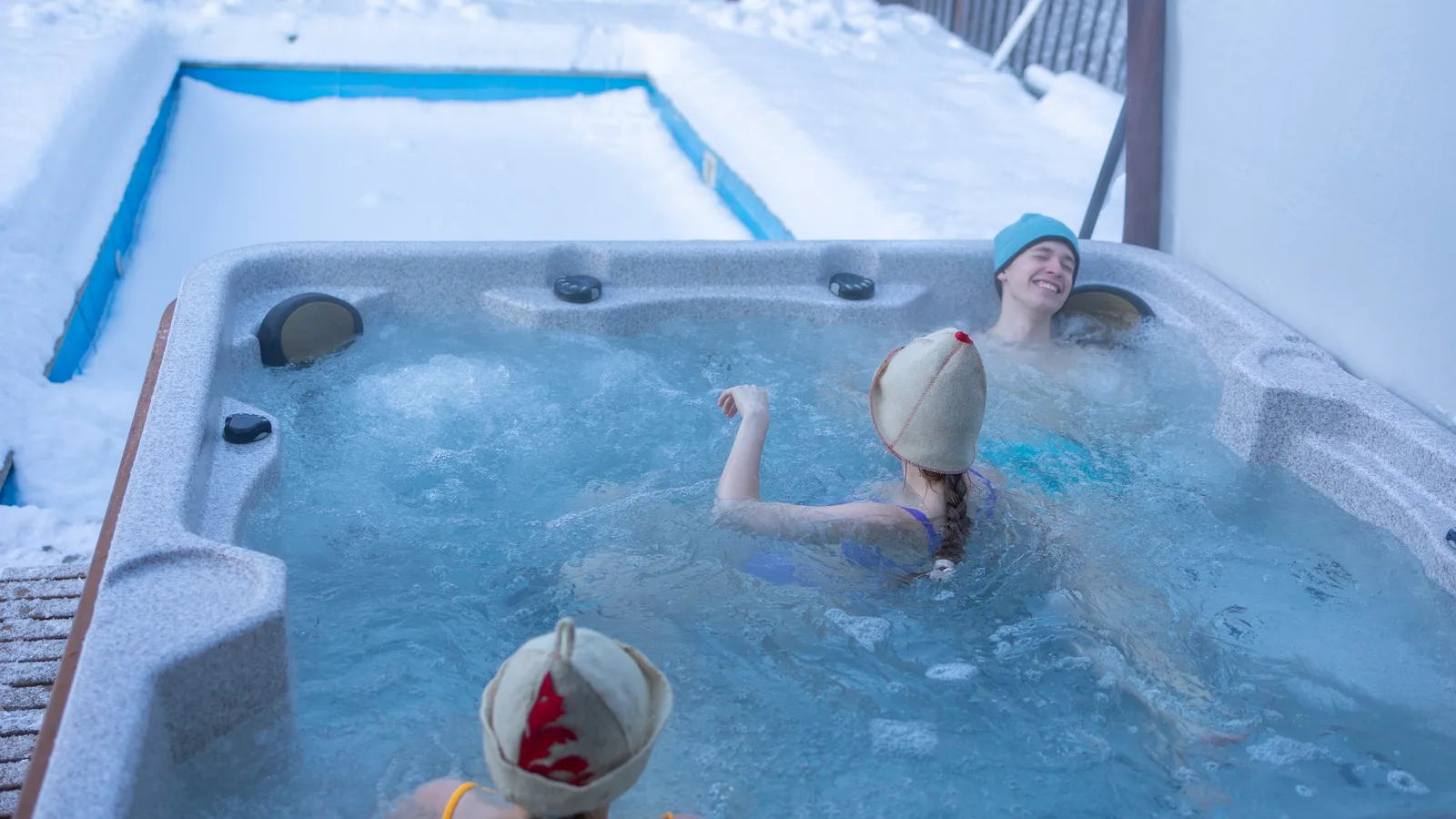
A backyard hot tub that sits quiet most of the fall can see more bathers in one holiday weekend than in the month before it. The Centers for Disease Control and Prevention publishes the water numbers that keep two common hot tub illnesses in check, and they are the same for a tub at home as the ones it gives the public: free chlorine of at least 3 parts per million, or bromine between 4 and 8 parts per million, and a pH between 7.0 and 7.8.
The three numbers, and the one that is too high
Chlorine is the floor of 3 ppm. CDC's hot tub rash guidance adds a ceiling for the bather to watch: above 10 ppm, the owner or operator should be told. Bromine, the other common hot tub disinfectant, has its own range of 4 to 8 ppm. The pH range of 7.0 to 7.8 matters because it governs how well either disinfectant works. If any of the three is out of range, CDC says to tell the operator or owner right away, and at home, that person is you.
How often to test when the tub is busy
CDC's guidance on Legionella in hot tubs says to check disinfectant and pH at least twice a day, and more often when many people are using the tub. Hot water and body oils use up disinfectant faster than a cold pool does, so a reading that was fine Wednesday morning can be low by Thursday evening after a full tub. CDC points users to test strips sold at pool supply and other retailers, with one practical note: check the expiration date on the bottle before trusting the color.
What the numbers protect against
Hot tub rash. The rash, known clinically as Pseudomonas folliculitis, is caused by the germ Pseudomonas aeruginosa. CDC describes it as an itchy, red, bumpy rash, sometimes with pus-filled blisters around hair follicles, and says it usually shows up a few days after time in a poorly kept tub. Mild cases usually clear on their own within a few days. CDC says to see a health care provider if it gets worse or keeps coming back.
Legionella. The more serious risk comes from breathing in mist from a tub whose water system is growing Legionella bacteria. The result can be Legionnaires' disease, a pneumonia that can be life-threatening, or Pontiac fever, a milder illness without pneumonia. CDC lists the people at higher risk: anyone 50 or older, current or former smokers, people with chronic lung disease or a weakened immune system, and people taking medicines that lower the body's defenses. That list often describes a holiday guest.
The upkeep behind the numbers
CDC's steps for owners go beyond the test strip:
- Scrub away slime or biofilm daily, since it shelters germs from the disinfectant.
- Replace the filter on the schedule the manufacturer gives.
- Replace the water as often as the manufacturer recommends.
For bathers, CDC's advice is short: take off the swimsuit and shower with soap after getting out, and wash the swimsuit after each use.
If someone gets sick afterward
CDC says anyone who used a hot tub in the past two weeks and develops a cough, shortness of breath, fever or muscle aches should see a health care provider promptly and mention the hot tub. That detail helps a clinician think of Legionella, which is otherwise easy to mistake for an ordinary respiratory illness in December.
The practical step this week: a fresh bottle of test strips, a reading the morning guests arrive and another in the evening, and a look at the filter's last change date.
Loading comments…