












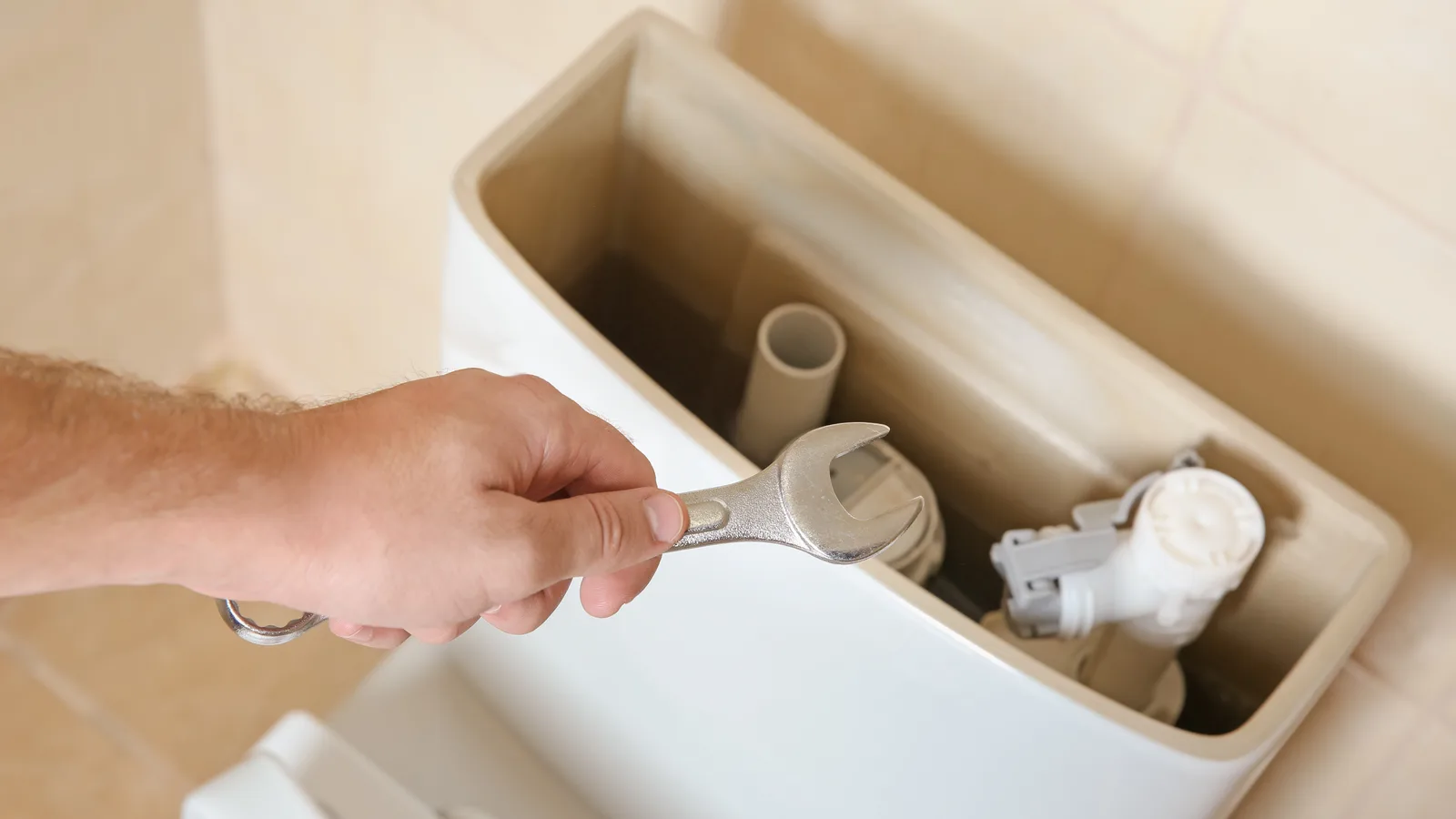
A toilet flapper that no longer seals can leak around 860 gallons a month without making a sound, and a fill valve that sticks open can send several thousand gallons down the drain in a single day. The Environmental Protection Agency's WaterSense program puts the average household's leaks at more than 9,300 gallons a year, and it names worn toilet flappers first on its list of the most common household leaks. A full house for Thanksgiving is when a tired flapper gets the most work, and when a running toilet is easiest to miss.
What EPA counts as a leak
WaterSense, the EPA program that labels water-efficient fixtures and runs the annual Fix a Leak Week, gives three household figures on its current Fix a Leak Week page. Leaks in the average home add up to more than 9,300 gallons wasted a year. Nine percent of homes have leaks that waste 50 gallons or more per day. Nationally, household leaks can waste close to 1 trillion gallons a year. The same page says fixing the leaks that are easy to correct can cut a household water bill by about 10 percent, and its statistics page puts the average family's spending on water at more than $1,000 a year, which makes that share roughly $100 a year for a typical family.
EPA also offers a quick check: a family of four using more than 12,000 gallons in a colder month may have a serious leak.
Why the flapper is usually the part that fails
The flapper is the rubber seal at the bottom of the tank that lifts when the handle is pressed and drops back to hold water in the tank. Rubber hardens and warps with age, and once it stops sealing, water trickles from the tank into the bowl until the fill valve tops the tank back up, over and over. WaterSense says the flapper should be checked from time to time and replaced at least every five years, and that a worn one can make a toilet flush on its own or leak silently.
The second part to check is the fill valve, the tower on one side of the tank that refills it. If the float is set so high that water rises above the top of the overflow tube, water spills down the tube and the valve never shuts off. EPA's guidance is to lower the float until the water line sits below the top of that tube. For the flapper itself, EPA's dye check is a few drops of food coloring in the tank: color in the bowl after 10 minutes without a flush means it leaks.
The flow rates behind the cost
A March 2025 WaterSense webinar gave flow rates for toilet failures. A small leak from a worn flapper runs about 0.02 gallons per minute, which works out to roughly 860 gallons a month. A toilet running at 0.5 gallons per minute wastes 21,600 gallons a month. A fill valve stuck fully open can run at up to 3 gallons per minute, or about 4,300 gallons a day.
A worked cost for Thanksgiving week
There is no single national price for water and sewer service: utilities set their own rates, many charge a separate sewer fee tied to the water you use, and many bill in units of 100 cubic feet (748 gallons) rather than 1,000 gallons. To keep the math readable, the figures below use an example combined water and sewer charge of $10 per 1,000 gallons. To get your own number, divide the usage charges on your bill (water plus sewer, not the fixed monthly fee) by the gallons billed, then multiply by 1,000.
At $10 per 1,000 gallons:
A worn flapper leaking 0.02 gallons per minute costs about $8.60 a month, or a little over $100 a year if it is never fixed.
A toilet that sticks running at 0.5 gallons per minute during a busy holiday week, say from Wednesday night to the following Tuesday, runs about 4,300 gallons in those six days, or about $43.
A fill valve stuck wide open at 3 gallons per minute runs about 4,300 gallons in one day, or about $43 a day, and roughly $300 over a full week of guests.
At a combined rate of $15 per 1,000 gallons, multiply each figure by 1.5. At $5, cut each in half. Homes on a private well pay no water rate, but a running toilet still keeps the pump cycling, and EPA's septic guidance says a single leaky or running toilet can add as much as 200 gallons a day to a septic system.
What a full house changes
EPA's statistics page puts the average American's water use at home at 82 gallons a day. Four overnight guests can add a few hundred gallons a day to a household's normal use before anything leaks, so a higher bill after the holiday is expected. The cost that does not show up as expected is a flapper that starts sticking partway open under heavy use, or a handle that has to be jiggled to stop the tank from refilling.
Before the guests arrive
Lift the tank lid on each toilet and look at three things: whether the water line sits below the top of the overflow tube, whether the flapper drops cleanly and sits flat after a flush, and whether the tank goes quiet within a minute or so of refilling. If the flapper is stiff, warped or more than five years old, WaterSense suggests taking the old one (or a photo of it) to the hardware store so the replacement matches the toilet model, including its width and whether it has a foam float. Then, the week after Thanksgiving, compare the next bill's gallons with the same month last year; a jump well beyond the extra guests is the sign to look for a leak.
Loading comments…