












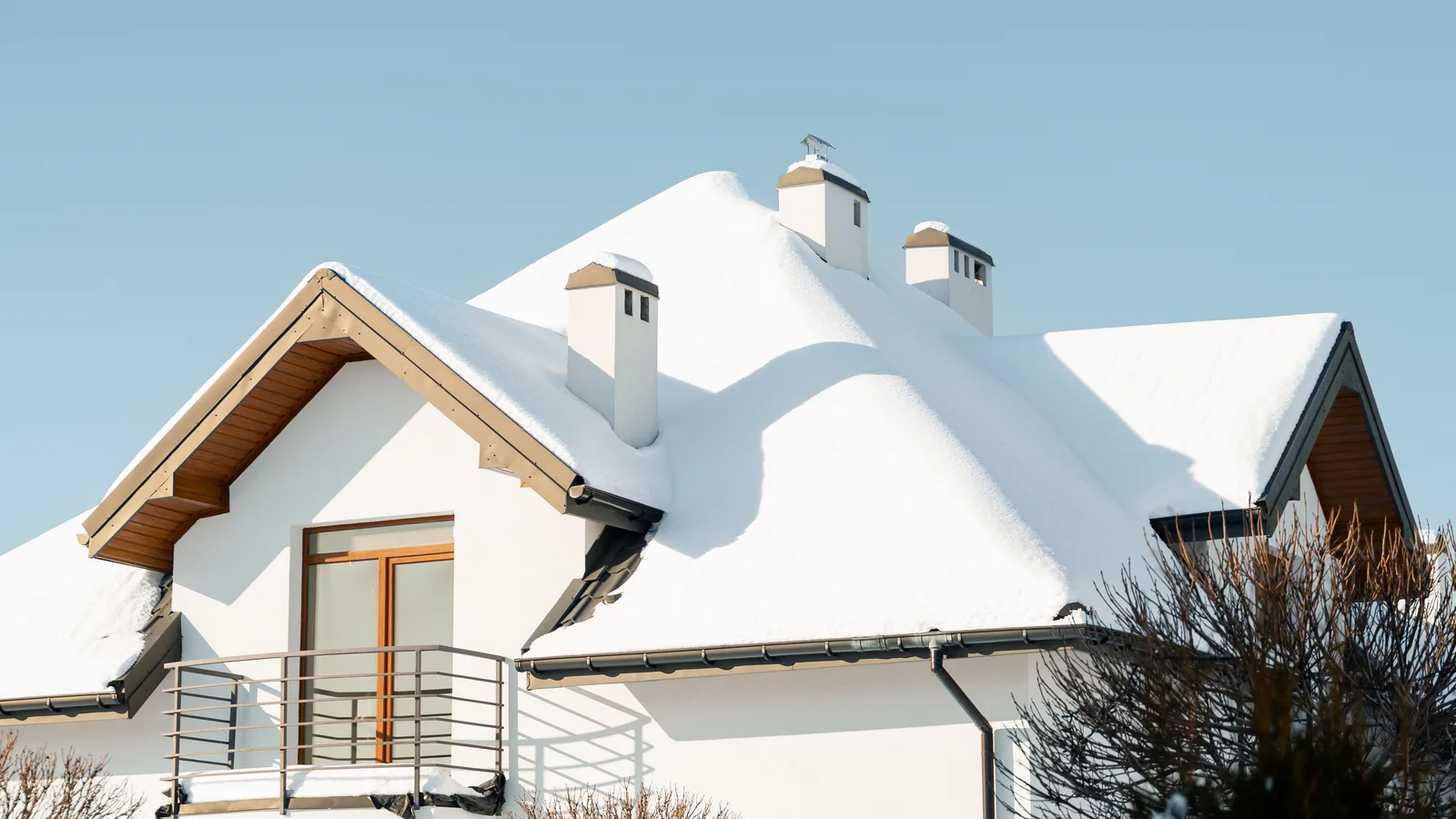
Snow is weather until it sits on a roof, and then it is a structural load. FEMA's Snow Load Safety Guide (FEMA P-957, part of the agency's Risk Management Series, published January 2013) was written for building owners, facility managers and homeowners, and it puts numbers on what most people judge by eye: how much a foot of snow weighs, where it piles up, what an overloaded roof does before it fails, and how to take snow off without making things worse.
What a foot of snow weighs
The guide's figures, per square foot of roof:
- Light, dry snow: about 3 pounds for each foot of depth.
- Wet, heavy snow: about 21 pounds for each foot of depth. Same depth, seven times the weight.
- Ice: a little under 5 pounds for each inch, and about 57 pounds for a full foot.
Region matters. FEMA notes that snow in the western United States tends to be lighter and less dense than the wetter snow common on the East Coast, with exceptions such as the area around Seattle and the southwestern coast of Alaska, so a foot in Utah and a foot in Vermont are not the same load. Local building officials and structural engineers know the design snow load for a given area.
Rain on top of snow is its own problem. The guide says building codes account for light rain on snow, but heavy rain is not built into design snow loads. Freeze and thaw cycles add more: melt that refreezes at the eaves forms ice dams, which hold snow on a sloped roof and concentrate weight at the edge.
Where the load piles up
A roof rarely carries snow evenly. FEMA's term is unbalanced snow load, and it comes from two things: wind moving snow from one part of the roof to another (drifting), and snow sliding off a higher roof onto a lower one. On a house, the guide points to the places drifts collect: where a lower roof meets a taller wall, around dormer windows and skylights, on porch roofs below a main roof, and around anything on the roof that blocks the wind. A section of roof under a drift can carry far more than the average depth across the whole roof suggests.
The warning signs of an overloaded roof
Wood and steel framing usually bend noticeably before they fail. The guide's list of signs during a snow event, translated to a house:
- Sagging ceiling boards or drywall, or ceiling material pulling loose.
- Popping, cracking or creaking sounds from the attic or roof.
- Sagging roof framing or sheathing, or bowing truss members, visible from the attic.
- Interior doors or windows that suddenly stick or will not open or close.
- Cracked or split wood framing, or new cracks in walls or masonry.
- Severe roof leaks.
FEMA's instruction for any of those is direct: get everyone out of the building promptly and have a qualified design professional, such as a licensed professional engineer, inspect the structure. If there is any concern that the roof may give way, the guide says to stop all snow removal and evacuate.
Taking snow off without damaging the roof
FEMA recommends a professional roofing contractor with snow removal experience, because of the risks of falls and of a roof giving way, and says roof work should follow OSHA fall-protection practice. For snow that can be reached from the ground, the guide's method notes apply:
- Work from the ground where possible. A non-metallic roof rake on a sloped roof removes snow without putting anyone on the roof. Metal rakes can damage roofing and should be avoided.
- Stand clear of the eave. Snow can slide at any moment, and icicles knocked loose from even a short height can injure someone.
- Leave a layer. Scraping a roof bare can damage the covering and cause leaks. The guide says to leave at least 2 inches.
- No sharp tools and no machines. No picks, no metal shovels, no mechanical removal equipment.
- Drifts first, evenly after. Remove drifted snow at elevation changes first, then the rest, without leaving a heavy pile on one side. On a gable roof, work from the ridge toward the eave.
- Mind what is below. Keep someone on the ground to keep people away from the drop zone, and keep removed snow away from exits, downspouts, vents and equipment.
After a large storm, the guide recommends checking the roof covering for damage and taking a quick look at the framing from inside the attic.
Before the next storm
FEMA's pre-season advice is to have a contractor or licensed engineer look at a building's vulnerabilities before snow arrives, keep drains and gutters clear so melt can leave the roof, and decide in advance who will clear snow and who will be called if the signs above appear. For a house with an addition, a low porch roof under a taller wall or an older roof that has never been checked, that conversation is worth having now, not during a storm.
Electrical, gas, roof and ladder work can cause serious injury. Shut off power or gas first, follow the manufacturer's instructions and local code, and hire a licensed pro for anything beyond your experience.
This article reports rules, data and expert guidance. It is not legal, tax, insurance or financial advice. Talk to a licensed pro, your tax advisor or your insurer before you act on it.
Loading comments…