












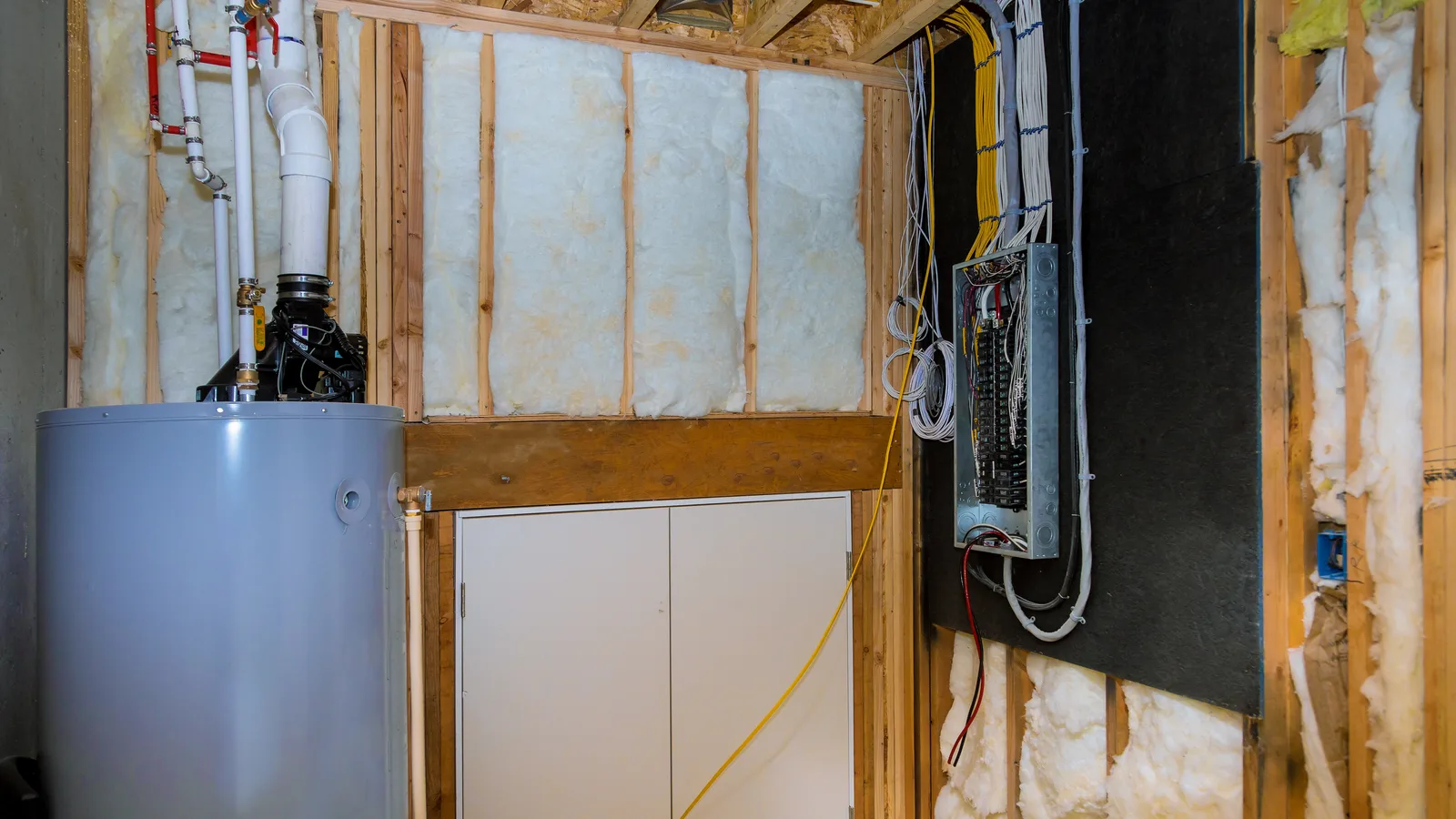
A tank water heater set hotter than 120°F is a scald risk, and the federal guidance on this is consistent: the Environmental Protection Agency recommends 120°F to prevent scalding, and the Consumer Product Safety Commission's tap water scald guidance gives the same number. Checking what your tank actually delivers takes about ten minutes, a mug and a meat thermometer, and it is worth doing in the heating season, when incoming water is colder and the heater is working its hardest.
Why 120°F
There are three reasons the federal guidance converges on this number:
- Scalding. Hotter water burns skin faster, and the CPSC identifies young children and older adults as the people most at risk from tap water scalds. That is the basis for the 120°F recommendation.
- Energy. A tank kept at a higher temperature loses more heat through its walls and pipes while it sits. The Department of Energy's Building America Solution Center, run by Pacific Northwest National Laboratory, estimates that each 10-degree reduction saves about 5% of the energy used.
- The equipment. The same guidance says a lower setting can slow the buildup of mineral deposits and corrosion, which can help a tank last longer.
Step 1: Measure what comes out of the tap
The dial on the tank is often not a true reading, and some use letters or words instead of degrees. So start by measuring:
- Go to the faucet closest to the water heater.
- Run only the hot water for about three minutes, so the water is coming from the tank rather than sitting in the pipes.
- Fill a coffee mug or glass measuring cup and put a meat thermometer in it right away.
Use a cooking thermometer, not a fever thermometer: the PNNL guide warns that older mercury fever thermometers can break above 110°F. If the reading is well above 120°F, the tank can be turned down.
Step 2: Find the thermostat
On a gas water heater, the temperature control is usually a dial on the gas valve near the bottom of the tank. On an electric heater, it is usually behind one or two access panels on the side of the tank, and many electric tanks have two thermostats, an upper and a lower, which should be set to the same temperature.
For an electric heater, turn off its circuit breaker at the panel before removing any cover. The thermostats sit next to live wiring. On a gas heater, the dial is adjusted from outside the valve and turning off the breaker is not needed; the PNNL guide notes that switching off a breaker will not affect a gas heater's pilot light.
If the dial uses letters or words such as Warm, Hot and Very Hot, the owner's manual says which mark corresponds to 120°F. Manuals for most models can be found online by brand and model number, which are printed on the tank's rating plate.
Step 3: Adjust, then measure again
Turn the dial by hand, or with a flathead screwdriver on an electric thermostat, to the 120°F mark. Replace any insulation and covers before turning the breaker back on. Then give the tank time to settle, since the water already inside will take a while to cool or reheat, and repeat the mug test at the same faucet. Small adjustments may be needed to land at 120°F at the tap.
When a higher setting makes sense
Lower is not right for every home. Department of Energy guidance has long noted that Legionella bacteria can grow in water heaters under some conditions, so a household with a member whose immune system is weakened should ask a doctor about the right setting before turning the tank down. Where a hotter tank is needed, a plumber can install an anti-scald mixing valve so the water reaching the taps is cooler than the water in the tank.
If the heater shows signs of trouble while you are there, such as water around the base, a leaking temperature and pressure relief valve, a rusty tank or the smell of gas, stop and call a licensed plumber or the gas utility rather than adjusting it.
Electrical, gas, roof and ladder work can cause serious injury. Shut off power or gas first, follow the manufacturer's instructions and local code, and hire a licensed pro for anything beyond your experience.
Loading comments…