












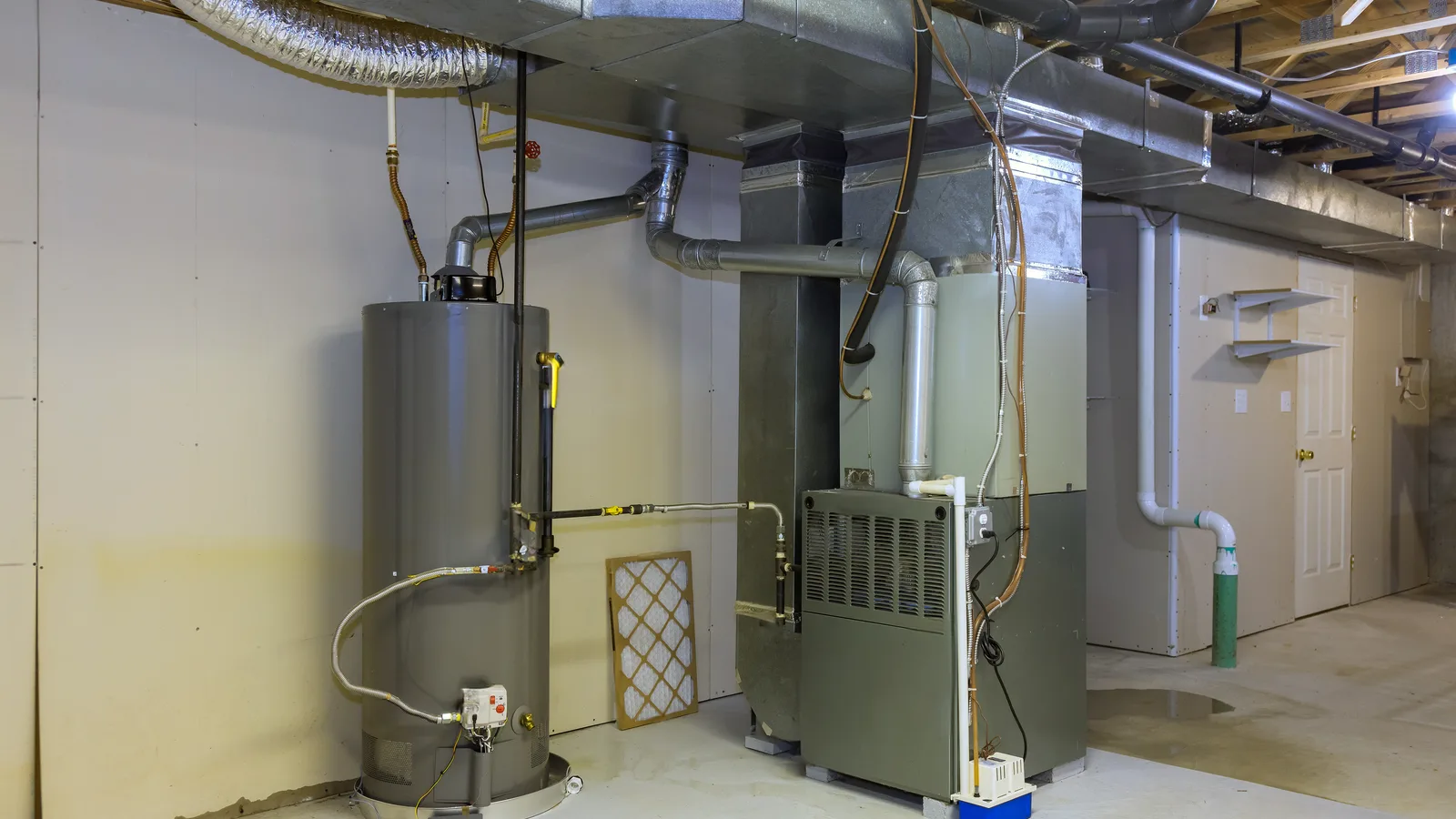
Minerals in household water settle to the bottom of a tank water heater as sediment, and over time that layer cuts the heater's efficiency and can clog the drain valve and water lines. Flushing the tank washes it out. The Building America Solution Center, a Department of Energy site whose guides are developed by Pacific Northwest National Laboratory, publishes a step-by-step procedure. Its first instruction is to check the heater's owner's manual and follow the manufacturer's directions where they exist; the guide fills in where the manual is unclear or missing.
What you need
A garden hose long enough to reach a floor drain or the outdoors, rags, and possibly a flat-head screwdriver, since some drain valves turn by hand and others need a tool.
Shut it down first
- Turn off the energy. For an electric heater, unplug it or switch it off at its control, and to be certain, turn off its two breakers at the electrical panel. For a gas heater, follow the manufacturer's instructions, which may mean closing the gas valve or setting the control to pilot. The guide warns that a heater running while empty or partly empty can be damaged quickly.
- Close the cold-water supply. Shut the valve on the cold-water inlet pipe at the top of the tank. If there is no valve there, shut off water to the whole house.
- Open a hot-water tap. Pick a hot-only fixture, ideally on a floor above the heater. It lets air into the tank as it drains.
Drain and flush
- Attach the hose to the drain valve near the bottom of the tank and run it outdoors or to a drain that can take sediment. The end of the hose must sit lower than the bottom of the tank.
- Open the drain valve, usually by turning it counterclockwise. The water coming out will be hot enough to scald.
- Stir up the sediment. After about 20 minutes, or once the flow stops, open the cold-water inlet for about 10 seconds to churn the bottom of the tank, and repeat that now and then.
- Flush until clear. With the drain open, slowly open the cold inlet and let water run through until it comes out clear. If the valve clogs, opening and closing it a few times can free it.
- Finish the flush. Close the cold inlet, let the tank drain completely, then briefly open the inlet again to push out what remains.
Refill before restoring power
- Close the drain valve and let the tank fill. The open hot tap will sputter as air escapes.
- Close the hot tap once water runs from it smoothly. The water will be cold.
- Restore power or gas only after the tank is full. On a gas unit, follow the manufacturer's instructions for the pilot.
- Remove the hose with its outlet still pointed at the drain, lifting it to empty, with rags ready for drips.
The guide notes that the tank takes several hours to reheat and that the water may run cloudy for a while, so it suggests waiting several hours before doing laundry.
When to stop and call someone
A drain valve that will not close, a leak at the valve or fittings, or a gas heater whose pilot will not relight are jobs for a licensed plumber or the gas utility. The guide does not set a schedule for flushing; the owner's manual for the specific heater does, and hard water generally means more sediment.
Electrical, gas, roof and ladder work can cause serious injury. Shut off power or gas first, follow the manufacturer's instructions and local code, and hire a licensed pro for anything beyond your experience.
This article reports rules, data and expert guidance. It is not legal, tax, insurance or financial advice. Talk to a licensed pro, your tax advisor or your insurer before you act on it.
Loading comments…