












Honda's owner's manual for its HRR216 push mower says gasoline can deteriorate in as little as 30 days, leaving gum that clogs the small passages in the carburetor. Briggs & Stratton gives the same 30-day figure. What the two engine makers say to do about it differs, so the manual for your own engine comes first.
Stabilize it or run it dry: two manufacturer methods
Briggs & Stratton's route is to treat the fuel and leave it in. Its fuel page says to add stabilizer per the label, run the engine 2 minutes so treated gas reaches the carburetor, and store the equipment in a clean, dry place for up to 24 months. Untreated fuel should be drained into an approved container or run out until the engine stops.
Honda splits storage by length. For 30 to 90 days, fill the tank with fresh gas plus stabilizer (air in a partly empty tank speeds deterioration), run the engine outdoors 10 minutes, turn the fuel valve off, and let it run until the carburetor bowl is empty. For more than 90 days, a typical winter in much of the country, Honda says to run the whole fuel system, tank included, until it is empty. Stabilizer, the manual adds, cannot restore fuel that has already gone stale.
The Outdoor Power Equipment Institute (OPEI), the trade association for equipment makers, combines the two: add stabilizer, run the machine to circulate it, let it cool, then restart it and run the tank empty. Both Honda and Briggs exclude fuel damage from old gas or neglected storage from their warranties.
Why the ethanol number on the pump matters
Honda's manual allows regular unleaded gasoline with no more than 10 percent ethanol (E10). Ethanol attracts and holds water, it explains, and higher blends can damage metal, rubber and plastic fuel parts. Briggs & Stratton accepts up to E10 and lists E15 and E85 as unapproved fuels whose engine damage falls outside its warranty. OPEI says most outdoor power equipment was designed, built and warranted for fuel with 10 percent ethanol or less.
The federal rule comes from the Environmental Protection Agency. On its E15 fuel registration page, EPA lists what E15 is approved for (flex-fuel vehicles, plus model year 2001 and newer cars, light-duty trucks and medium-duty passenger vehicles) and what it is not, a list that includes engines in nonroad equipment such as lawn mowers and chain saws. When EPA finalized its E15 pump labeling rule on June 28, 2011, it said dispensers selling E15 would carry an orange and black label warning against its use in gasoline-powered equipment such as lawn mowers. Read the dispenser before filling a gas can.
Oil, cylinder and blade
Honda calls for an oil change, drained warm because warm oil runs out more completely, with the used oil taken to a recycling center or service station, never the trash or a drain. Then remove the spark plug, pour 1 to 2 teaspoons (5 to 10 cc) of clean engine oil into the cylinder against corrosion, pull the starter rope several times, reinstall the plug, and pull slowly until you feel resistance, which closes the valves to moist air. Brief smoke at the first spring start is normal, the manual says.
Before any work under the deck, Honda says to turn the fuel valve off, disconnect the spark plug cap so the engine cannot fire, and tip the mower onto the side the manual names (the right side on this model) to keep fuel from leaking and flooding the carburetor. Wear heavy gloves and check the blades for cracks and heavy rust, because a worn blade can break and throw pieces. Honda recommends dealer sharpening to avoid weakening or unbalancing them, and reinstallation takes a torque wrench.
Batteries on battery-powered mowers
OPEI's general advice is to remove and charge batteries before storage, but lithium-ion packs can carry a narrower rule. Toro's manual for its 21-inch 60V mower says to charge the pack until 2 or 3 indicator lights are green, never storing it full or empty, and to keep pack and charger out of the mower, indoors, dry, between 41 and 104 degrees F, and away from garden chemicals and de-icing salt. Toro also says not to wash that mower with water. Where your pack's manual names a storage charge, follow it.
Where to put it
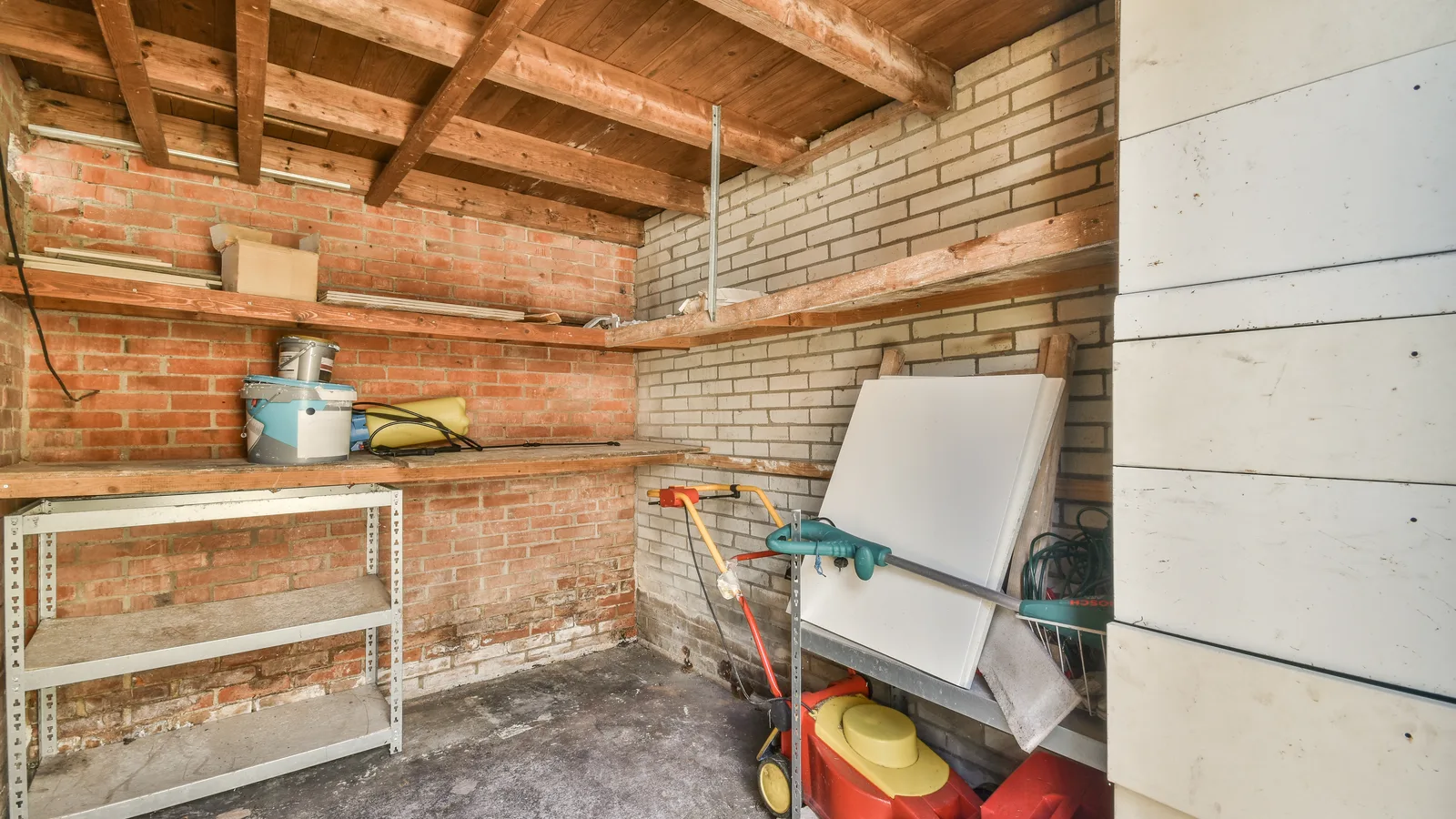
Gasoline left in a mower gives off vapor, so Honda says to store it in a well-ventilated spot away from flame appliances (furnace, water heater, clothes dryer), spark-producing motors and humid areas. Keep it level with the fuel valve off, and cover it only once the engine is cool, never with plastic sheeting, which traps moisture. OPEI adds a clean, dry garage or shed, out of the reach of children.
Before the last mow
Find the owner's manual for your engine model (OPEI notes a lost one can usually be found online) and read its storage section before you buy stabilizer: it says whether your engine maker wants treated fuel in the tank or a dry system. For leftover can gas, Honda's manual passes along an EPA suggestion to add it to your car's tank.
Electrical, gas, roof and ladder work can cause serious injury. Shut off power or gas first, follow the manufacturer's instructions and local code, and hire a licensed pro for anything beyond your experience.
Sources
- EPA: E15 Fuel Registration
- EPA: EPA Finalizes E15 Pump Labeling Requirements (June 28, 2011)
- Briggs & Stratton: What is the best fuel type for lawn mowers and small engines?
- American Honda: HRR216 Rotary Mower Owner's Manual
- Outdoor Power Equipment Institute: 7 Questions to Ask Around Winterizing Outdoor Power Equipment
- Toro: 21in 60V Lawn Mower Operator's Manual
Loading comments…