












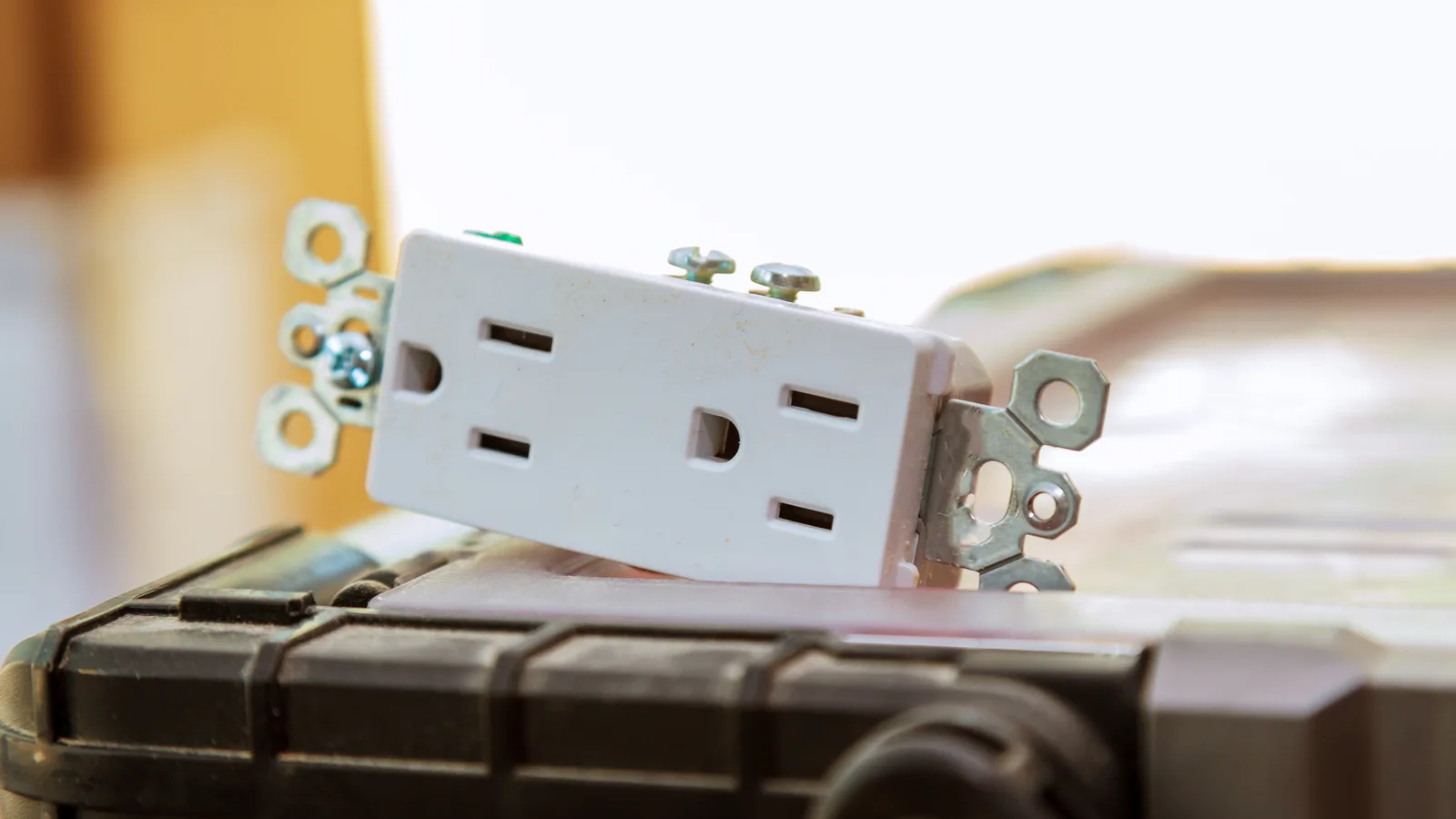
The outlets with the Test and Reset buttons by the kitchen sink, in the bathroom and in the garage are ground fault circuit interrupters, or GFCIs. They are the cheapest life-saving device in most houses, and they can fail without any sign. The U.S. Consumer Product Safety Commission's GFCI fact sheet tells homeowners to test every one at least once a month.
What a GFCI does
A GFCI watches the current going out on a circuit and the current coming back. If the two differ by as little as 0.006 amperes, the CPSC says, the device cuts power faster than the blink of an eye. That difference means current is leaking somewhere it should not, such as through a person standing on a wet floor and touching a faulty appliance. The device is designed to trip before the shock can affect the heartbeat. Because it detects ground faults, the CPSC notes, a GFCI can also prevent some electrical fires. It works even on older two-slot outlets that have no ground wire.
GFCI protection comes in three forms: a GFCI receptacle, which protects itself and can protect outlets wired after it; a GFCI circuit breaker in the panel, which protects the whole circuit; and portable GFCIs built into a cord or plugged into an outlet.
When to test
The CPSC's list is short:
- After installation.
- At least once a month.
- After a power failure.
- Following the manufacturer's instructions, which may add more.
How to test one
If the instructions are gone, the CPSC gives this procedure. Plug a lamp into the outlet and turn it on. Press the Test button. The lamp should go out. If it stays on, the GFCI is not working or was wired wrong, and the agency says to have a qualified electrician correct the wiring or replace the device. Then press Reset. The lamp should come back on. If it does not, the GFCI needs to be replaced.
Testing one GFCI receptacle can also cut power to other outlets downstream on the same circuit, which is useful: an outlet in a bathroom with no buttons of its own may go dead when the one by the sink is tested, which shows it is protected. A dead outlet with no buttons is also worth checking for a tripped GFCI elsewhere, often in a garage or another bathroom, before calling anyone.
Where code requires them
Which outlets need GFCI protection is set by the National Electrical Code, and the requirement has widened over the decades. The CPSC fact sheet lists when each location was added: underwater pool lighting in 1968, outdoor receptacles in 1973, bathrooms in 1975, garages in 1978, kitchens in 1987, crawl spaces and unfinished basements in 1990, wet bar sinks in 1993 and laundry and utility sinks in 2005. The fact sheet's list stops at 2005, and later editions of the code have extended it. The code generally applies to new construction and major renovation, so an older house may have kitchen or garage outlets with no protection at all, and states and towns adopt different editions.
The CPSC also suggests a portable GFCI whenever using electric garden equipment or power tools for projects in and around the house. Receptacle GFCIs can be installed by homeowners with the skills to follow wiring practice and the device's instructions; when in doubt, the agency says, call a qualified electrician.
Electrical, gas, roof and ladder work can cause serious injury. Shut off power or gas first, follow the manufacturer's instructions and local code, and hire a licensed pro for anything beyond your experience.
This article reports rules, data and expert guidance. It is not legal, tax, insurance or financial advice. Talk to a licensed pro, your tax advisor or your insurer before you act on it.
Loading comments…