






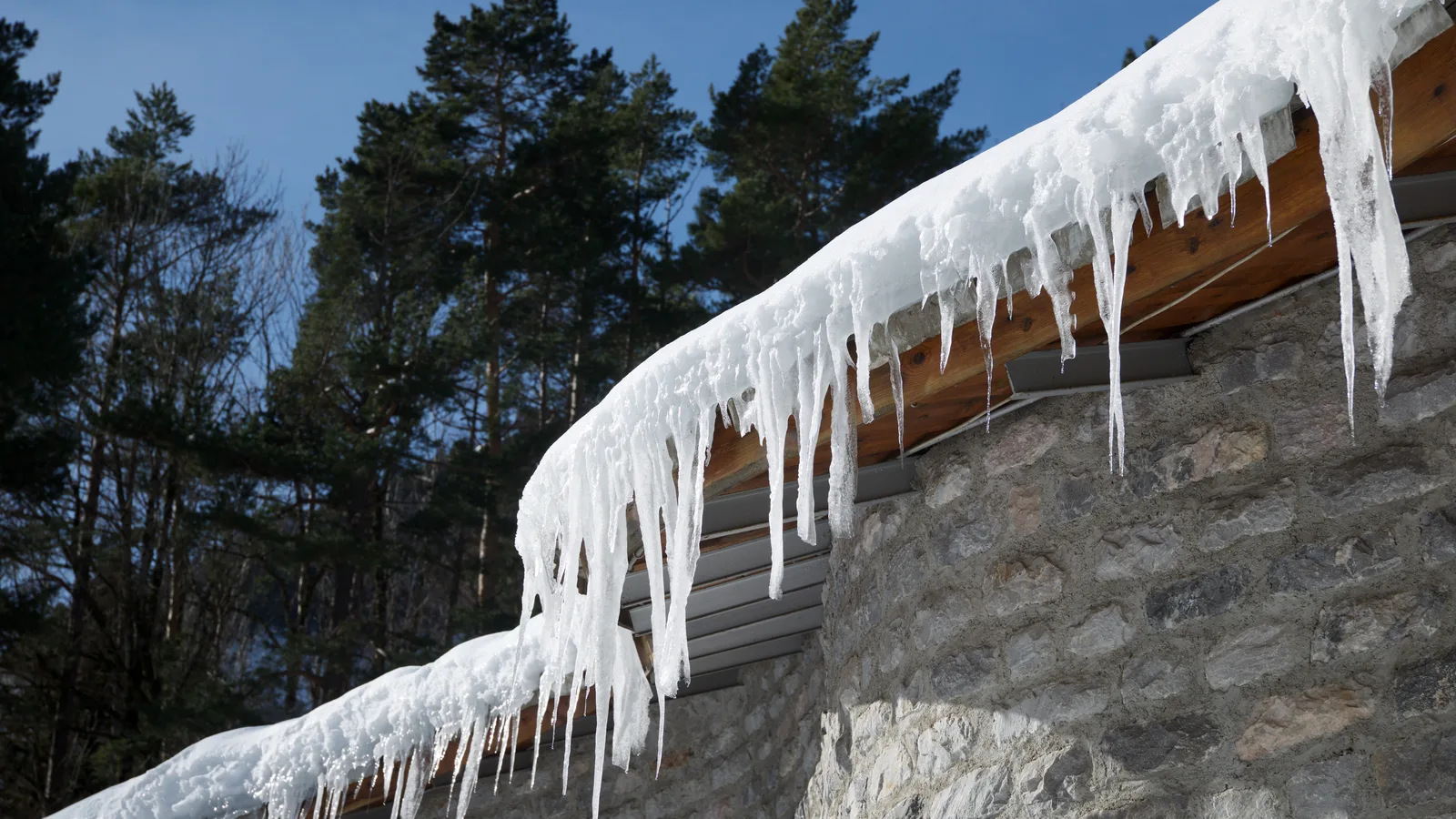
An ice dam is a ridge of ice that forms at the lower edge of a snow-covered roof and traps meltwater behind it, where the water can back up under shingles and leak into the attic, walls and ceilings. According to the University of Minnesota Extension, the cause is almost always heat escaping from the house below, not the weather alone.
Three things have to happen at once, the extension's guidance explains: there is snow on the roof, the upper part of the roof surface averages above 32 degrees Fahrenheit, and the lower edge stays below freezing because the outdoor air is below freezing. Snow melts on the warm upper roof, runs down to the cold eaves and refreezes. As the ridge grows, water pools behind it.
Where the heat comes from
The extension identifies heat from the house as the main source of the warm upper roof, and sunshine as a rare one. The largest share usually travels by air leakage: warm, moist indoor air moving up through gaps in the ceiling into the attic. Heat also conducts through thin or uneven ceiling insulation.
Other sources named in the guidance include leaky or poorly insulated ductwork running through the attic, chimneys, wood stoves and fireplaces used often, knee wall spaces in finished upper floors, and kitchen or bathroom exhaust fans that end just above the roof surface and melt the snow around them. In heavy snow areas, the extension says, those exhaust outlets may need to be moved or extended.
The long-term fix: air sealing first
The extension's order of work starts with making the ceiling airtight, so warm air cannot move from the living space into the attic. After air leaks are sealed, adding insulation reduces the heat that conducts through the ceiling; where space is tight, the guidance points to insulation with a higher R-value per inch.
For how much insulation, Energy Star publishes recommended attic levels by climate zone. For an uninsulated attic, it recommends R30 in zone 1, the warmest; R49 in zones 2 and 3; and R60 in zones 4 through 8. For an attic that already has 3 to 4 inches of insulation, it recommends adding R25 in zone 1, R38 in zones 2 and 3 and R49 in zones 4 through 8.
Ventilation plays a supporting role. The extension says natural attic ventilation is still needed to dry the attic and remove summer heat, but that when air sealing is done well, only a small amount is needed to keep the roof cold. It does not recommend powered attic ventilation in Minnesota. It also notes that a tighter house changes how its exhaust fans and fuel-burning appliances get their air, which needs to be checked so combustion equipment can operate safely.
When a dam has already formed
For an existing dam, the extension describes two short-term measures. Removing snow from the roof takes away one of the three ingredients; a roof rake or push broom can do it, though either can damage roofing. In an emergency, channels cut through the dam let trapped water drain, and the guidance describes hosing them in with tap water on a warm day, working upward from the lower edge. Those channels close up again within days.
The extension's guidance warns that anyone working on a roof in winter, or on a roof from below, risks injury and can damage the roof and the house, and it recommends hiring professionals for that work.
After a leak
Water from an ice dam can soak insulation, stain ceilings and damage walls, and the moisture can lead to mold and mildew. The extension advises waiting until ceilings and walls are fully dry before repairing interior damage. Water damage from ice dams can also involve a homeowners insurance claim, and the policy and the insurer set what is covered.
A home energy assessment or an insulation contractor can identify where a specific attic leaks air before any insulation is added, and the Energy Star insulation page lists its recommended levels zone by zone.
Electrical, gas, roof and ladder work can cause serious injury. Shut off power or gas first, follow the manufacturer's instructions and local code, and hire a licensed pro for anything beyond your experience.
This article reports rules, data and expert guidance. It is not legal, tax, insurance or financial advice. Talk to a licensed pro, your tax advisor or your insurer before you act on it.
Loading comments…