












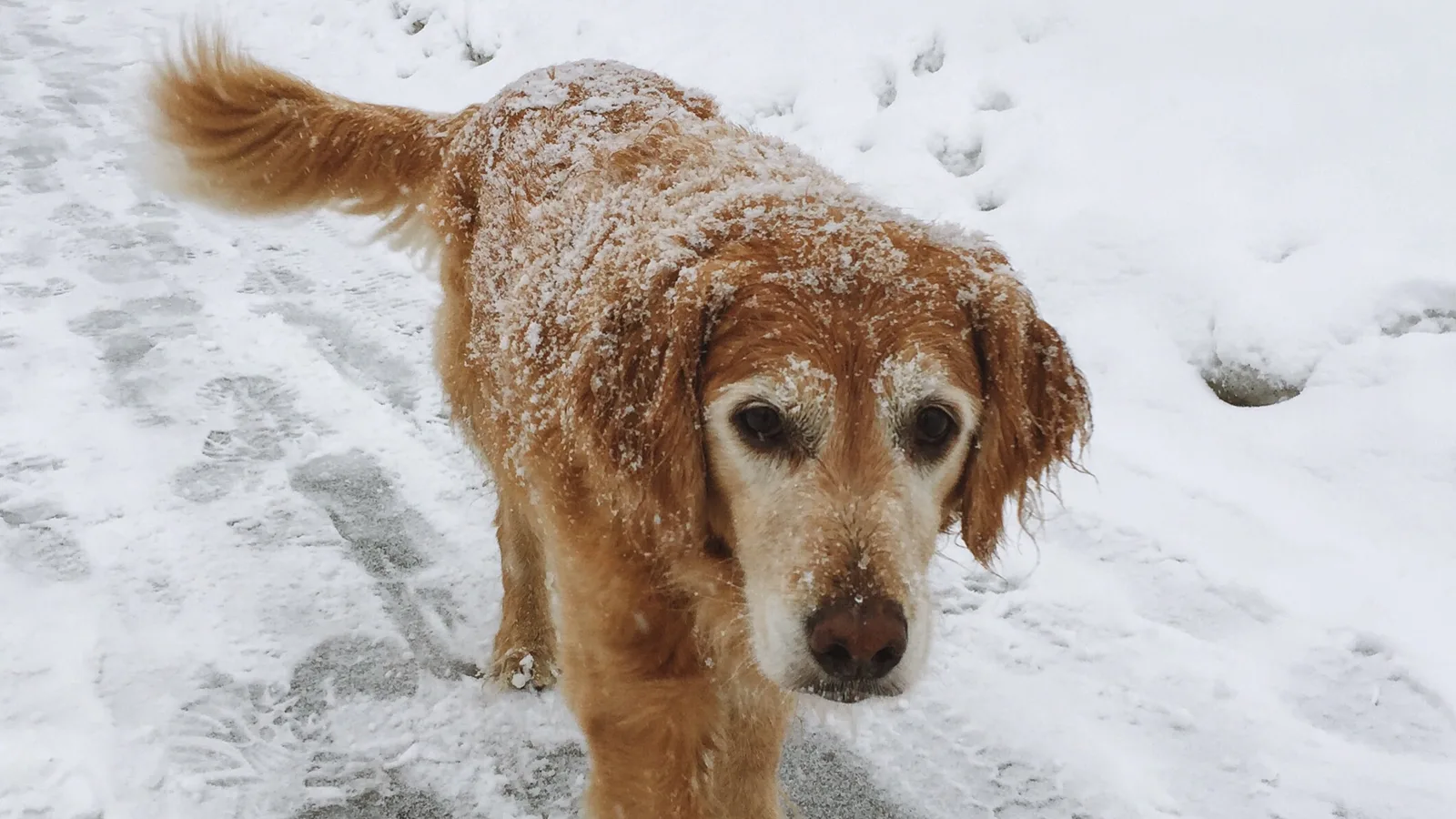
The first sidewalk salting of the season changes what a dog brings home from a walk. Ice melt crystals and the slush they make cling to paw pads and the fur between the toes, and a dog or cat that licks its feet clean afterward swallows some of it. Antifreeze dripped in a driveway or garage is a smaller exposure with a much worse outcome. Both are covered in the ASPCA's winter guidance, which comes from the organization that runs the Animal Poison Control Center.
What is in ice melt
Most ice melts are salts. The ASPCA lists sodium chloride, potassium chloride, calcium chloride and magnesium chloride as the common ingredients. Products sold as pet friendly typically use urea or magnesium chloride instead.
The most common result of a pet swallowing ice melt is stomach upset, with vomiting and diarrhea; severe vomiting or diarrhea raises the risk of dehydration. Eating a larger amount can raise the sodium level in the blood, which the ASPCA says can lead to tremors and seizures. Calcium chloride products can also cause ulcers in the mouth.
A pet friendly label lowers the risk without removing it. The ASPCA notes that those products can still cause stomach upset, so the same cleanup applies.
What it does to paws
Salt and de-icing chemicals irritate paw pads, which can become cracked, red or bleeding. The ASPCA's cold weather guidance lists several ways to limit that:
- Wipe each paw with a damp cloth or a baby wipe as soon as the pet comes inside, before it starts licking.
- Rub petroleum jelly or a paw protectant approved by a veterinarian into the pads before going out, or use dog booties.
- Trim long hair between the toes, where ice balls and salt crystals collect.
- Check for cracks in the pads and redness between the toes after walks.
- Keep dogs from eating treated snow, especially slush along curbs and walkways.
At home, a pet friendly ice melt on the owner's own steps and walk reduces exposure, and the bag or bucket belongs on a high shelf, out of reach.
Antifreeze is the bigger danger
The ASPCA describes antifreeze, like engine coolant, as lethal for dogs and cats. Many antifreeze products are made with ethylene glycol. The ASPCA recommends cleaning up every spill from a vehicle thoroughly and considering products made with propylene glycol rather than ethylene glycol. Winter is when containers get opened in garages and driveways, and when radiators that leak leave puddles where pets walk.
Unlike ice melt, antifreeze poisoning is not something to watch and wait on. The time between exposure and treatment is what the ASPCA's guidance centers on: contact a veterinarian or the poison control center right away if a pet may have swallowed any.
Who to call
The ASPCA Animal Poison Control Center answers at (888) 426-4435. The ASPCA suggests saving the number in a phone before it is needed, and it also offers a mobile app. A veterinarian is the other first call.
Loading comments…