












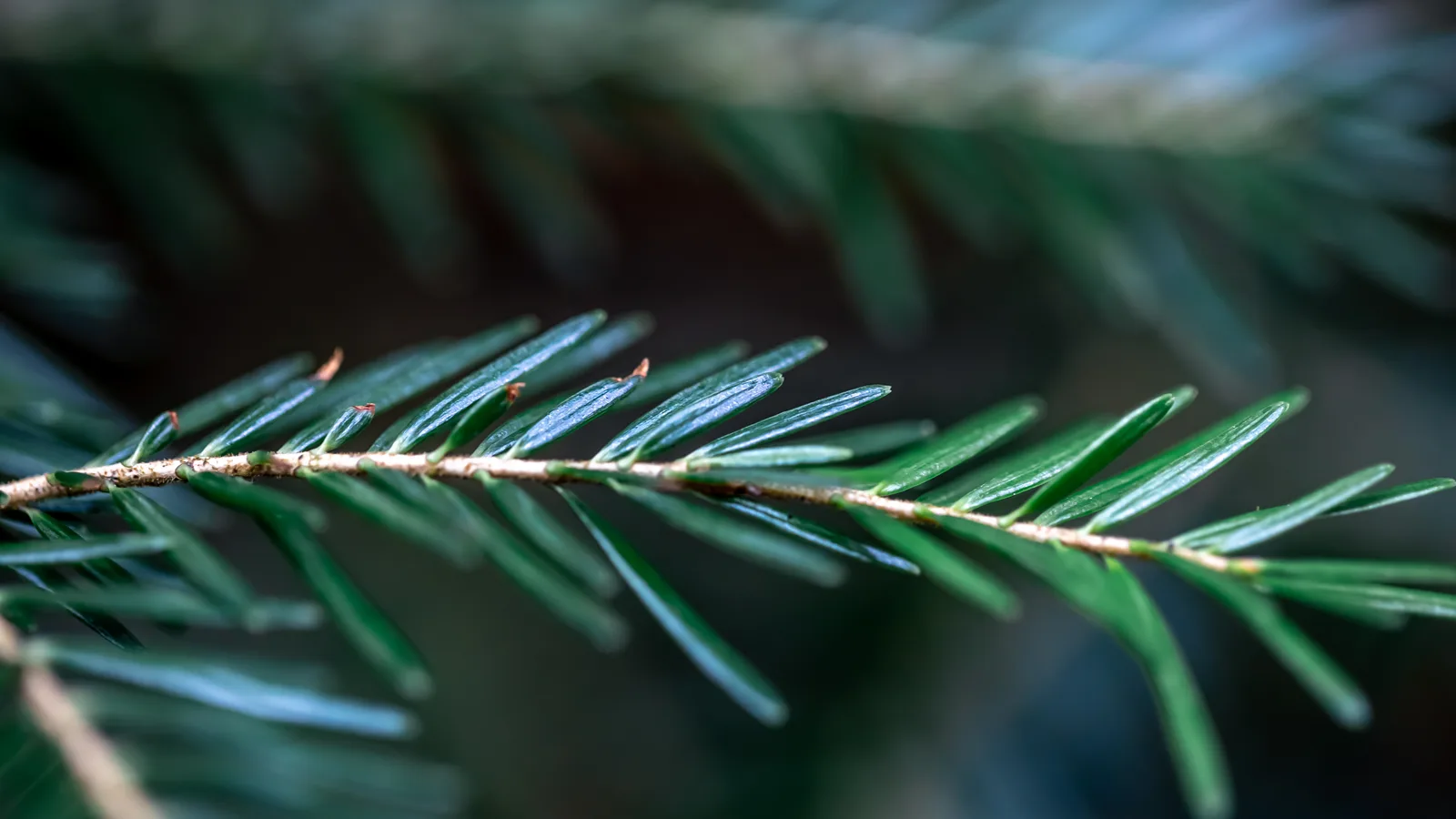
A fresh-cut Christmas tree comes indoors with whatever was living on it in the field, and Penn State Extension's entomologists say none of those hitchhikers is a danger to the people, pets or furnishings in the house. The usual list includes aphids, adelgids, bark beetles, mites, spiders and praying mantis egg cases. A few minutes of checking at the lot, and a few more in the driveway, keep most of them outside.
What tends to ride along
Penn State Extension's guide to insects on real Christmas trees lists the common ones and what each looks like.
Aphids. Giant conifer aphids in the genus Cinara are up to about 1/8 inch long, black, gray or brown, with long legs. In a warm room they can reproduce and produce winged offspring that show up on windows. Balsam twig aphids are gray-green and much smaller. Clemson Cooperative Extension says sooty mold or a sticky residue called honeydew on a tree signals aphids or scale insects, and recommends passing on a tree that shows them.
Adelgids. White, cottony flecks on needles, twigs or bark usually mean adelgids, tiny aphid relatives that coat themselves in wax. Penn State says they and their wax are harmless and that they stay put on the tree.
Bark and ambrosia beetles. Small brown, cylindrical beetles, or fine sawdust from their larvae, can appear under the tree. Penn State notes they cannot colonize the dry wood in a house and usually die quickly indoors.
Mites, bark lice and scale. Predatory mites, bark lice (psocids) and the red crawlers of pine needle scale are all tiny. Penn State says the mites do not bite people or pets, bark lice cannot bite and die in dry indoor air, and scale crawlers can be wiped up with a damp towel.
Spiders. Penn State lists spiders as harmless on a tree, though they may spin small webs on walls, ceilings or furniture.
Praying mantis egg cases. These are brown, frothy-looking masses attached to a twig. A single case can hatch a large number of nymphs in a warm living room, and Penn State notes the young are very hard to keep alive indoors.
Bird nests are worth noting separately. Both Penn State and the University of Illinois Extension recommend removing any nest, because old nests can hold parasitic mites and lice.
Check the tree before it comes home
The University of Illinois Extension suggests laying the tree on its side and looking up into the interior from the cut end, where egg masses and nests are easiest to spot. Penn State recommends a visual check for egg masses on the trunk and branches before the tree is transported, and scraping off any that turn up.
Many lots and farms run a mechanical tree shaker, and both extension services recommend using it. Penn State says a vigorous shake by hand also helps, since it dislodges adult insects and spiders. Do the shaking outside, before the tree goes on the car.
For a mantis egg case, the Illinois and Penn State advice is the same: cut off the twig or branch it is attached to and leave it outdoors in a shrub or evergreen, where it can hatch in spring.
In states with spotted lanternfly quarantines, Penn State asks for extra attention. Look for lanternfly egg masses before moving the tree, and when the season is over, dispose of it through a community recycling or chipping program rather than leaving it outside, so any eggs do not hatch in spring. State agriculture departments publish their quarantine maps.
No bug spray on the tree
Penn State Extension says aerosol insect sprays are often flammable, are usually not labeled for indoor use, and should not be sprayed on a Christmas tree. The University of Illinois Extension gives the same warning.
Penn State recommends sticking to non-chemical steps indoors: leave insects on the tree until it comes down, vacuum any that reach walls, ceilings or windows, and clear webs with a vacuum or a dusting brush. Clemson's guidance adds that if insects keep appearing, the tree can go back outside to be shaken or cleaned off before it returns.
Before heading to the lot, bring pruners for any egg case and a sheet or tarp for the car, and ask whether the lot runs a shaker. At home, look into the tree from the cut end once more before carrying it through the door.
Loading comments…