












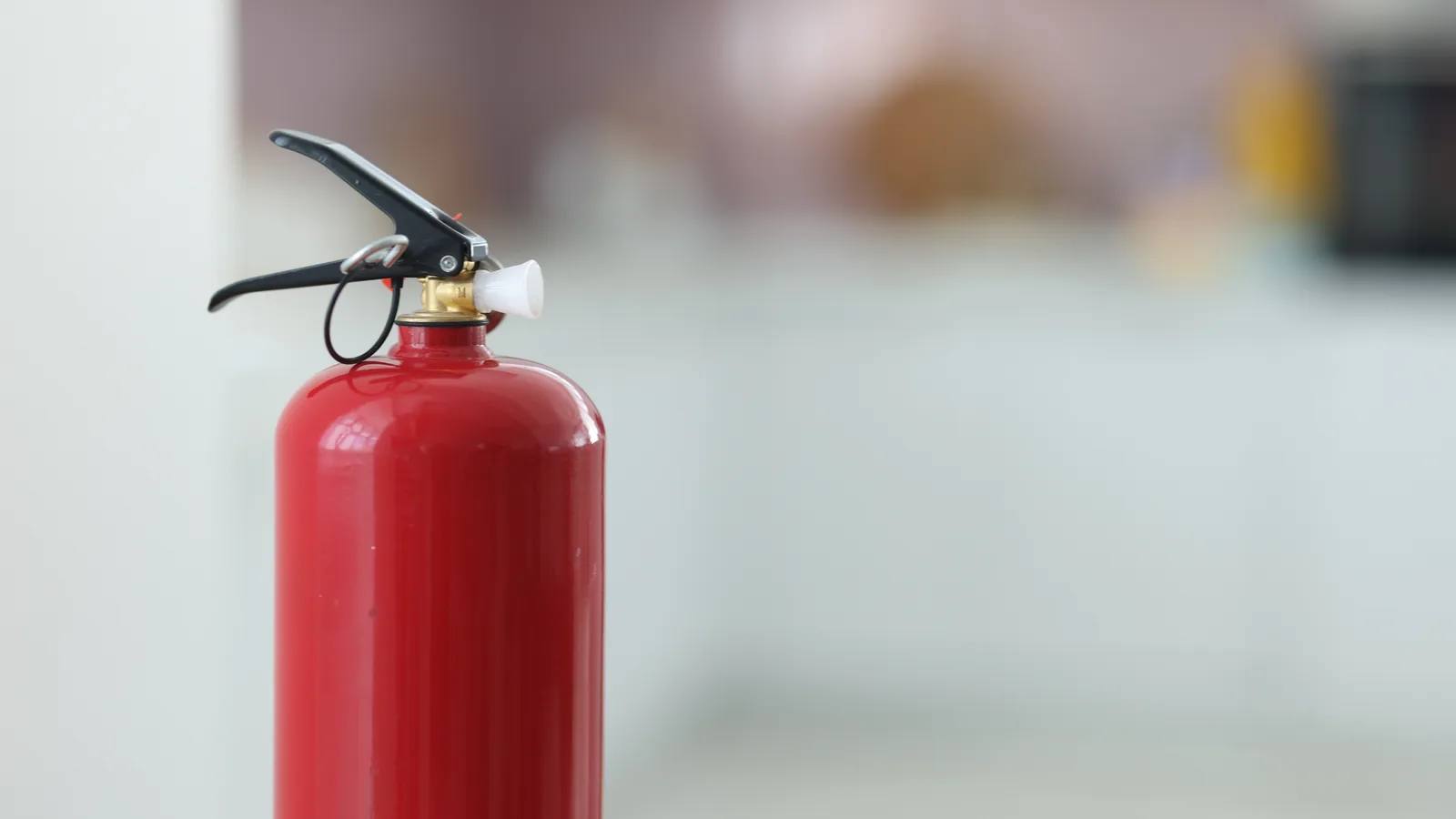
With holiday cooking underway, the U.S. Fire Administration, part of FEMA, publishes plain guidance on what the letters and numbers on the label mean, how to use one and, just as important, when not to try.
What the letters mean
Extinguishers are rated by the kind of fire they put out. Class A is ordinary combustibles: wood, paper, cloth. Class B is flammable and combustible liquids, which the Fire Administration lists as grease, gasoline, oil and oil-based paint. Class C is energized electrical equipment, and the agent in a C-rated unit does not conduct electricity. Class D is for burning metals, found mostly in factories, and Class K is for cooking oils and fats in commercial kitchen appliances.
For a home, the Fire Administration points to multipurpose extinguishers labeled B-C or A-B-C, which cover most household fires, and notes that home improvement stores typically carry A-B-C units. It also says to look for a UL Listed or ULC Listed label, meaning the model was tested to a published standard.
How to read 1A:10B:C
The numbers say how much fire a unit can handle. The number in front of the A is a multiple of 1.25 gallons of water, and the number in front of the B is a multiple of square feet of liquid fire. So a 1A:10B:C extinguisher has the Class A capacity of 1.25 gallons of water, can handle up to 10 square feet of a Class B fire, and is safe on electrical fires. A 2A:10B:C unit has twice the Class A capacity. The Fire Administration's advice on size is to choose the largest extinguisher the person using it can safely and comfortably handle.
The six conditions before fighting a fire
The agency's guidance is to fight a fire only if every one of these is true:
- Everyone else in the building has been alerted.
- Someone has called the fire department.
- The person is physically able to do it. Young children and older adults should not use extinguishers.
- The fire is small and confined to one object or surface, such as a pan or a wastebasket.
- The person is not exposed to toxic smoke.
- There is a clear way out.
If any answer is no, or if there is doubt, the guidance is to alert others, leave the building and call 911 from a cell phone or a neighbor's phone.
PASS, step by step
The Fire Administration teaches the same four steps fire departments do. Pull the pin, with the nozzle pointed away and the locking mechanism released. Aim low, at the base of the fire rather than the flames. Squeeze the lever slowly and evenly. Sweep the nozzle from side to side.
Where it goes and how to check it
The agency's one placement rule is that the extinguisher must be easy to reach in an emergency, with nothing blocking it. Its inspection list is short: nothing blocking access; the pressure gauge, if there is one, not reading too high or too low; no dents, rust or damage on the cylinder, hose or nozzle; and no dust, oil or grease on the outside. Some models need to be shaken monthly and some need pressure testing every few years, so the label on the unit is the schedule. A unit that has lost pressure is recharged or replaced depending on the type.
The practical step this week is two minutes at the extinguisher itself: read the rating on the label, check the gauge, and make sure nothing blocks the way to it. The local fire department is the agency's suggestion for hands-on training.
Loading comments…