






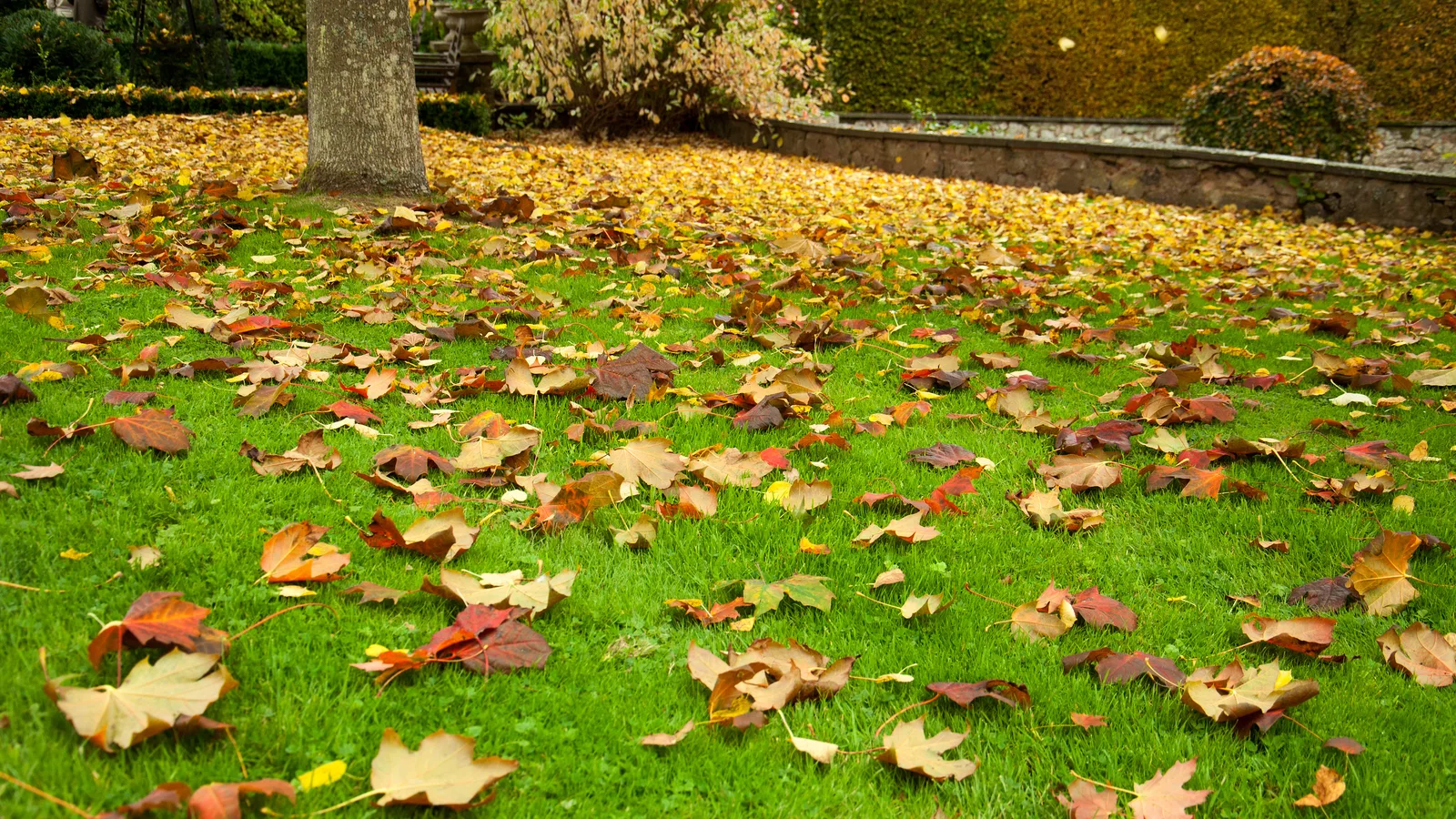
By mid-November most of the country's lawns are either slowing toward dormancy or already brown, and the leaves are down. The work left for the season splits by what kind of grass is in the yard. Cool-season lawns across the North can still use a last feeding. Warm-season lawns across the South, by extension guidance, skip it. And in the dry West, the job is water, not fertilizer. Cooperative extension services in Indiana, South Carolina, Virginia and Colorado have each published the details.
Leaves: mow them in
Virginia Cooperative Extension's lawn leaf publication, last reviewed in August 2025, summarizes the research on mulching leaves into turf. At Purdue University, perennial ryegrass lawns received up to 4,000 pounds of maple leaves per acre in a single application, chopped in with a mower, with no harmful effect on turf quality, color, growth, thatch, soil pH, weeds or disease. The leaves did not replace nitrogen fertilizer. At Michigan State University, up to 6 inches of leaves could be mulched in at once, depending on the mower, and over time the chopped leaf layer reduced dandelions and crabgrass by covering the gaps where weed seeds germinate.
The same publication lays out the method. Most rotary mowers can do it, and mulching mowers are built for it. Clear sticks and limbs first. Wear safety glasses and a mask. Mow leaves when they are slightly moist, which keeps the dust down; leaves that are soaking wet strain the engine and do not chop well. Do not overload the mower, and make more than one pass if the first one leaves large pieces. Keep the blade sharp and clean the air and fuel filters during a season of repeated mulching. The exception is pine needles, which resist breaking down for months even when chopped; the publication suggests using them as mulch around shrubs instead. Leaves can also be composted.
Cool-season lawns: one late feeding
For cool-season grasses such as fescue, bluegrass and ryegrass, Purdue's turfgrass program recommends a late-fall nitrogen application near or after the last mowing of the year, while the lawn is still green. The target rate is 0.5 to 1.0 pound of nitrogen per 1,000 square feet. In Purdue's region, the first few weeks of November are generally the window, and a month or more often passes between the last mowing and browning or snow cover. Purdue recommends a quick-release nitrogen source in the fall, such as urea or ammonium sulfate, because the grass has to take it up before winter. The payoff shows up the next spring and summer: earlier green-up, a denser lawn and better tolerance of red thread and pink patch.
Warm-season lawns: skip the nitrogen
For centipedegrass, St. Augustinegrass, bermudagrass and zoysiagrass, Clemson Cooperative Extension's guidance runs the other way. Late-season nitrogen forces tender growth and depletes the carbohydrates the grass needs to survive winter. Clemson's fact sheet puts the last nitrogen at least two months before the average first frost, which in South Carolina means by about August 15 in the Upstate and September 1 on the coast. If a soil test shows potassium is low, Clemson suggests about 1 pound of potash per 1,000 square feet, since potassium improves cold tolerance. It also advises against weed-and-feed products in the fall, because they usually carry high nitrogen; fertilizer goes on by soil test and weeds are handled separately. Keeping leaves off warm-season turf and letting more sunlight reach it are on the same list.
Dry winters: water, carefully
Where winters are dry and snow cover is unreliable, Colorado State University Extension's fact sheet on fall and winter watering, reviewed in August 2025, says lawns and landscape plants can dry out even while dormant. Its guidance is to water only when both the air and the soil are above 40 degrees Fahrenheit and the ground has no snow cover, at midday so the water soaks in before night freezes, about once or twice a month during extended dry spells from October through March. Newly seeded or sodded lawns are the most vulnerable, and lawns facing south or west are at higher risk.
Know your grass and your zone
Which of these sections applies depends on the grass, not the calendar. The USDA Plant Hardiness Zone Map, updated in 2023, sorts locations by their average annual extreme minimum winter temperature, in 10-degree Fahrenheit zones split into 5-degree half zones, and the interactive map returns a zone for any ZIP code. The zone narrows the likely grass types, but transition areas grow both. A county's cooperative extension office can identify a lawn's grass from a sample, run or recommend a soil test, and give the local dates for the last fertilizer and the first frost.
Sources
- Virginia Cooperative Extension: Leave Them Alone: Lawn Leaf Management (430-521)
- Purdue University Turfgrass Science: Late Fall Fertilization
- Clemson Cooperative Extension Home and Garden Information Center: Winterizing Lawns (HGIC 1221)
- Colorado State University Extension: Fall and Winter Watering (7.211)
- U.S. Department of Agriculture Agricultural Research Service: USDA Plant Hardiness Zone Map
Loading comments…