












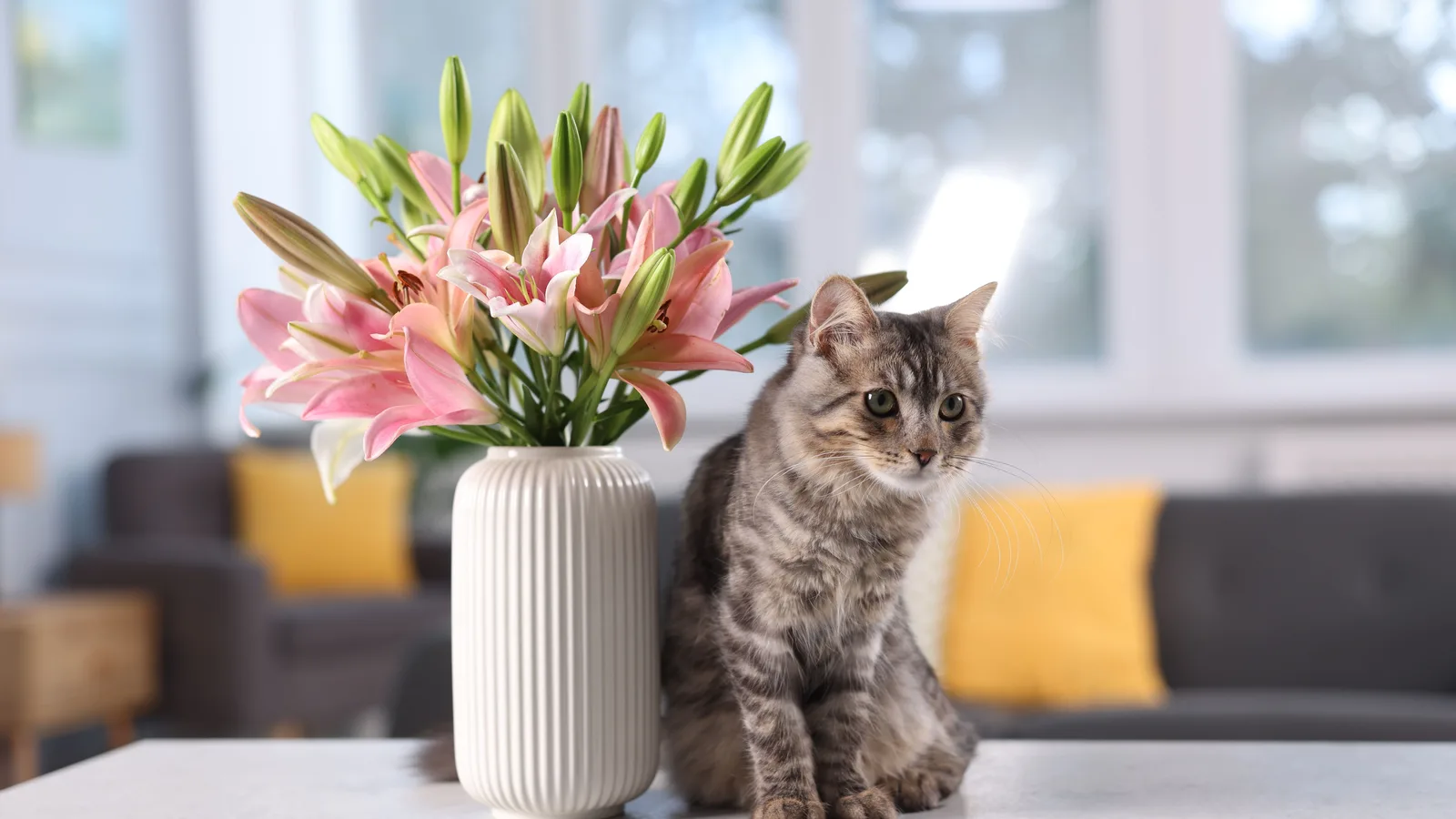
Lilies are a staple of holiday arrangements and hostess bouquets, and for a household with a cat they are one of the most dangerous flowers to bring through the door. The U.S. Food and Drug Administration's Center for Veterinary Medicine says that true lilies and daylilies can cause kidney failure in cats, and that the amount it takes is very small.
Which lilies FDA names
FDA's list of highly toxic lilies for cats covers Asiatic lilies and their hybrids, daylilies, Easter lilies, Japanese show lilies, Oriental lilies, rubrum lilies, Stargazer lilies, tiger lilies and wood lilies.
Every part of the plant is toxic, according to FDA: the stem, leaves, flowers, pollen and even the water in the vase. A cat can be poisoned by chewing a small piece of a leaf or petal, by drinking from the vase, or by grooming a few grains of pollen off its fur after brushing past the flowers. FDA says the toxin has not been identified and that it affects only cats. A dog that eats a lily may get an upset stomach, but not kidney failure.
The timeline
FDA describes the signs in stages. In the first 12 hours a cat may be less active, drool, vomit and stop eating. Between 12 and 24 hours, signs of kidney damage appear, such as urinating more and becoming dehydrated. Between 24 and 72 hours the kidneys can fail, which is fatal without treatment.
The most important number on FDA's page is 18 hours. It says that when treatment is delayed 18 hours or more after a cat eats part of a lily, the result is generally kidney failure that cannot be reversed, while early treatment greatly improves the outlook. That is why FDA says to call a veterinarian or a pet poison control line right away if a cat has eaten any part of a lily, licked its pollen or drunk the vase water, rather than waiting for symptoms.
FDA suggests bringing the plant to the clinic, or a photo of it, so the vet can tell whether it is one of the highly toxic kinds.
Flowers called lilies that are not true lilies
Several common plants carry the name without belonging to the same group, and FDA describes each:
- Lily of the valley can cause an abnormal heart rhythm that can be life threatening, along with vomiting, diarrhea and weakness, in both cats and dogs.
- Gloriosa, or flame lily, can cause serious failure of several organs in cats and dogs if they eat the roots or tubers.
- Calla lilies and peace lilies contain crystals that irritate the mouth and throat, causing pawing at the face, drooling, foaming and vomiting, which usually clear up on their own.
- Peruvian lilies, common in grocery store bouquets, may cause mild vomiting and diarrhea if a cat eats a lot, and FDA says they do not cause kidney failure in cats.
Keeping the house safe
FDA's advice is to keep true lilies out of a home with a cat entirely, rather than trying to place the vase out of reach, since pollen falls and cats climb. A guest arriving with a bouquet can be thanked and the arrangement checked before it is set out; lilies can go to a household without cats. The same applies to planting lilies outdoors where a household's own cats or the neighbors' outdoor cats roam.
The two poison lines FDA lists are the Pet Poison Helpline at 855-764-7661 and the ASPCA Animal Poison Control Center at 888-426-4435. It is worth saving both numbers in a phone before the holiday flowers start arriving.
Loading comments…