












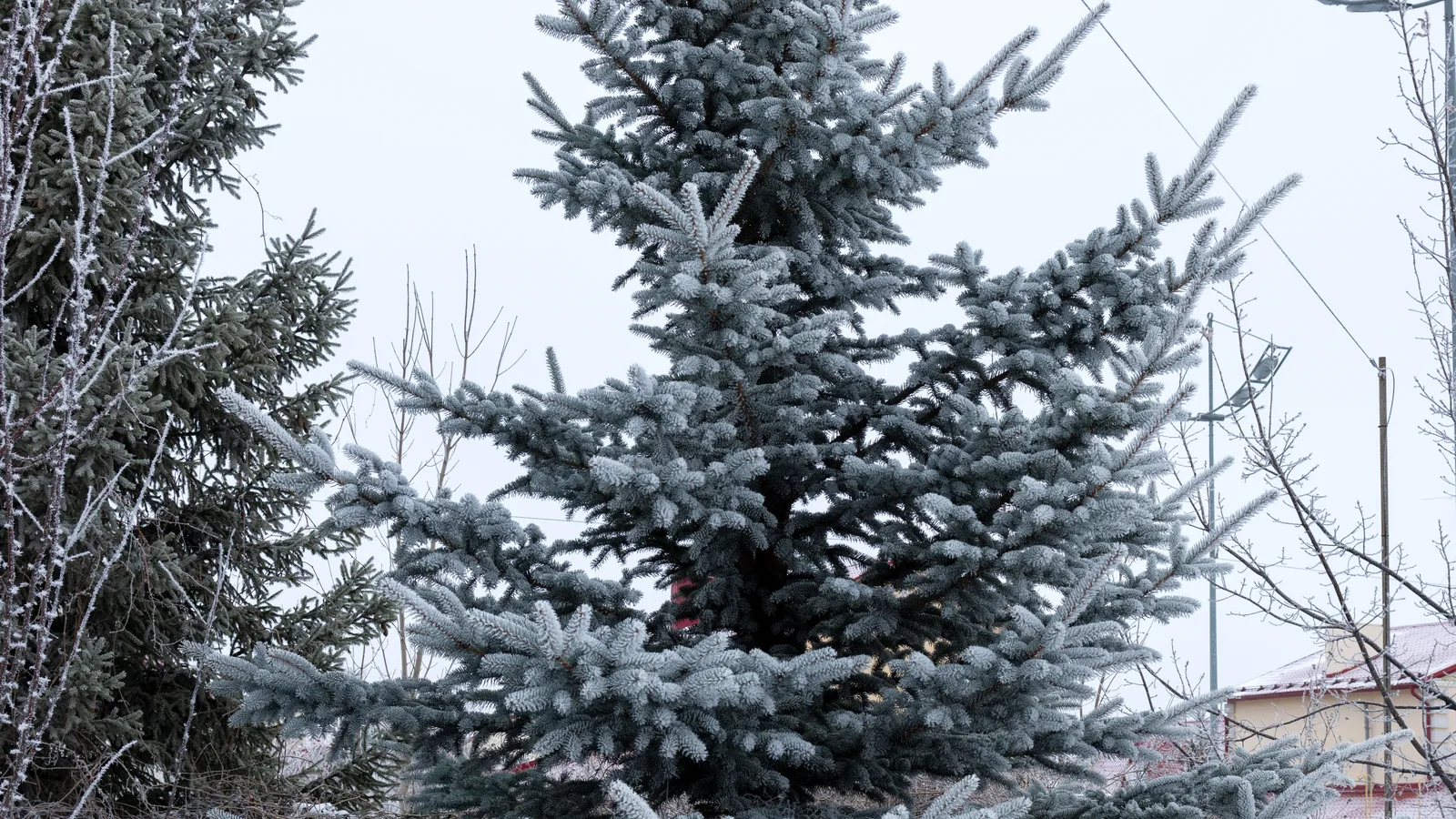
A living Christmas tree, sold with its roots in a burlap-wrapped ball or a container, can go into the yard after the holidays and grow for decades. Penn State Extension's guidance makes the schedule plain: the tree spends very little time in the house, and most of the work, digging the hole, happens weeks before it arrives, while the ground can still be dug.
Choosing one
Two kinds are sold. Container trees are usually small, tabletop size, and the tag says whether they are winter hardy where you live. Balled-and-burlapped trees are much heavier than a cut tree of the same height, so Penn State suggests choosing a smaller one than you would cut, and raising it on a stand indoors if you want more height. Check the mature size on the tag against the spot in the yard it is going to: a spruce that is 6 feet in the living room can grow far wider than the corner it was meant for.
Dig the hole now
Penn State says to dig early, before the ground freezes, which in much of the northern half of the country means the next few weeks. The hole:
- 1 to 2 feet wider than the root ball;
- as deep as the distance from the root flare, where the trunk widens into roots, to the bottom of the ball, so the flare ends up level with or slightly above the finished grade;
- with tapered sides, wider at the top, and a firm, flat base;
- with the sides roughened by the shovel so they are not glazed smooth.
If freezing weather is forecast, store the soil you dug out in a shed or garage so it is not a frozen lump on planting day.
Bringing it in, slowly
Before a balled-and-burlapped tree comes inside, Penn State says to keep it in a garage, shed or sheltered outdoor spot for 1 to 2 weeks. Indoors, limit its time to four to five days and never more than a week, in a cool spot away from heat sources and direct sun. Light it with LED or other low-heat lights rather than incandescent bulbs. A tree kept warm too long can break dormancy, which leaves it unready for the cold it is about to be planted into.
Watering is the daily job. Set the tree in a watertight tub or galvanized bucket with stones in the bottom so the ball does not sit in water, and check the root ball every day indoors. Container trees dry out faster still.
Planting
- Move the tree back to a cooler spot for several days before planting, shortening that if the weather is unusually warm and lengthening it if it is extremely cold.
- Set it in the hole and remove the burlap or wire basket and any twine, cutting the material all the way around the bottom of the ball. Synthetic burlap does not break down and can restrict roots, so it comes off too.
- Backfill, water thoroughly, and if possible mulch with straw to help the roots adjust to cold soil.
If the ground freezes before planting, keep the tree in an unheated spot until spring, or in a sheltered outdoor spot out of the prevailing wind with mulch over the root ball, and plant it the same way then. The practical step this week: pick the spot, check the mature size, and dig.
Loading comments…