












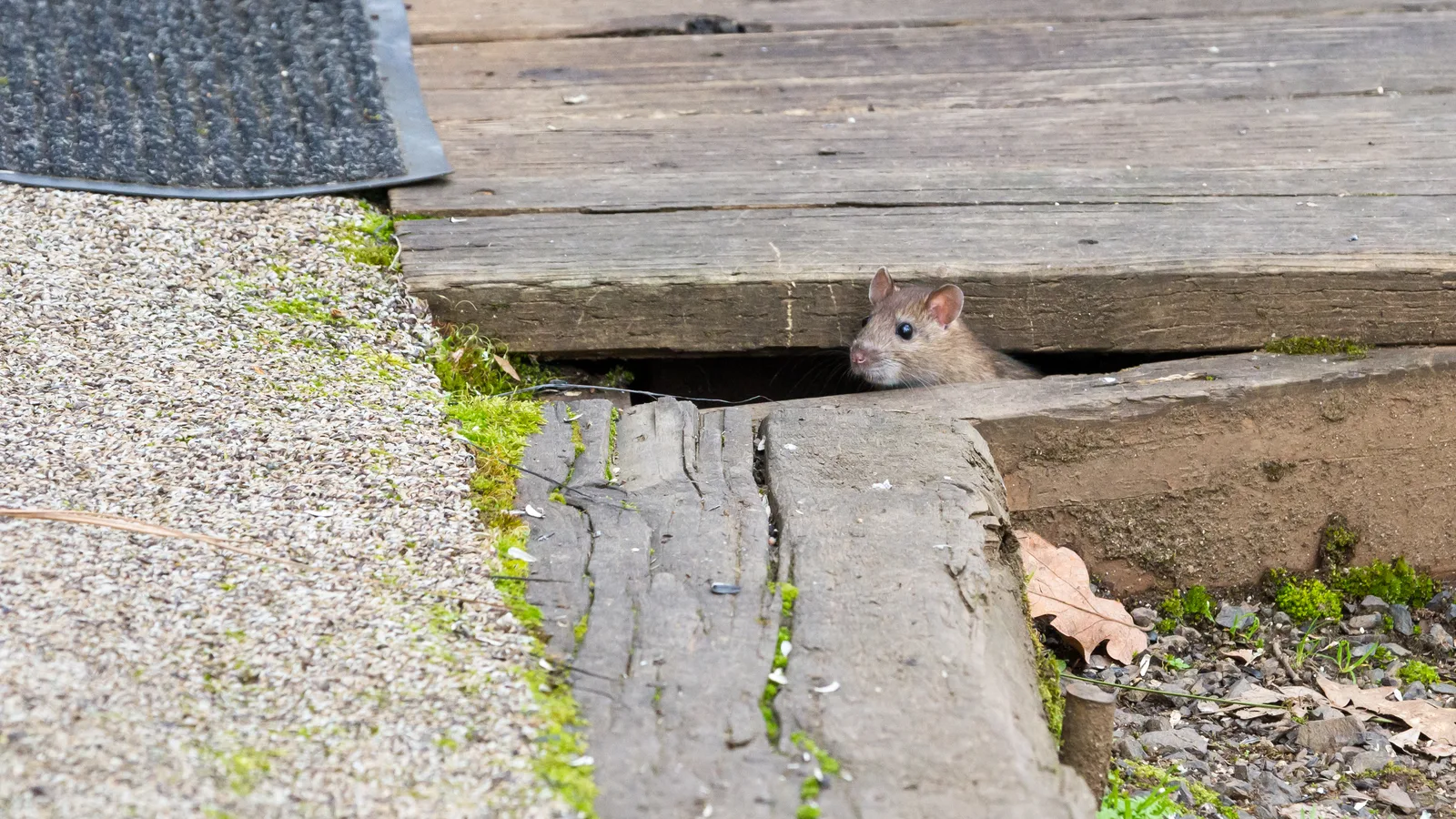
A house mouse can fit through an opening about the width of a pencil, roughly a quarter inch across, according to the Centers for Disease Control and Prevention. That is why the agency's advice on keeping rodents out starts with sealing gaps of any size.
Where to look inside
The CDC's seal-up list for the inside of a house is specific:
- Under, inside and behind kitchen cabinets.
- Closet floors, especially the corners.
- Around the fireplace, windows and doors.
- Behind appliances.
- Around pipes under sinks and washing machines, and the pipes running to the water heater and furnace.
- Around floor air vents and dryer vents.
- Around electrical, water, gas and sewer lines.
- The attic, basement and crawl space.
- Around floor drains in the basement or laundry room.
- Where the floor meets the wall.
Where to look outside
Outside, the agency lists the roof edges (rafters, gables, eaves and soffits); windows and doors, especially those without weather stripping; the line between the foundation and the ground; attic and crawl space vents; and every hole where an electrical, plumbing, cable or gas line enters the house.
What to seal with
For small holes, the CDC says to stuff them with steel wool and hold it in place with caulk, or to use spray foam. For larger holes, it lists lath screen, hardware cloth, metal, cement or metal sheeting, cut to fit around pipes. Gaps between the foundation and the ground get caulk, and the agency also mentions adding flashing around the base of the house and sealing garages and outbuildings.
Take away the reasons to stay
Sealing works alongside removing food and shelter. The CDC recommends storing food in thick plastic, metal or glass containers with tight lids, putting pet food away after feeding and not leaving bowls out overnight, and keeping garbage in lidded plastic or metal cans. Outdoors, it recommends keeping compost bins at least 100 feet from the house, keeping woodpiles 100 feet away and at least one foot off the ground, using squirrel guards on bird feeders, and keeping grass and shrubs trimmed within 100 feet of the house.
If mice are already inside
The CDC recommends traditional snap traps sized for the pest, since mouse and rat traps differ. It advises against glue traps and live traps, because a frightened rodent can urinate and raise the chance of spreading illness. Bait with a small amount of chunky peanut butter. Set each trap on the floor against a wall with the baited end touching the wall, so the trap and wall form a T, because rodents run along walls. Good spots are where droppings, gnaw marks or nesting material show up, behind the stove and refrigerator, and at the back of cabinets and drawers.
Check traps daily, keep them away from children and pets, and dispose of any caught rodent right away. The agency's guidance is to keep trapping until nothing is caught for a week and no new signs appear. Poison baits are for infestations that persist, in EPA-registered bait stations used exactly as the label says, and the CDC points to a pest control professional or the local health department when trapping does not solve it. Cleaning up droppings safely is its own set of steps, covered in the CDC's clean-up guidance.
The useful step this weekend is a flashlight walk along the CDC's list, starting under the kitchen sink and at the spot where the dryer vent leaves the house.
Loading comments…