












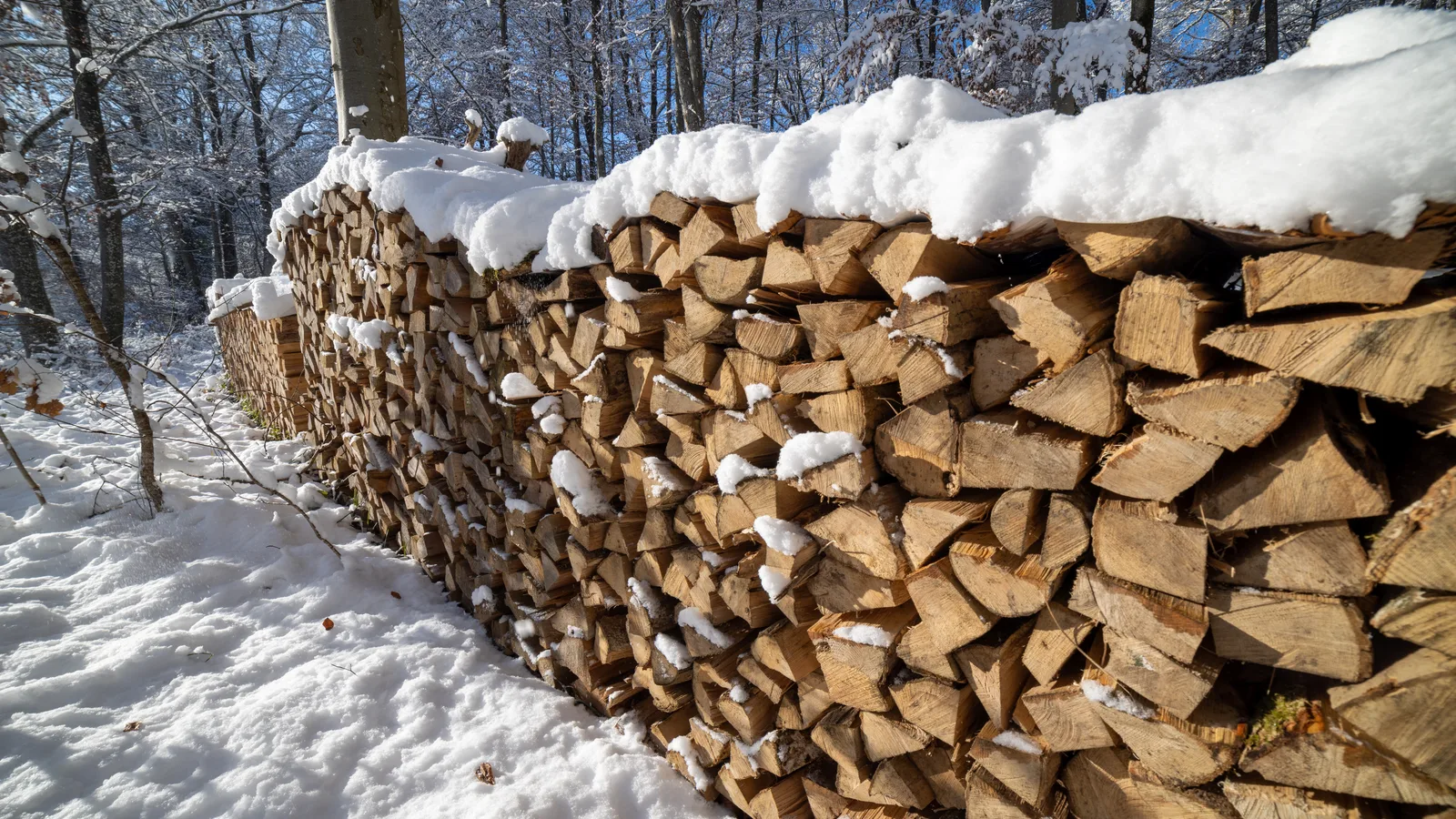
Emerald ash borer, the metallic green beetle first found in southeast Michigan in 2002, has now been detected in 38 states and the District of Columbia, according to the USDA Animal and Plant Health Inspection Service (APHIS). APHIS says the long jumps happen when people move infested ash firewood, logs or nursery stock, and several other pests that kill yard and street trees travel the same way.
Why a woodpile is such an efficient carrier
Many tree pests live inside the wood or ride on its surface for months. Emerald ash borer larvae feed in the inner bark of ash. Asian longhorned beetle, which APHIS says attacks maple and other hardwoods, tunnels through branches and trunks, and APHIS lists tunneling in cut wood and firewood among its signs. Spotted lanternfly lays its eggs on hard surfaces, and APHIS names firewood alongside grills, outdoor furniture, trailers and vehicles. Oak wilt is a fungus rather than an insect: the Wisconsin Department of Natural Resources says moving infected firewood can carry it long distances into an area that had none.
The Nature Conservancy's Don't Move Firewood program notes that these pests move only short distances on their own but can travel hundreds of miles in a load of wood, and that a clean-looking log proves little, since a few eggs or spores are nearly impossible to see.
How far is too far
APHIS's guidance is to buy firewood where you burn it, and it warns that even a short trip can spread pests unless the wood has been properly treated. The Don't Move Firewood program offers a rule of thumb: 50 miles is too far, and 10 miles or less is best. It describes local wood as the closest convenient source, such as a seller down the road or a state forest in your county.
That is general guidance, not law. Where a state limit or quarantine applies, it governs, whatever the mileage.
What certified heat-treated firewood means
When wood has to travel, the alternative is firewood certified as heat treated. The Minnesota Department of Agriculture, following the APHIS treatment schedule known as T314-a, requires the core of the wood to reach 60 degrees Celsius (140 degrees Fahrenheit) and stay there for 60 minutes. The heating must happen in a facility certified by APHIS or state officials, and Minnesota's certified bundles carry the company name, the county and state of harvest, and the state's certification logo.
Don't Move Firewood says packaged wood with an APHIS or state department of agriculture heat treatment seal is generally considered safe to move, and that a bundle labeled only kiln dried is a different product and should not be treated as safe to move.
Quarantines, and how to find your state's rule
Federal rules have shifted. APHIS removed its domestic emerald ash borer quarantine, effective January 14, 2021, so ash firewood rules now come mostly from the states. For Asian longhorned beetle, APHIS runs active eradication programs with regulated areas in four states as of fall 2026: Worcester County in Massachusetts, central Long Island in New York, Clermont County in Ohio, and Charleston and Dorchester counties in South Carolina. Several states also keep spotted lanternfly quarantine zones, which APHIS says can grow as new infestations turn up.
To look up your own state, the Don't Move Firewood map at dontmovefirewood.org/map lists each state's rules and links to the agency in charge. Parks and campgrounds may add rules of their own.
Checking the woodpile and the trees around it
- Ash trees: APHIS lists D-shaped exit holes in the bark, S-shaped feeding tracks under it, dead branches near the top of the crown, vertical bark cracks and heavy woodpecker activity, since woodpeckers strip bark to reach the larvae.
- Maples and other hardwoods: APHIS describes round exit holes about the size of a dime or smaller, oval wounds chewed into the bark that may weep sap, sawdust-like material at the base of the tree or on branches, and limbs dropping from a tree that otherwise looks healthy.
- Lanternfly egg masses: Look on logs, the woodpile cover, fences and stone from fall through spring. APHIS says fresh masses are about an inch long, hold 30 to 50 eggs and look like wet gray putty before turning dull brown. Smash them, scrape them into a sealable plastic bag with rubbing alcohol or hand sanitizer, seal it and throw it away.
- Oaks: The Wisconsin DNR says oak wilt leaves wilt from the top of the canopy down, turn dull green or bronze, and drop while partly green, most often in July and August. Red oaks usually die within about a month of wilting. For wood from a suspect oak, it suggests keeping it local and covering it with 4 mil plastic until the bark loosens.
Wood already on hand can usually stay where it is. Don't Move Firewood says wood and brush from your own property pose no threat if they are not moved far, and that firewood already brought in from a distance should be burned promptly and completely, along with any bark and debris it shed.
Where to report what you find
In Massachusetts, New York, Ohio and South Carolina, APHIS takes Asian longhorned beetle reports through its online form or its hotline at 1-866-702-9938; elsewhere, contact your state plant health officials. APHIS asks for a photo when possible, or a beetle frozen in a sturdy container. Lanternfly sightings go to your state contact or your county cooperative extension office. Before your next firewood purchase or camping trip, open your state's entry on the Don't Move Firewood map and note the agency it names.
Loading comments…