












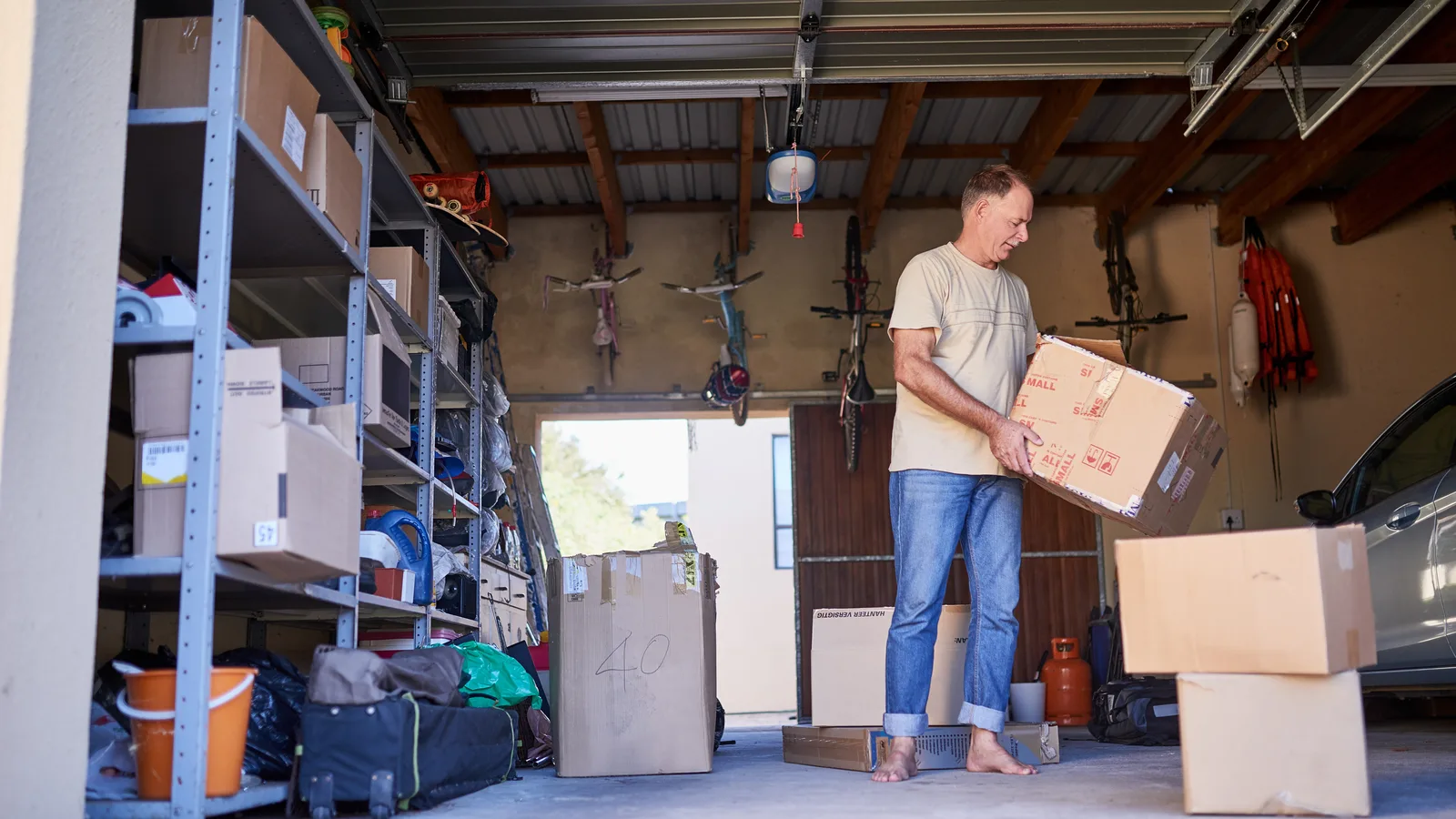
The kitchen and the bedrooms are the obvious work in a move. The garage and the basement shelves are where a move goes wrong, because that is where most households keep things the Federal Motor Carrier Safety Administration counts as hazardous materials. The agency, which regulates interstate movers, defines the category and spells out what packing those items quietly does to the mover's responsibility for the rest of the shipment.
What counts as hazardous
FMCSA's moving glossary defines hazardous materials as explosives, compressed gases, flammable liquids and solids, oxidizers, poisons, corrosives and radioactive materials, and it names the ordinary household versions: nail polish remover, paints, paint thinners, lighter fluid, gasoline, propane cylinders, and automotive repair and maintenance chemicals. In most garages that list covers a grill tank, a gas can, the fuel left in a mower or snow blower, half-used cans of stain and the shelf of car-care bottles.
What packing them does to a claim
Interstate movers must offer two kinds of liability, Full Value Protection and Released Value, and FMCSA lists the customer's own actions that can limit what the mover owes. The first one on the list is packing perishable, dangerous or hazardous materials in the household goods without the mover's knowledge. The others are worth knowing on the same day: packing boxes yourself can make damage harder to prove, and failing to tell the mover in writing about items of extraordinary value, which the agency defines as more than $100 per pound (jewelry, china and furs are its examples), lets a mover limit its responsibility for them under Full Value Protection.
Clearing the garage, step by step
- Walk the shelves a few weeks out. Sort everything into three groups: use it up, give it away or take it to a household hazardous waste collection, and carry it yourself.
- Run engines dry or drain them as the manual says. Mowers, trimmers and snow blowers go on the truck far more safely with the fuel handled the way the engine maker's storage instructions describe.
- Leave the grill cylinder. A propane cylinder is a compressed gas on FMCSA's list. A filled one can often be given to a neighbor or exchanged at a retailer's cage before the move.
- Close and label what you will drive yourself. Keep paint and chemicals in their original containers, upright and sealed, and check the rules of any state you will cross.
- Write down the valuables. List anything over $100 a pound on the shipping documents, and keep cash, jewelry and papers with you.
- Ask before you pack. If anything is in doubt, ask the mover in writing what it will and will not carry.
After delivery
FMCSA gives a customer nine months from the date of delivery to file a written claim for loss or damage with an interstate mover. It also warns against signing a delivery receipt that releases the mover from liability, and says to strike out that kind of language. Moves within one state follow that state's rules; the agency points to state consumer affairs offices and state moving associations for those.
Loading comments…