












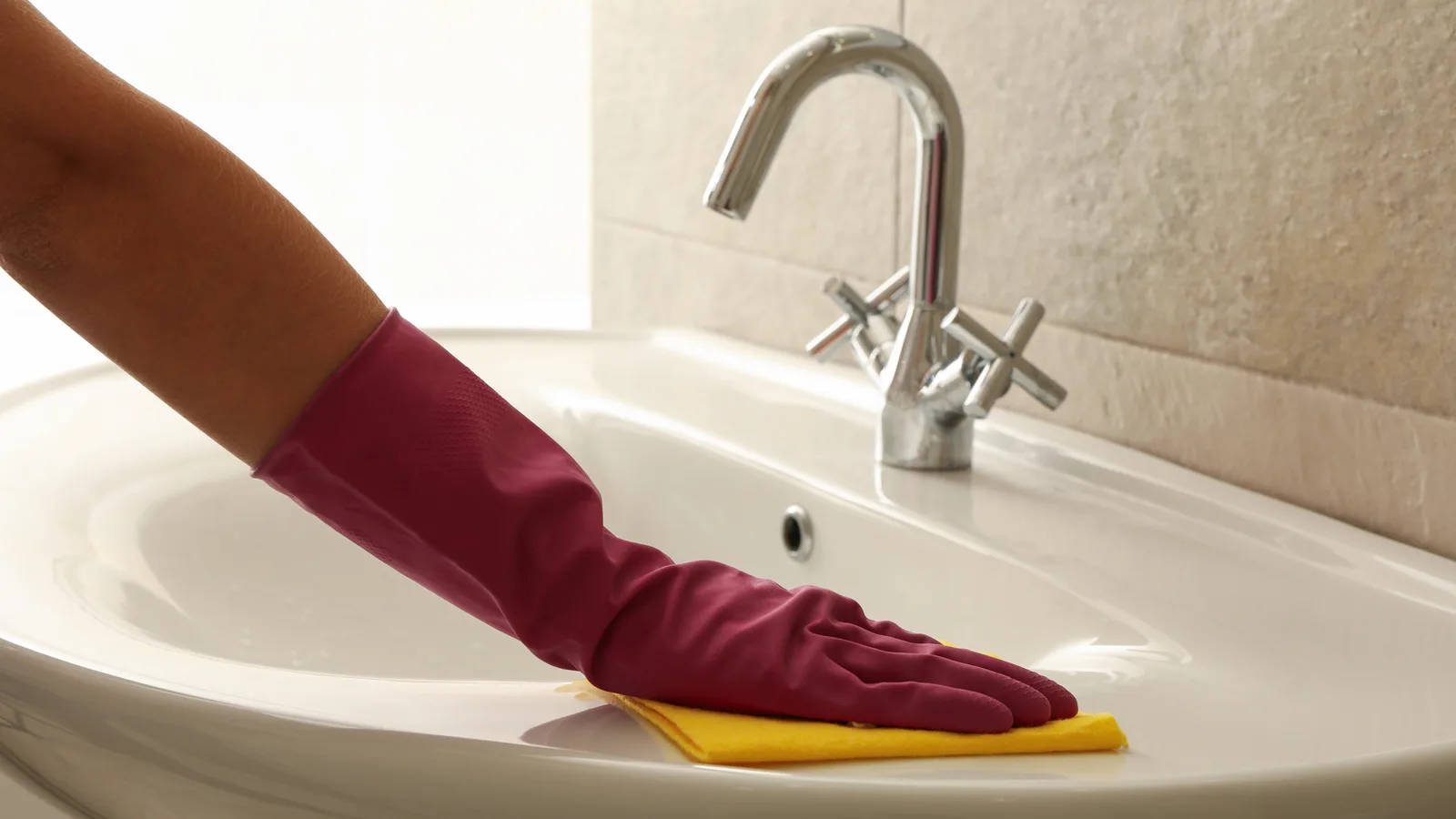
When someone in the house gets sick with vomiting or diarrhea during a holiday week, the cleanup matters as much as the care. Norovirus spreads easily, and the Centers for Disease Control and Prevention gives specific instructions for disinfecting surfaces after it, including the bleach strength to use.
The bleach strength
CDC's norovirus guidance calls for a chlorine bleach solution with a concentration of 1,000 to 5,000 parts per million. With household bleach of 5 to 8 percent strength, that works out to about 5 to 25 tablespoons of bleach per gallon of water.
The alternative is a disinfectant registered with the Environmental Protection Agency that carries a claim against norovirus on its label. CDC links to EPA's list of products registered for norovirus. Whichever is used, CDC says to leave it on the surface for at least 5 minutes.
Cleaning up vomit or diarrhea, step by step
CDC's order of operations:
- Put on rubber or disposable gloves.
- Wipe up the entire area with paper towels and put them in a plastic trash bag.
- Disinfect the area with the bleach solution or an EPA-registered product, following the product's label.
- Leave the disinfectant on for at least 5 minutes.
- Clean the whole area again with soap and hot water.
- Finish by washing laundry, taking out the trash and washing your hands.
Sheets, towels and clothes
CDC's laundry instructions: remove soiled clothing and linens right away, wear gloves, and handle them without shaking them. Wash them with detergent and hot water at the longest cycle the machine offers, then machine dry them on the highest heat setting. Wash your hands with soap and water afterward.
How long the household stays at risk
Norovirus can be present in vomit or stool before a person feels sick, according to CDC, and it can stay in stool for two weeks or more after the person feels better, during which time they can still spread it. That is why cleanup and handwashing continue after the symptoms end.
Who should stay out of the kitchen
CDC says people who are sick should not prepare or handle food or care for others, and should wait at least two days (48 hours) after their symptoms stop before doing so. In a week built around a large shared meal, that rule decides who cooks.
What to have on hand
Following CDC's guidance takes disposable gloves, paper towels, plastic trash bags, plain household bleach or an EPA-registered disinfectant with a norovirus claim on the label, and a measuring spoon set aside for cleaning. Checking that those are in the house before guests arrive means the cleanup can start at once if someone gets sick.
Loading comments…