












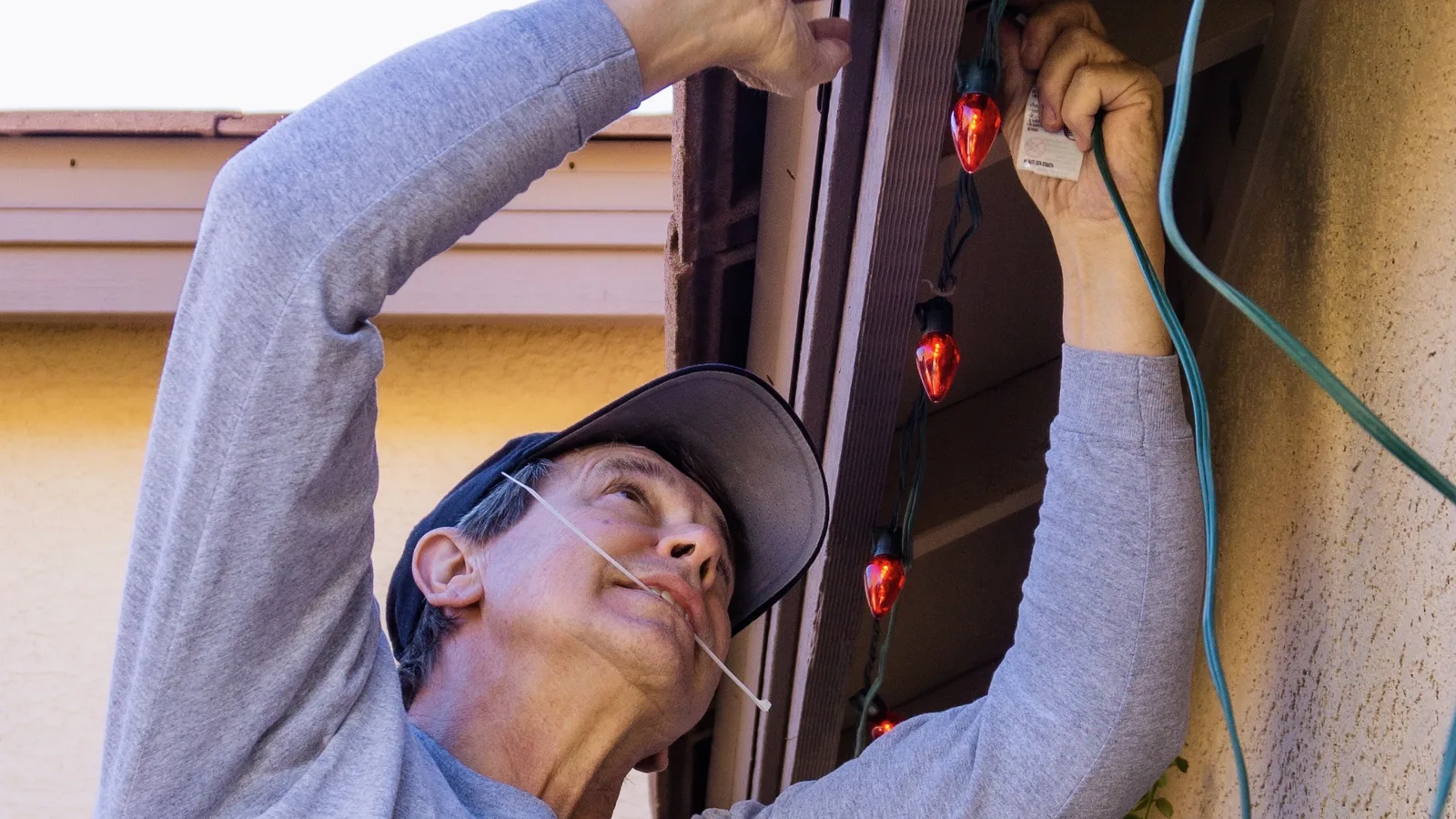
The weekend after Thanksgiving is when most roofline lights, wreaths and porch garlands go up, and the federal injury numbers for that work are steady from year to year. The Consumer Product Safety Commission estimates that about 14,900 people were treated in emergency departments for holiday decorating injuries in the season from November 1, 2022, through January 31, 2023, the most recent season it has reported. That works out to about 160 decorating injuries a day during the holidays, and nearly half involved falls.
Fires are rarer and more costly. The National Fire Protection Association reports that from 2018 through 2022, fire departments responded to an average of 155 home fires a year that began with Christmas trees, causing an average of four deaths, seven injuries and $15 million in direct property damage annually.
Here is the job broken into its parts, from the box of lights to the ladder.
Step 1: Read the label on every string
Light strings tested to UL's standard carry a holographic UL label, and its color says where the string can go. UL Solutions' bulletin on decorative lighting strings says a green holographic label means indoor use only, and those strings are printed For Indoor Use Only. A red holographic label means the string is rated for indoor and outdoor use. A green-label string on a gutter or a porch railing is outside what it was tested for. Strings with no label at all have no listing to rely on.
Step 2: Inspect before you hang
Lay each string out and plug it in on the ground. Look for cracked or broken sockets, frayed or bare wire and loose connections, and set aside any string that has them. This is easier on a table in daylight than on a roof edge at dusk.
Step 3: Do not overload the strings or the outlet
The CPSC's holiday guidance says never to connect more than three sets of incandescent lights end to end, and never to overload electrical outlets. For any string, the maximum number of connected sets is printed on its tag or packaging. Outdoor strings belong on extension cords rated for outdoor use.
Step 4: Set up the ladder before the lights
With falls behind nearly half of decorating injuries, the ladder is the main hazard of the day. OSHA's portable ladder guidance calls for setting the ladder on a stable, level surface, extending an extension ladder at least 3 feet above the point it rests against, keeping three points of contact while climbing, and keeping the body near the middle of the step. The same card says to look for overhead power lines before handling a ladder and to avoid using a metal ladder near them, a real concern when the service drop runs to the same roofline as the lights. Moving the ladder more often is slower than stretching for the next clip, and it is the part of the job that keeps someone off the ground.
Step 5: Trees, candles and timers
The CPSC advises keeping a live Christmas tree watered, since a dry tree ignites more easily, and looking for a Fire Resistant label when buying an artificial one. Candles should never be left burning in an empty room or near anything that can catch fire; the CPSC suggests flameless candles where possible. Turning off indoor and outdoor lights when leaving the house or going to bed, by hand or with a timer, limits the hours anything is energized.
Electrical, gas, roof and ladder work can cause serious injury. Shut off power or gas first, follow the manufacturer's instructions and local code, and hire a licensed pro for anything beyond your experience.
Loading comments…