












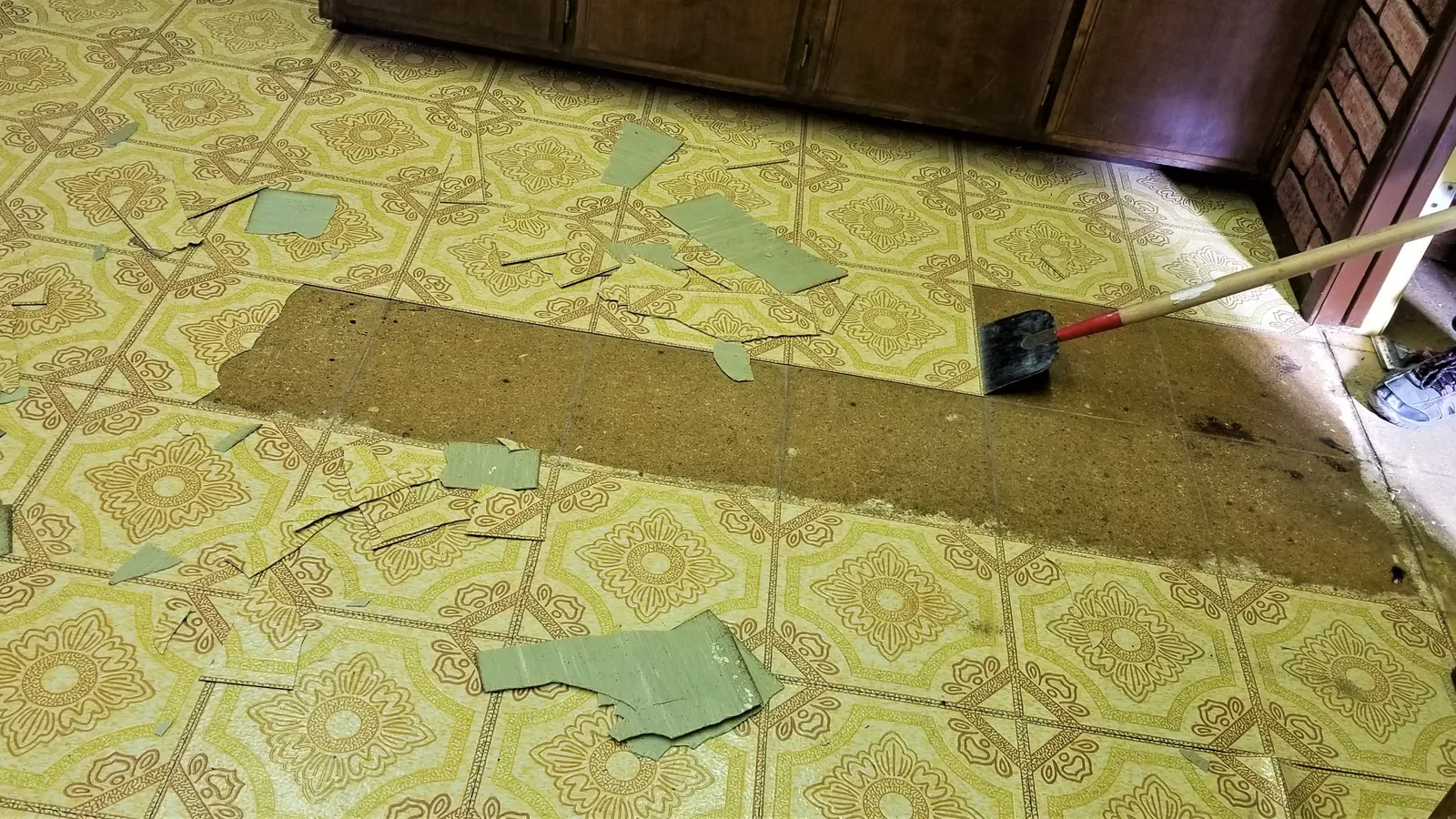
A remodel in an older house usually starts with taking something out: a layer of flooring, a ceiling, old insulation, a wall. Some of those materials may contain asbestos, and the Environmental Protection Agency's homeowner guidance, Protect Your Family from Exposures to Asbestos (last updated June 25, 2026), is built around one idea: material that is intact and left alone is not likely to be a health risk, and material that is cut, sanded, scraped or crumbling can be.
Looking at it will not tell you
EPA says plainly that asbestos generally cannot be identified by sight unless the material is labeled. Its rule of thumb is to treat a suspect material as if it contains asbestos and leave it alone until it is known otherwise. Material in good condition that will not be disturbed does not need to be tested at all.
The agency does recommend a professional inspection in two situations: before a remodel that will disturb the material, and when material is already damaged, such as crumbling drywall or insulation that is falling apart.
Why the sampling goes to a professional
A sample is a small piece of the material cut out and sent to a lab, and taking it is itself a disturbance. EPA says sampling done badly can be more hazardous than leaving the material in place, and recommends that a trained, accredited professional take it. A proper inspection, per EPA, includes a complete visual examination, laboratory analysis of the samples, and a written evaluation if asbestos is found.
What not to do in the meantime
EPA's list of things to avoid with a suspect material:
- Do not dust, sweep or vacuum debris that might contain asbestos.
- Do not saw, sand, scrape or drill into it.
- Do not use a power stripper on flooring that might contain asbestos, and do not sand or level the flooring or its backing.
- Do not track material through the house. If a path through the area cannot be avoided, wet-mop it, and call a professional for damaged areas or larger cleanups.
- Keep children away from it.
For material that is only slightly damaged, EPA's advice is to limit access to the area and not touch it. For damage beyond that, or for a project that will disturb it, the agency says to bring in a professional.
Repair or removal
Removal is not the only answer. EPA describes two forms of repair that leave the material in place: encapsulation, which seals it with a coating, and enclosure, which covers or wraps it. Removal is generally reserved for remodeling that will disturb the material or for damage too extensive to repair, and EPA says it should be done only by a trained, accredited professional, because improper removal can raise exposure rather than lower it.
Hiring the right people
EPA distinguishes two jobs: inspectors, who assess, sample and advise and can monitor the air after the work, and abatement contractors, who repair or remove. It recommends using separate firms for the two to avoid a conflict of interest. It also notes something many homeowners do not expect: federal law does not require inspectors or abatement workers working in a detached single-family home to be trained and accredited, though some states and localities do. EPA recommends hiring accredited people regardless, asking for proof of federal or state-approved training for each worker, and checking a firm's record with the local air pollution control agency, the local worker safety agency and the Better Business Bureau.
Before work starts, EPA says to get a written contract covering the work plan, cleanup and the regulations that apply. During the work, a contractor should mist materials to keep them wet, avoid breaking them into small pieces, seal the work area with plastic sheeting and tape, shut off the heating and cooling system, keep people and pets out, and bag waste in sealed, labeled heavy-duty bags. Cleanup should use wet methods or HEPA vacuums, never a household vacuum. Air monitoring afterward can confirm fiber levels did not rise, and EPA suggests getting written assurance at the end that the procedures were followed.
State agencies keep the current lists of accredited inspectors and contractors, and they are the place to start before any demolition in a house old enough to raise the question.
This article reports rules, data and expert guidance. It is not legal, tax, insurance or financial advice. Talk to a licensed pro, your tax advisor or your insurer before you act on it.
Loading comments…