












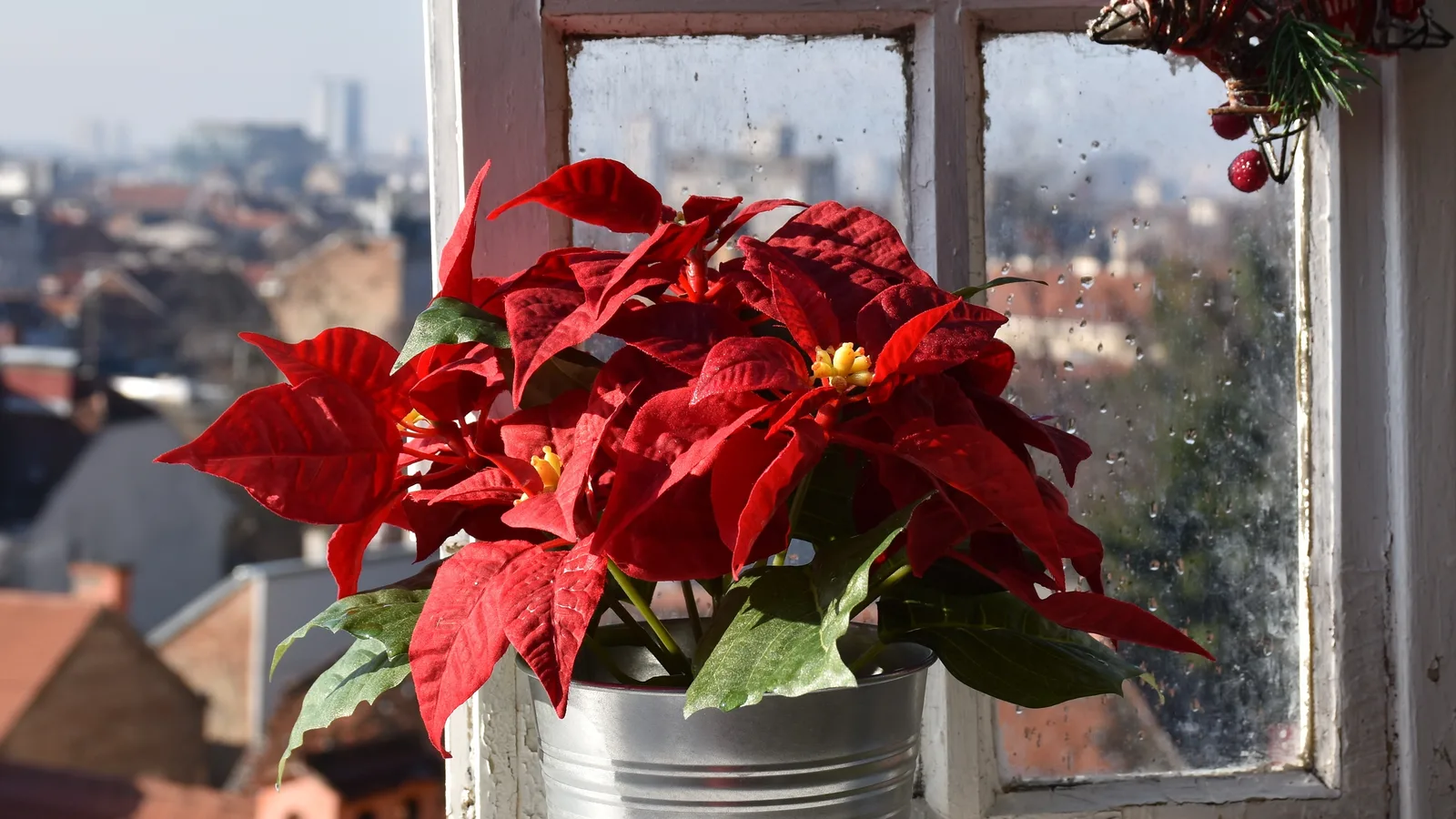
Poinsettias go home from garden centers and grocery stores between Thanksgiving and Christmas, and plenty of them are dropping leaves by New Year's. The plant is a tropical shrub, and most of what goes wrong with it indoors comes down to three things the Clemson Cooperative Extension Home and Garden Information Center spells out in its poinsettia fact sheet: light, temperature and water. Here is what the guidance says, step by step, from the store shelf to the windowsill.
Picking one at the store
Clemson's checklist for choosing a plant starts with the colored parts, which are not flowers at all. The red, pink or white bracts are modified leaves, and the true flowers are the small yellow structures in their center, called cyathia. Look for:
- Bracts that are fully colored and mature.
- Dark green foliage all the way down the stem, not just at the top.
- Stiff stems with no wilting, breaking or drooping.
- Yellow cyathia in the center that have not fully opened yet. Unopened cyathia are the sign of a plant that has not peaked yet.
Cold is the risk on the trip home. The fact sheet puts the chilling line at 50°F: below it, a poinsettia can suffer chilling injury and drop its leaves early. In much of the country that describes a parking lot in late November, so the plant goes straight into a warm car rather than riding in a cold trunk or sitting outside while other errands get done.
Light: six hours, bright but filtered
Clemson calls for at least six hours of bright, indirect sunlight a day. Direct sun can fade the bracts, so a south or west window works best with a sheer curtain between the plant and the glass.
Temperature: cool, steady and away from drafts
The guidance keeps daytime temperatures at or below 70°F and the plant above that 50°F chilling line at all times. Just as important is what sits near it. The fact sheet warns against drafts, heat sources and the dry air that blows from appliances, fireplaces and vents. In practice that rules out:
- A mantel over a working fireplace.
- The top of a television, refrigerator or radiator.
- A spot in the path of a forced-air register or a space heater.
- A windowsill where the leaves touch cold glass, or an entry table hit by a blast of outdoor air each time the front door opens.
Water: through the pot, never into a puddle
Most poinsettias come wrapped in decorative foil or a plastic pot cover, and that sleeve is where many of them drown. Clemson's steps:
- Check the soil surface with a finger. Water when it feels dry, not on a fixed schedule.
- Take the plant out of its decorative cover first.
- Water until it runs out of the drainage hole and the soil is saturated.
- Let it drain completely before it goes back into the cover. The pot should never stand in water.
The fact sheet also says not to let the soil dry out completely. No fertilizer is needed while the plant is in bloom; Clemson's schedule only starts feeding after the holidays, every two to three weeks through spring, summer and fall for anyone keeping the plant.
Pets and children
Poinsettias have a reputation as a deadly houseplant that the guidance does not support. Clemson says they are not considered toxic, though eating the leaves can cause a stomachache, diarrhea or vomiting, and the milky sap can cause a mild skin rash or eye irritation. The ASPCA's Animal Poison Control Center lists the plant as toxic to dogs, cats and horses because of that irritant sap, and describes its effects as irritation of the mouth and stomach, sometimes with vomiting, while noting that its toxicity is generally overrated. Keeping the pot out of reach of a chewing pet is still the simplest step. Sap on skin washes off with soap and water, and sap in an eye is flushed with water.
If a pet has eaten part of any plant and is vomiting repeatedly or acting unwell, the ASPCA directs owners to call its poison control line at (888) 426-4435 (a consultation fee may apply) or their own veterinarian.
Loading comments…