












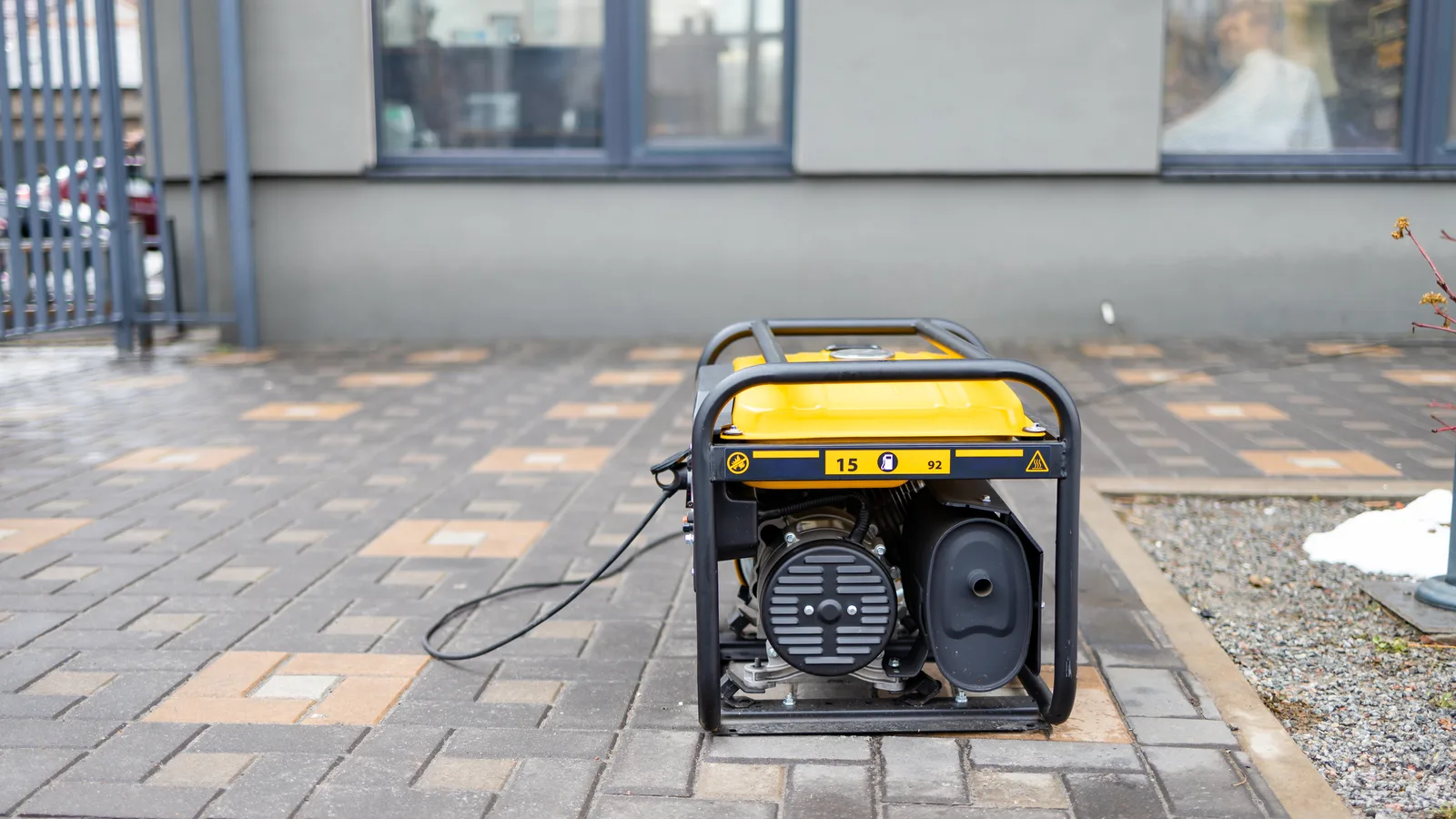
Winter outages are when portable generators kill people, and almost always the same way. The Consumer Product Safety Commission estimates that about 100 people in the United States die each year, on average, from carbon monoxide poisoning tied to portable generators. The gas has no color and no smell, and a generator running in a garage, a basement or a carport can fill the house before anyone notices a symptom.
The CPSC repeated its rules for a storm season in December 2025, and they are short enough to set up before the power goes out.
Outdoors only, and 20 feet away
Run a portable generator outside, at least 20 feet from the house, with the exhaust pointed away from the home. The CPSC has recommended that minimum distance from windows, doors and vents since 2013. Its own investigations of stationary and portable units have found exhaust traveling farther than that, so 20 feet is the least distance, not a guarantee.
The places people put generators to keep them dry or out of sight are the dangerous ones. The CPSC says never to run one inside the home or garage, and not on a porch or in a carport either, because a partly enclosed space holds the exhaust close to the house.
Rain and snow add a shock hazard. The CPSC says to follow the manufacturer's instructions for wet weather, which may call for a listed, non-combustible generator tent or for waiting until the precipitation stops. A tarp draped over the unit or a spot under the eaves is not the same thing.
Alarms before the outage
The second layer is detection. The CPSC recommends carbon monoxide alarms with batteries or a battery backup, so they work when the power is out, on every level of the home and outside each separate sleeping area. Interconnected alarms are better, because when one sounds they all do. Smoke alarms belong on every level and inside each bedroom. Test both kinds monthly, and a week before a forecast storm is a sensible time to do it.
If a CO alarm sounds, or anyone feels dizzy, sick or weak while a generator is running, the CPSC says to get to fresh air right away and call 911. Do not go back in to find the source.
Connecting it to the house
Follow the owner's manual for connecting appliances, using outdoor-rated extension cords sized for the load, and have a licensed electrician install a transfer switch if you want the generator to feed circuits in the house. Do not improvise a connection to the home's wiring.
If you are buying a generator before the season, the question to settle first is where it will sit: a spot 20 feet from every window and door, on level ground, that you can reach in the dark and the snow. If the lot has no such spot, a licensed electrician can tell you what a permanently installed standby unit or a transfer switch would cost to do it properly.
Electrical, gas, roof and ladder work can cause serious injury. Shut off power or gas first, follow the manufacturer's instructions and local code, and hire a licensed pro for anything beyond your experience.
This article reports rules, data and expert guidance. It is not legal, tax, insurance or financial advice. Talk to a licensed pro, your tax advisor or your insurer before you act on it.
Sources
- U.S. Consumer Product Safety Commission: As Winter Storms Threaten Millions in the U.S., CPSC Issues Safety Tips to Help Families Prevent Carbon Monoxide Poisoning and Fires
- U.S. Consumer Product Safety Commission: Stationary Generators, The Carbon Monoxide Poisoning Hazard
- U.S. Consumer Product Safety Commission: Carbon Monoxide Information Center
Loading comments…