












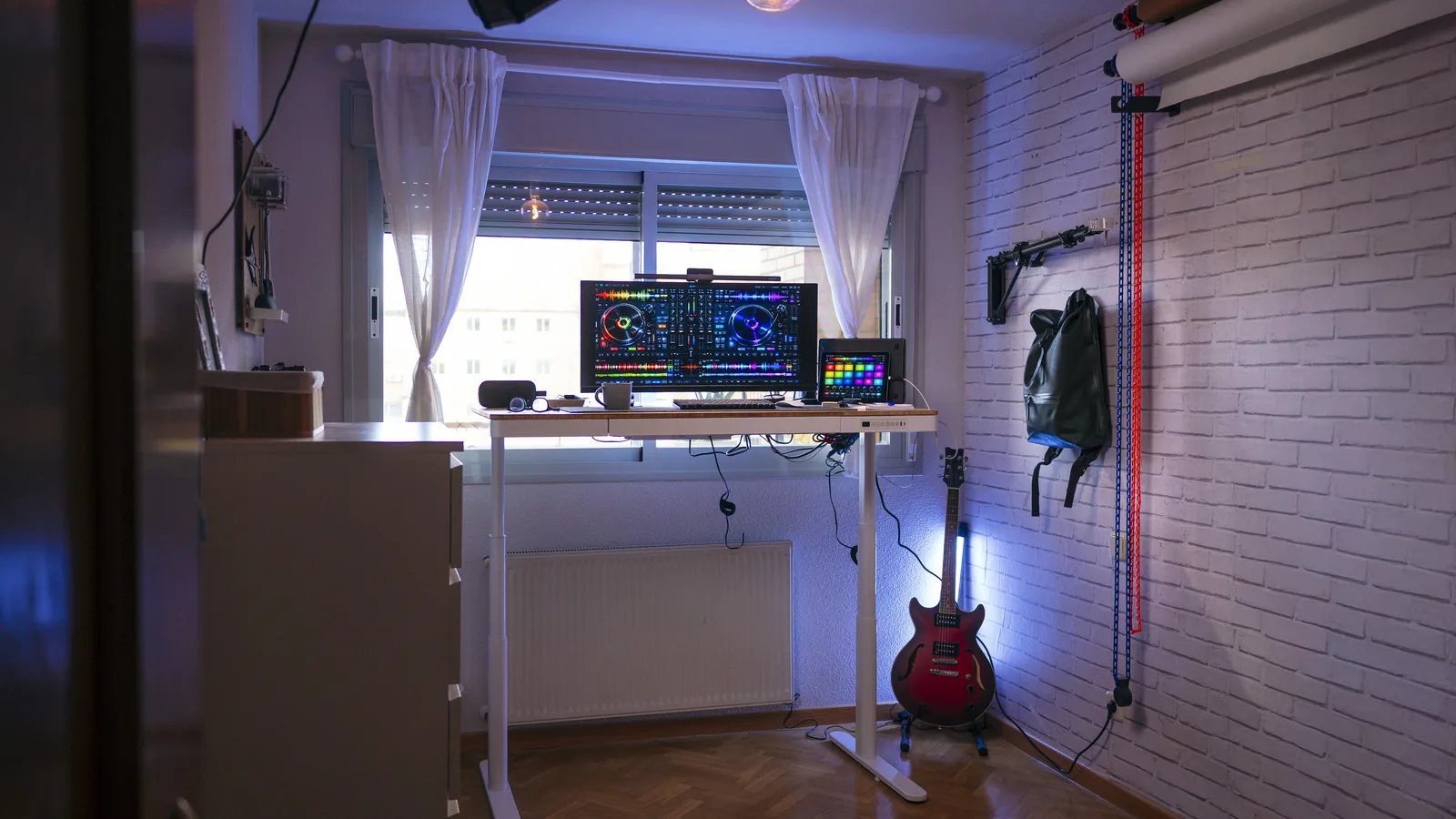
A power strip and a surge protector can look identical on a desk, but they are certified to two different UL standards and do two different jobs. A plain power strip, which UL calls a relocatable power tap, is tested under UL 1363 and only adds outlets. A surge protector is tested under UL 1449 as a surge protective device and is built to limit brief voltage spikes. Neither one adds any power to a home office: both draw from the same wall circuit.
What the UL 1363 listing covers
UL 1363 applies to cord-and-plug-connected power taps for indoor use rated 250 volts AC or less and 20 amps or less. The standard's scope, which points to the National Electrical Code (NFPA 70), says these taps are a movable connection for plug-in equipment and are not to stand in for the fixed wiring of a building or of built-in furnishings. A listing tells you the strip passed construction and fire tests for its rating. It says nothing about surges.
What the UL 1449 listing covers
UL 1449 covers devices that repeatedly limit transient voltage surges on power circuits up to 1,000 volts. The desk-side models people buy for a computer fall in its Type 3 class, meaning point-of-use devices that plug in at least 30 feet of wire away from the electrical panel. When a strip has more than two outlets and includes surge protection, UL requires it to meet both standards: the Type 3 surge requirements of UL 1449 and the power tap requirements of UL 1363. So a multi-outlet surge protector should carry a listing under each.
The standard is just as specific about what it does not judge. Its scope states that it does not evaluate the effect of the device on the equipment plugged into it, how much a surge is reduced, or whether the device's rating is enough to protect a particular piece of equipment.
Reading the numbers on the box
The figure UL 1449 itself assigns is the voltage protection rating, or VPR, printed in volts. A National Electrical Manufacturers Association (NEMA) specification guide, NEMA SPD 1.1-2019, describes how it is set: three samples are hit with a combination surge of 6,000 volts and 3,000 amps, the voltage each one lets through is measured and averaged, and the result is rounded up to the next value on a fixed list that runs from 330 volts upward (330, 400, 500, 600 and so on). That let-through voltage is what many packages call clamping voltage. A lower VPR means less of the spike reached the outlets in that test.
Joule ratings are another matter. They are the manufacturer's own figure for how much energy the device can absorb, and neither the UL 1449 scope nor the NEMA guide treats joules as one of the standard's listed ratings. A joule number is not a substitute for the UL 1449 listing mark and its VPR.
A surge protector also wears out. The Electrical Safety Foundation International (ESFI), in its Indoor Electrical Safety Check booklet published with CPSC, says a large surge such as a lightning strike can use up a surge suppressor in one event, so it will likely need replacing afterward. ESFI also notes that a suppressor protects only what is plugged into it, not the rest of the circuit.
Why strips are not chained or loaded with heaters
OSHA addressed both points in a November 18, 2002, letter of interpretation on power strips. It explains that UL's instructions require a listed power tap to plug directly into a permanently installed wall receptacle, and that it is not to be plugged into another power tap (often called daisy-chaining) or into an extension cord. The same letter says power strips are meant for low-powered loads such as computers and audio and video equipment, and not for space heaters, refrigerators or microwave ovens, which can exceed the strip's amp rating.
Consumer guidance says the same. CPSC's January 2026 winter safety release tells households to plug electric space heaters straight into a wall outlet and never into an extension cord or power strip; the agency estimates about 1,600 fires a year involving portable heaters, with about 70 deaths and 150 injuries a year, averaged over 2020 through 2022. NFPA's electrical safety tip sheet advises only one heat-producing appliance per receptacle at a time and says major appliances should go directly into a wall receptacle, without extension cords or plug strips.
Sizing the load at a home office
ESFI's booklet gives the math: volts times amps equals watts, so a 15-amp, 120-volt circuit carries 1,800 watts, and ESFI recommends staying under 80 percent of that, or 1,440 watts. The circuit feeding a desk often serves other outlets and lights in the room too. ESFI lists a portable heater at about 1,500 watts, which alone fills most of that budget. It also says a heavy reliance on power strips is a sign a room needs more outlets installed.
The practical check takes a few minutes: turn each strip over and look for the listing mark and the standard it names, look for a VPR in volts on any unit sold as a surge protector, move any heater to its own wall outlet, and unplug any strip that feeds another strip. If breakers trip or outlets feel hot, ask a licensed electrician whether the office needs a dedicated circuit or more receptacles.
Electrical, gas, roof and ladder work can cause serious injury. Shut off power or gas first, follow the manufacturer's instructions and local code, and hire a licensed pro for anything beyond your experience.
This article reports rules, data and expert guidance. It is not legal, tax, insurance or financial advice. Talk to a licensed pro, your tax advisor or your insurer before you act on it.
Sources
- UL Standards & Engagement: UL 1363, Relocatable Power Taps
- UL Standards & Engagement: UL 1449, Surge Protective Devices
- National Electrical Manufacturers Association: NEMA SPD 1.1-2019 Surge Protective Device Specification Guide
- OSHA: Compliance Requirements for Relocatable Power Taps or Power Strips (November 18, 2002)
- Electrical Safety Foundation International: Indoor Electrical Safety Check
- U.S. Consumer Product Safety Commission: Keep Warm and Safe This Winter (January 2026)
- National Fire Protection Association: Electrical Safety Tip Sheet
Loading comments…