












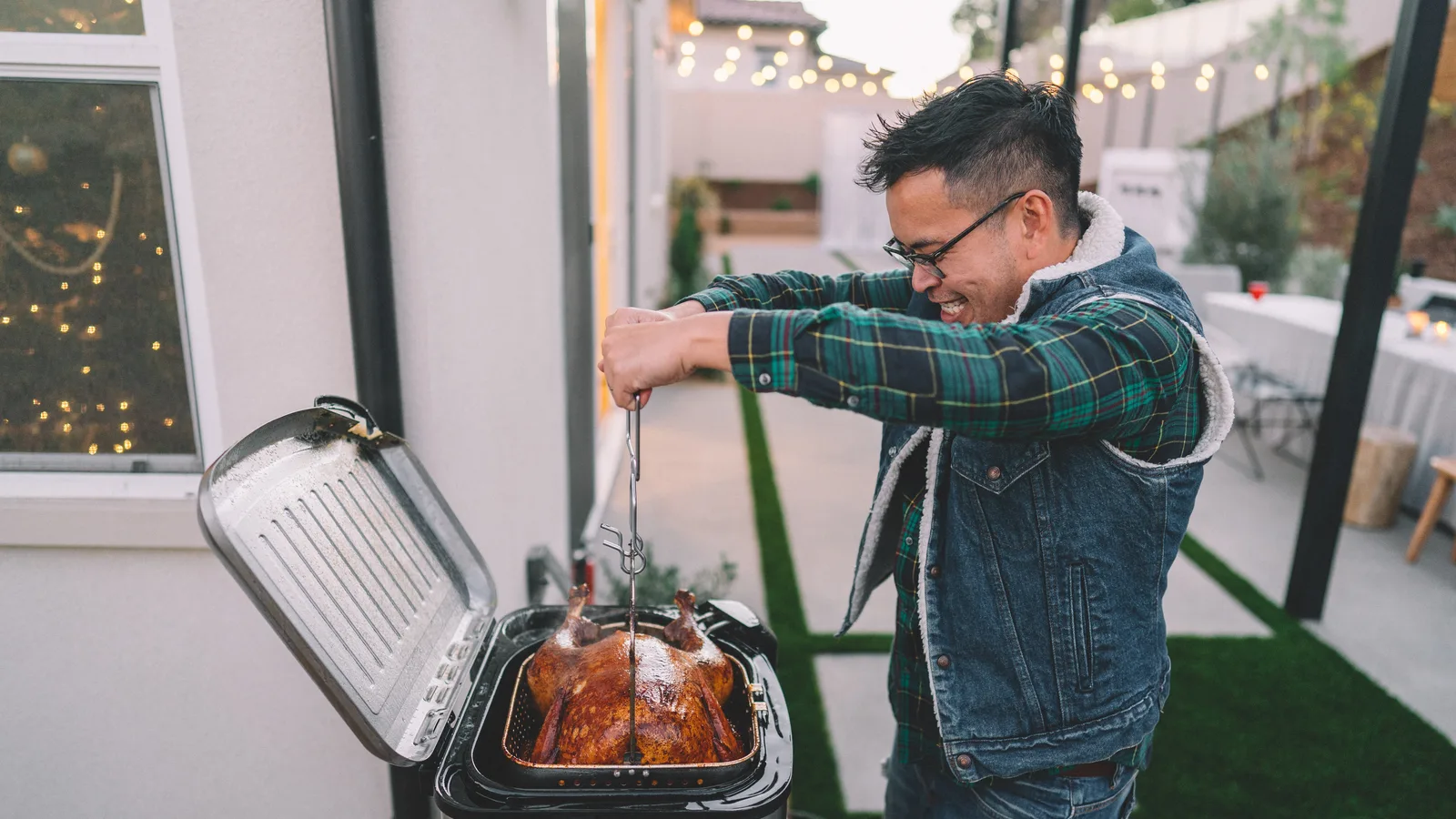
The U.S. Consumer Product Safety Commission counts 217 fire or scald and burn incidents involving turkey fryers reported to it since 2000, with 83 injuries and $9.5 million in property loss, according to its November 2023 holiday safety release. An earlier CPSC review found most fryer incidents happened while the oil was still heating, before any turkey went in. So the setup, done days before Thanksgiving on Thursday, Nov. 26, 2026, matters as much as the frying.
Where the fryer goes
CPSC says to fry only outdoors and away from the house, never in or under a garage, breezeway, carport, porch or other structure that can burn, and clear of walls and fences.
Owner's manuals for propane fryer kits put a number on it. The manual for a 30-quart kit sold at Lowe's (model RYQT01) calls for at least 10 feet from any wall, structure or combustible material, nothing overhead, and no use on balconies or decks. It recommends an open area on cement or brick.
The propane cylinder needs its own spacing. CPSC calls for at least 2 feet between the tank and the burner and says to set the two so the wind carries the burner's heat away from the tank. The manual's diagram shows 24 inches and warns against keeping a spare cylinder under or near the cooker. The pot sits centered on the burner.
Check the gas connection first
The RYQT01 manual calls for a leak test on every new or exchanged tank: control knobs off, tank valve open, a 50/50 mix of mild soap and water brushed on the connections. Growing bubbles mean a leak; close the tank valve and retighten. If it cannot be stopped, close the valve, leave the area and call the propane supplier or fire department. Never test with a flame.
Measure the oil with water, a day ahead
CPSC warns against overfilling in every release, because a bird lowered into a full pot pushes oil over the rim toward the flame. Measure with water while the burner is unlit.
- Put the thawed turkey on its rack or lifter and set it in the empty pot.
- Add water until the bird is covered. CPSC suggests about half an inch over the top; the RYQT01 manual says to stop where the bird is just submerged and to leave at least 3 inches between the water and the rim.
- Lift the turkey out and mark the water line on the pot, or measure the water you poured in.
- Dump the water, then dry the pot and the turkey completely. Fill with oil only to that mark, and never past the pot's own maximum fill line if it has one.
A fully thawed, dry bird
Water and ice turn to steam in hot oil and throw it out of the pot. CPSC says to thaw completely and dry the turkey, citing the U.S. Department of Agriculture's refrigerator estimate of 24 hours for every 4 to 5 pounds. On that math a 16-pound turkey needs three to four days in the refrigerator, so for a Thursday meal it goes in by Sunday, Nov. 22. The manuals add that it must be patted dry inside and out.
Lowering, watching and shutting it down
The manual says to lower the turkey slowly on the lift handle, pausing several times on the way down, wearing long insulated gloves. CPSC adds covering bare skin. If your model's manual calls for the burner to be off while the bird goes in, follow it. Never leave the fryer unattended, and keep children and pets away. If the oil starts to smoke, CPSC and the manual both say to turn the gas off at once, because smoke means the oil is overheating. If rain or snow starts, the manual says to cover the pot and turn off the burner and the gas.
The fire plan and the extinguisher
Water on burning oil spreads the fire. CPSC says to call 911 and not to use water. The manual says to turn off the tank valve, call the fire department and never move the cooker while it is in use. It says to keep a type BC or ABC extinguisher on hand, which it notes may contain a grease fire in some circumstances. The National Fire Protection Association notes that only Class K extinguishers are designed for grease and animal fat fires, and that a portable extinguisher is for a small fire, used only once someone is calling 911 and there is a clear way out.
What the NFPA says about fryers
NFPA's 2026 educational messages for the fire service state that oil-filled turkey fryers, as currently designed, are not suitable for safe use even by careful, well-informed consumers, citing the volume of hot oil, the risk of a spill and burners that can ignite it. It points those who want fried turkey to grocery stores, specialty retailers and restaurants, or to fryers listed by a nationally recognized testing laboratory that work without a pot of oil, such as infrared fryers, air fryers and electric turkey fryers. Note that an oil-free propane cooker is still a gas appliance: one such manual carries the same 10-foot clearance and outdoor-only rules as an oil fryer.
Next step: a dry run this weekend. Set the fryer on a bare, level spot at least 10 feet from the house, leak test the tank and mark the pot's oil line with water, before the bird thaws and the guests arrive.
Electrical, gas, roof and ladder work can cause serious injury. Shut off power or gas first, follow the manufacturer's instructions and local code, and hire a licensed pro for anything beyond your experience.
Sources
- U.S. Consumer Product Safety Commission: CPSC Is Working to Keep Families Safe this Holiday Season (2023)
- U.S. Consumer Product Safety Commission: CPSC Issues Safety Tips for Turkey Fryers
- U.S. Consumer Product Safety Commission, OnSafety: Gobble Up Safety on Thanksgiving Day
- National Fire Protection Association: Educational Messages Desk Reference for the Fire Service, 2026 Edition
- Lowe's: 30 Qt Turkey Fryer Kit Owner's Manual (Model RYQT01)
- Nuuk: Propane Outdoor Oil-Free Turkey Fryer and BBQ Smoker Manual (Model PF200)
Loading comments…