












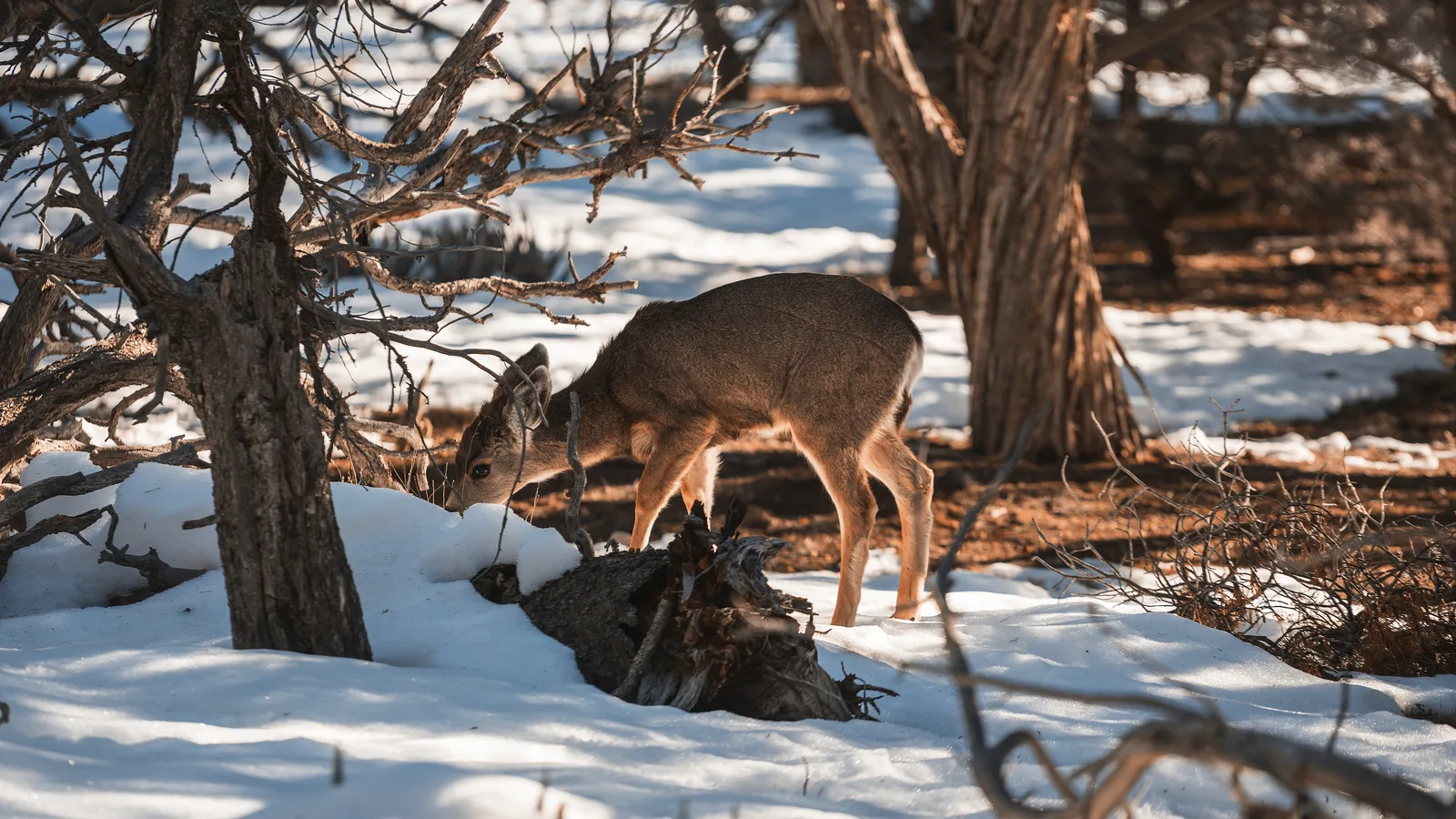
University of Minnesota Extension calls for deer fencing 8 feet high and notes that deer with room for a running start can clear fences up to 12 feet. Short barriers often fail by midwinter, when snow covers other food and deer turn to evergreens near the house. Heavy, wet snow brings a second risk: it can split an upright evergreen. The steps below, drawn from several cooperative extension services, cover both.
Step 1: Decide which plants need it
Iowa State University Extension notes that deer tend to strip the lower foliage of evergreens and that damage is most likely during long stretches of snow cover, when food is scarce. University of New Hampshire Extension singles out arborvitae and yew as vulnerable. Rutgers Cooperative Extension's database, Landscape Plants Rated by Deer Resistance, grades several hundred plants from A (rarely damaged) to D (frequently severely damaged), which helps sort out which shrubs in a yard are worth protecting first. For snow, Minnesota Extension identifies multi-stemmed trees, upright evergreens such as arborvitae and juniper, and trees with narrow branch angles as the plants most at risk.
Step 2: Fence or cage before deer settle into a pattern
Exclusion works better than anything sprayed on a plant, Iowa State says. For a whole bed or garden area, its guidance and Minnesota's both call for woven wire or mesh at least 8 feet tall. Iowa State notes one exception: an enclosure smaller than about 8 by 16 feet can keep deer out with a 50-inch fence, because deer avoid jumping into a space that tight. For a single shrub, Iowa State recommends a wire cylinder or tube at least 6 feet tall, or a shorter cylinder closed over the top for a small plant. Install these early, which also stops antler rubbing, and remove them in spring.
Step 3: Screen with burlap, set back from the foliage
Burlap on a frame of stakes and wire fencing blocks drying wind and sun, and when the frame surrounds the plant it also keeps deer off. Iowa State says to set the screen at least 6 inches from the foliage and not to wrap burlap tightly around the plant like a blanket. Minnesota recommends putting the screen on the south, southwest and windward sides, and enclosing the plant with the top left open if injury shows on every side. UNH says that for compact shrubs such as arborvitae, wrapping the whole plant in burlap is acceptable.
What not to use: UNH advises against black plastic because it causes extreme temperature swings around the plant, and Minnesota cautions against dark wraps in general because they absorb the sun's heat.
Step 4: Tie up multi-stem evergreens against splaying
Snow settling into a multi-stem arborvitae pushes the stems apart. Iowa State recommends wrapping these plants with twine or rope in fall. Minnesota is more specific: tie the leaders together with soft material such as carpet strips, strong cloth or nylon stockings, placing the tie about two thirds of the way up from the weak crotches, and remove every tie in spring after the last frost so it does not girdle the stems as they grow. On tall hedging plants this may mean working from a stepladder; set it on firm, level ground rather than frozen or snow-covered soil.
Step 5: Clear snow gently, and leave ice alone
When snow is bending branches, UNH and Iowa State both recommend a broom. Iowa State says to brush with an upward motion so the stroke does not add downward weight to a loaded limb. Minnesota warns against shaking branches, which can do more harm than good, and says not to try to break off ice that has already formed, because ice makes branches brittle and knocking it loose can snap them. Iowa State also says not to throw heavy, wet snow from driveways, walks or roofs onto small trees and shrubs.
Step 6: Use repellents as a supplement, and rotate them
Repellents come in two kinds, Iowa State explains: contact repellents, applied to the plant and working by taste, and area repellents that work by odor. Deer become used to a single product, so Iowa State and the Chester County Master Gardeners both advise alternating products and scents. Iowa State says to spray from about 6 feet down, since deer browse from the top down, and to apply on dry days above freezing. Minnesota notes that most repellents need reapplying after rain or irrigation and that no repellent will stop starving deer. Iowa State adds that winter results are limited because freezing weather makes reapplication hard. The label gives each product's reapplication interval.
Where to start this week
Walk the yard and list each evergreen within reach of deer or under a roof edge, then check its rating in the Rutgers database. Plants rated C or D get a cage or burlap enclosure; multi-stem uprights get tied before the first heavy snow. Local deer pressure and snow loads differ widely by region, so your county extension office can tell you which plants are browsed most in your area.
Electrical, gas, roof and ladder work can cause serious injury. Shut off power or gas first, follow the manufacturer's instructions and local code, and hire a licensed pro for anything beyond your experience.
Sources
- University of Minnesota Extension: Protecting trees and shrubs in winter
- Iowa State University Extension: Protecting Trees and Shrubs in Winter
- Iowa State University Extension: How can I prevent deer browsing during the winter months?
- University of New Hampshire Extension: Do My New Evergreen Shrubs Need Winter Protection?
- Rutgers Cooperative Extension: Landscape Plants Rated by Deer Resistance
- Penn State Extension: Large Garden Pests, Chester County Master Gardener
Loading comments…