












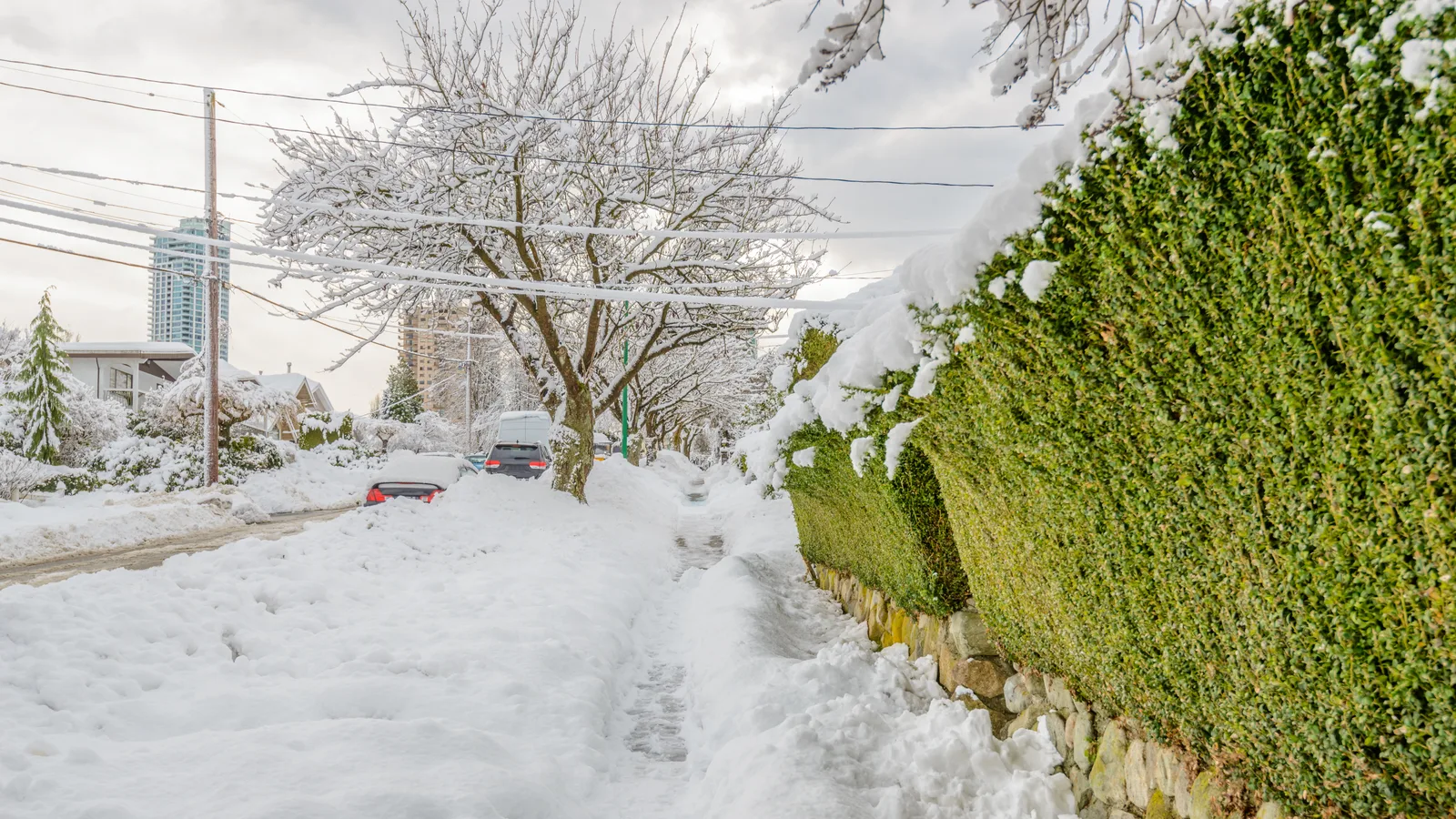
Browned evergreens along a driveway in April, a hedge that leafs out only on the side away from the street, and shrub branches that die back at the tips are often blamed on cold. Extension horticulturists trace a large share of that damage to deicing salt applied months earlier. The work to prevent it happens now, before the first storm, and in spring after the last one.
How salt hurts plants
University of Illinois Extension describes two routes. Salt spray, thrown by plows and passing cars, lands on needles, buds and bark, draws water out of the tissue and can build up to toxic levels in growing tips. That damage concentrates on the side of a plant that faces the road. Salt that dissolves into meltwater and soaks into the soil does slower harm: sodium breaks down soil structure and drainage, sodium and chloride interfere with the uptake of other nutrients, and the salt holds water away from roots, so a plant can suffer drought symptoms in moist ground.
The symptoms usually appear in late winter and spring. Evergreens show pale green, yellow or brown foliage. Deciduous shrubs and trees may lose buds, bloom poorly or not at all, and show dieback at branch tips; repeated injury can produce dense clusters of twigs known as witches' brooms. University of Wisconsin Extension notes that damage typically occurs within about 30 feet of salted roads, driveways and parking areas.
Step 1: Put up a barrier before the first storm
Burlap, plastic or snow fencing set on stakes between the plant and the pavement intercepts spray. Penn State Extension notes that evergreens near busy roads are wrapped or screened with burlap for this reason.
Step 2: Use less salt, and use it better
Most of the salt that reaches a planting bed comes from the property's own walks and driveway. Illinois Extension's guidance:
- Shovel or plow first, and salt only what remains.
- Limit salt to the high-risk spots: steps and sloped walks and drives.
- Apply a light amount before a storm, which keeps ice from bonding to the pavement and reduces how much is needed later.
- Spread it evenly, about 3 inches between grains, and sweep up leftover crystals once the surface is dry.
- Mix salt with sand, ash or kitty litter for traction.
Calcium chloride, magnesium chloride and calcium magnesium acetate are less damaging to plants than rock salt, which is sodium chloride. They cost more and can still cause some injury. Illinois Extension also advises using salt sparingly after about March 1, when plants begin to break dormancy.
Step 3: Shovel away from the beds
Snow pushed off a salted walk carries salt with it. Pile it where the meltwater drains away from the root zones of shrubs and trees rather than on top of them, and direct downspout and driveway runoff away from planting beds where the grade allows.
Step 4: Rinse and flush
Hose salt spray off foliage during a winter thaw, before budbreak. In spring, water heavily salted soil deeply to leach salt below the root zone. Wisconsin Extension notes that gypsum, sometimes suggested to counter salt, depends on good drainage and is most useful on heavy clay soils high in sodium; in the compacted, poorly drained soil common along walks and roads, it does little.
Step 5: Plant for the spot
Where damage repeats every year, the longer fix is a plant that tolerates salt. Illinois Extension lists sweet gum, bald cypress, Kentucky coffeetree, common horsechestnut, red oak, juniper, eastern red cedar, sumacs, potentilla and rugosa rose among plants tolerant of both soil salt and spray. Wisconsin Extension cautions that no plant is fully immune, and newly planted shrubs, with small root systems and little stored water, are the most vulnerable. A state's own extension service can say which of these suit its climate.
Loading comments…