












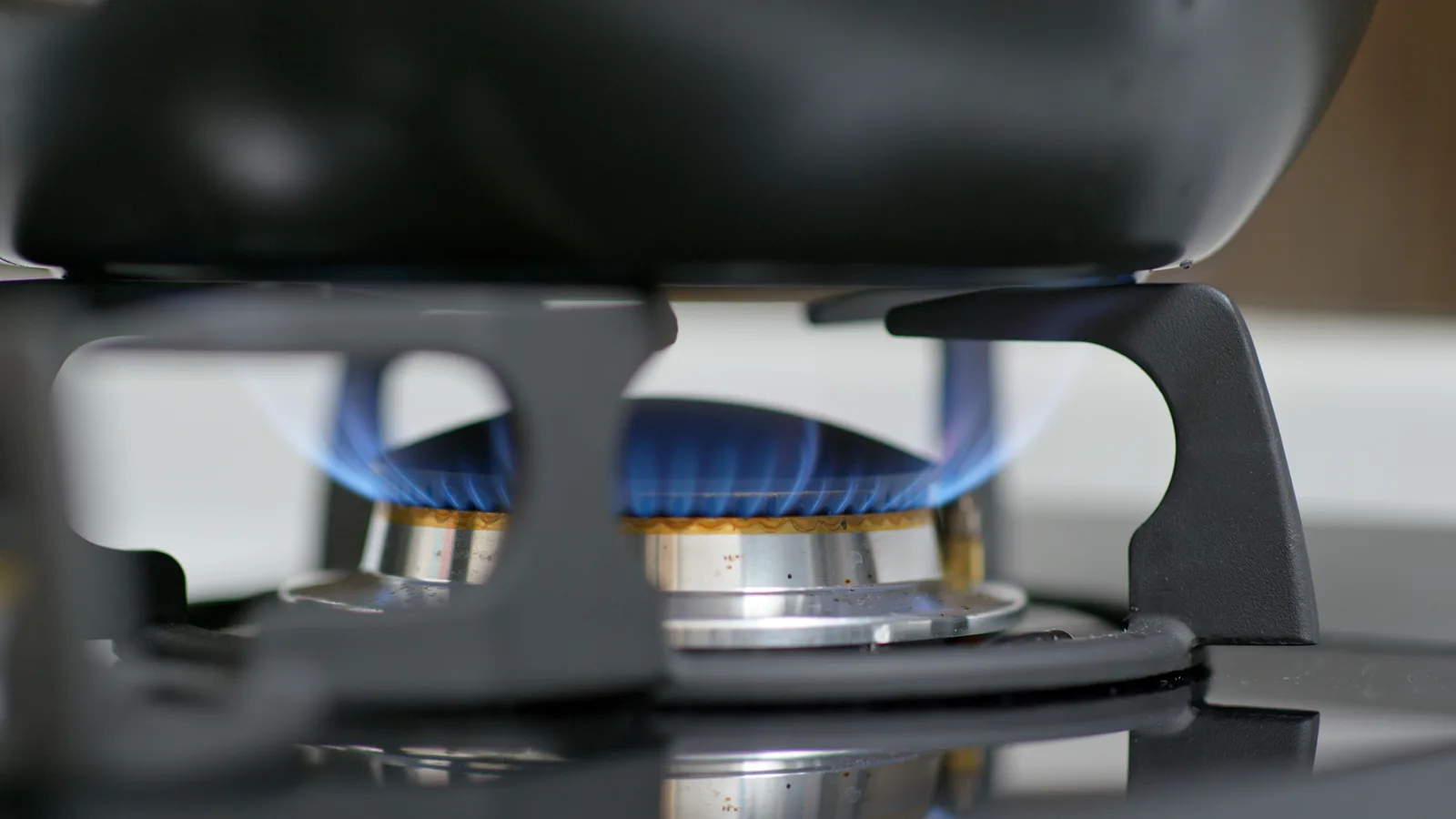
A holiday week puts more hours on a kitchen range than almost any other week of the year: a turkey in the oven all afternoon, every burner going for the sides, the windows shut against the cold. For a household cooking with gas, that also means more combustion byproducts in the air. The Environmental Protection Agency's page on nitrogen dioxide and indoor air quality (last updated April 29, 2026) explains what a gas stove adds to a kitchen and what reduces it.
What a gas range puts into the room
Nitrogen dioxide, NO2, is a gas formed when fuel burns. EPA lists the main indoor sources as unvented combustion appliances such as gas stoves, vented appliances that were installed incorrectly, kerosene heaters, welding and tobacco smoke.
The agency's comparison of homes is the useful number here. In homes without combustion appliances, indoor NO2 averages about half the outdoor level. In homes with gas stoves, kerosene heaters or unvented gas space heaters, indoor levels often run higher than outdoors.
Why it matters
EPA describes NO2 mainly as an irritant of the eyes, nose, throat and respiratory tract. At low levels, the agency says, exposure may increase bronchial reactivity in some people with asthma, reduce lung function in people with chronic obstructive pulmonary disease, and raise the risk of respiratory infections, especially in young children. Continued high exposure can contribute to acute or chronic bronchitis. There is no agreed indoor standard for nitrogen oxides; for outdoor air, EPA's National Ambient Air Quality Standard sets an annual average limit of 0.053 parts per million.
EPA's steps for reducing it
EPA says the two most effective measures are venting the source to the outdoors and making sure combustion appliances are installed, used and maintained correctly. For the kitchen and the rest of the house, its list includes:
- Use an exhaust fan vented to the outdoors over the gas stove. A recirculating hood that filters grease and blows the air back into the room does not send combustion gases outside. Running a vented hood whenever the burners or oven are on is the step that applies most directly to a long cooking day.
- Keep gas appliances properly adjusted. Burners and ovens that are out of adjustment burn less cleanly. Adjusting gas appliances is a job for a qualified technician or the gas utility.
- Have the central heating system inspected, cleaned and tuned every year by a trained professional, including the furnace, flues and chimney, and have leaks repaired promptly.
- Open the flue when a fireplace is in use.
- Choose a vented space heater when replacing an unvented one, and use only the proper fuel in a kerosene heater.
- Pick a properly sized wood stove certified to EPA emission standards, with doors that fit tightly.
- Do not idle a car in an attached garage.
Putting it to work on a cooking day
For the practical side, the order is short. Find out whether the range hood actually vents outside: a vented hood connects to a duct that leaves through a wall or the roof, and a recirculating model has a filter and returns the air to the kitchen. Turn the hood on when cooking starts and leave it running for a while after. If the range or oven has not been looked at in years, a technician visit before the holiday is the step EPA's adjust-and-maintain advice points to.
Electrical, gas, roof and ladder work can cause serious injury. Shut off power or gas first, follow the manufacturer's instructions and local code, and hire a licensed pro for anything beyond your experience.
This article reports rules, data and expert guidance. It is not legal, tax, insurance or financial advice. Talk to a licensed pro, your tax advisor or your insurer before you act on it.
Loading comments…